

Abundance as a State of Being – Integration #22
Often, people embark on a quest for abundance wanting more money, more success, or more security and discover that the real blockage is not outside, but in their ability to receive and live.
When we hear the word abundance, we almost automatically think of money. What we have in our bank account, our house, vacations, and generally what we can possess. All of these are part of abundance, but they do not define it in its entirety.

Abundance – From having to being
We can have a lot and yet live with the feeling that it is never enough. We can have money and constantly worry about losing it. We can be successful but not have the time, energy, or joy to experience it. If we are not well on the inside, what is on the outside fails to truly reach us.
For me, abundance is mostly a state of being. It is the willingness to live in the here and now. It is the ability to see the beauty in what you experience, to be grateful for what already exists, and to remain open to what may come.
Abundance is not just the ability to have. It is the ability to receive and stay in the flow of life.
From lack to a story about oneself
Lack is not just an external situation. Over time, it can become a story about ourselves: “I don’t deserve it,” “I can’t,” “It’s not for me,” “I have to work hard for everything.”
Many such conclusions are formed early. The child observes his parents' arguments about money, their fear of the future, sacrifice, losses, or repeated messages about how hard everything is to earn. Sometimes he experiences a painful event and builds a conclusion that, at that moment, helps him understand the world and protect himself.
In Regression Therapy we often follow this sequence: Traumatic event → Conclusion → Decision → Consequences.
A child may decide, “I won’t ask for anything anymore, so I won’t be a burden to them.” Or, “I have to take care of others before I take care of myself.” Later, the adult may work hard, give a lot, and have difficulty asking for a fair price, accepting help, resting, or keeping what they earn.
Through repetition, belief becomes familiar. Then it is no longer questioned, but is mistaken for reality. Man makes choices that confirm it, and each confirmation seems to prove once again that the old story was true.
Why can we be afraid? even successful
There are people who desire abundance and, at the same time, fear it. Success can activate the fear of loss, envy, criticism, or responsibility. It can test the present identity: "Who will I be if I stop fighting?"
Sometimes there is also a deep loyalty to family: “If I have more than my parents or grandparents, I will betray them.” In families marked by wars, communism, poverty, confiscations or repeated losses, survival and prudence had a real meaning. The problem arises when the response required by another generation continues to guide our lives, although the context has changed.
Breaking free from an old pattern does not mean criticizing our family. We prefer to work with gentleness: understanding, accepting, integrating, and transforming. We can build on the foundation of our family without repeating all of its limitations. Sometimes, allowing ourselves to live more fully is how we move forward in life and honor our ancestors.
Lack can be painful, but familiar. And to our nervous system, familiarity is often confused with safety. That’s why when things start going well, procrastination, impulsive spending, conflict, or withdrawal can arise. There’s no need to attack this so-called self-sabotage. We can listen to it as an old protection and gradually transform it so that our whole being can support the new reality.
How we work with abundance in Regression Therapy
In Regression Therapy we start from the present situation. How does lack manifest itself in a person's life? What does he feel in his body when he needs to ask, receive, be seen, or have more? What emotions arise? What thoughts and behaviors are repeated?
From there we can explore different levels of experience: childhood, birth, the prenatal period, conception, family history, and, depending on the client's belief framework and experience, symbolic or transpersonal images experienced as past lives or as life between lives.
We are not looking for spectacular images, nor are we trying to prove a theory about the past. We are looking for the pattern that is still alive in the present: in the body, in emotions, in conclusions about oneself, and in everyday choices.
The process I teach and practice is an integrative one: Experience → Understanding → Acceptance → Release → Integration → Transformation.
Mental understanding is important, but often it is not enough. We can know very well where a problem is coming from and yet the body reacts as if the danger were still present. That is why we also work with bodily sensations, unexpressed emotions, old decisions and the resources of today's adult. When all of these come together, that moment of clarity can occur in which the person not only understands, but feels: " This was my story, but it doesn't have to be my reality anymore."
Client abundance and therapist abundance
This transformation does not only concern the clients. In training in Reconnective Regression Therapy, the future therapist goes through a deep personal process himself. It is not enough to learn a technique. He needs to know his relationship with merit, money, visibility, sacrifice, giving and receiving.

abundance therapy
A therapist who feels they have to save others may give beyond their own limits. A therapist who is ashamed to receive may ask for too little or mistake exhaustion for devotion. And a therapist who fears their own power may avoid being fully present at the very moments when the client needs their stability.
Training thus becomes more than professional accumulation. It is a process through which we learn to give through ourselves, not by consuming ourselves. To be generous without entering the role of savior. To receive without guilt. To build a balanced exchange, in which energy, time, competence and responsibility are respected.
As the therapist integrates their own histories of lack, their presence becomes freer and more coherent. They do not hand abundance over to the client as a recipe. They make it possible through the space they create and the way they experience it.
To receive life
In a newer perspective, abundance is no longer something we run after, but something we become available for. The first option involves effort and often starts with an awareness of lack. The second starts with presence: I am here, in my body, aware, and creating space to receive. Creation becomes less an attempt to compensate for something and more an expression of who we are. Sometimes the question is no longer “How do I get what I am missing?” but “What does life want to experience and express through me right now?”
I like the metaphor of the hose through which water flows. The hose does not own the water, and yet it has constant access to it as long as it remains in the flow. Likewise, abundance does not mean accumulating everything for fear that one day there will be nothing left. It means trusting the movement of life, receiving what sustains us, using it with respect, and giving it on without emptying ourselves.
An abundant person is not necessarily the person who has the most. He is the person who is present in his own life. Who can see the beauty without denying the difficulty. Who is gentle with himself. Who receives, creates, rejoices and inspires through his own presence.
Perhaps the deepest level of abundance comes when we no longer have to talk about it so much. We no longer seek it out or try to prove it.
We live it. We radiate it. We are it.
still recommends
The One Talk Podcast
What, really, is abundance?
In this episode of The One Talk – Tot., we talk to Victor Chirea, regression therapist, trainer and founder of the Romanian Institute of Regression Therapy, about a profound and current perspective on abundance.
Integration #22
Abundance is above all a state of being. It is the willingness to live here and now.
Victor Chirea
ARTICLE AUTHOR
Victor Chirea
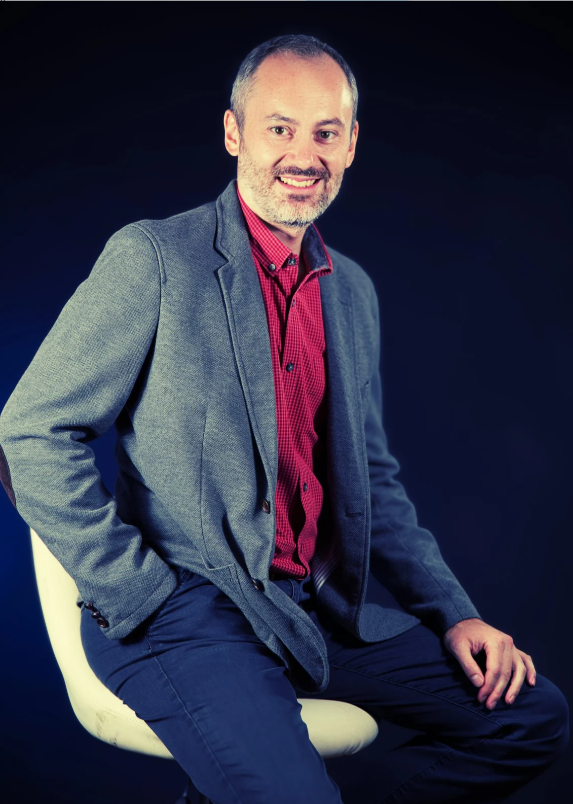
A Gestalt psychotherapist and EARTh-certified regression therapist, Victor Chirea is the founder of the Romanian Institute for Regression Therapy and a trainer in this field. His approach integrates psychology, trauma work, and the transpersonal dimension, in a process oriented towards understanding and reintegrating the deep experiences of the being.
psychotherapist

TotUna is not just a magazine. It is a co-creation space.
Submit your article!
If you feel the call to write, share, or contribute your voice, we are here.




