

Murano Glass | Intuitive Art #20
Take a handful of sand in your palm. There is nothing more humble in the world. Small, opaque, featureless, trampled on any beach, scattered by any wind. The light falls on it and stops there—it does not pass through it, it does not reflect, it dies out in its dull gray. If you had to choose the lowest matter, the most devoid of brilliance, you would choose sand.
And yet, from this humble thing, the hand of man has brought forth one of the clearest beauties the world knows: glass. The crystal through which light not only passes, but plays, refracts in rainbows, takes on color and holds it. How does the opaque become transparent? How does what stops light become its very carrier? The answer to this question is, if you look with the eyes of the soul, the very story of the Master.
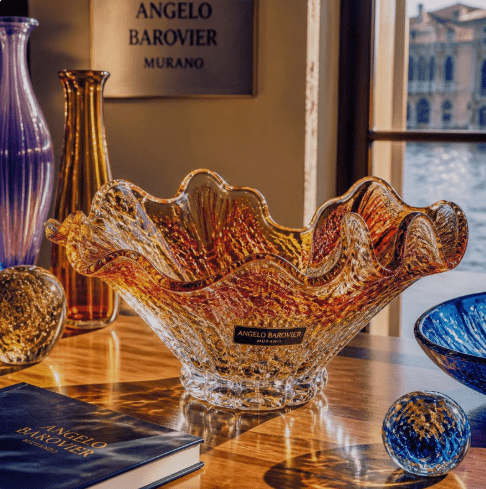
Angelo Barovier
Somewhere in the Venetian lagoon lies a small island called Murano. Since 1291, it has been the heart of an art that the world has never equaled. In that year, the Venetian authorities ordered all glass furnaces to be moved from the city to the island — out of fear of fire, which threatened the wooden city, but also to guard a secret. For the glassmakers knew something that the rest of the world did not, and the Republic wanted that something to remain locked away, like a treasure, in the waters of the lagoon.
Thus were born, isolated on their island, the master glassmakers — vetrai. They were, in a way, prisoners: they were not allowed to leave, and anyone who tried to take the secret to another country was pursued by the agents of the Republic. But they were, at the same time, valued as few commoners ever were. Their names were inscribed in the Golden Book of Venice. They were the only commoners whose daughters could marry noblemen. They carried swords. They lived on the border between slavery and supreme honor — as, perhaps, any master lives, bound to his art by a chain that is both a prison and a crown.
Master glassmakers
In the mid-15th century, one of these masters, named Angelo Barovier, did something that seemed miraculous. He invented Murano crystal—a glass so clear and pure that it looked like rock crystal, transparent, light, free from all turbidity. Pure light had finally risen from the opaque sand of the lagoon. The courts of Europe, even the Pope, coveted it. The sand below had reached the table of kings—not because anything had been added to it from outside, but because it had been passed through fire by a hand that knew. The secrets of this art were never written down. They still aren’t. There is no manual that contains the art of the master glassmaker—the exact balance between sand, soda, and lime, the temperatures, the cooling times, the precise moment when the molten material is ready to take shape. All of this is transmitted, today as seven centuries ago, from master to apprentice, directly, from hand to hand, in a process that lasts years and which is not just a school, but a way of life.
Vetro Artistico® Murano
The art of Murano glass was born in the Venetian lagoon and has flourished uninterruptedly since 1291, when the furnaces were moved to the island of Murano. Over more than seven centuries, master glassmakers — vetrai — have developed techniques such as clear crystal (invented by Angelo Barovier in the 15th century), millefiori, murrina, filigree and aventurine, passed down from generation to generation without ever being written down. Today, the tradition is protected by the Vetro Artistico® Murano mark of origin, which guarantees that each authentic piece was created on the island, according to ancient methods. For those who seek to bring this silent witness of transformation closer, small pieces — beads, pendants, crystals — remain accessible and carry within them the entire story of the sand that, passed through fire, remembers the light.
The beauty is that this seven-hundred-year-old art has not remained confined to museums. It lives on. On the island of Murano, the same furnaces still burn today, and masters who have passed down the craft from father to son melt the sand with the same gestures as their ancestors. And the fruits of their hands can reach you today — not just chandeliers for palaces, but also small, intimate pieces: beads, pendants, crystals that you can wear around your neck, close to your heart.
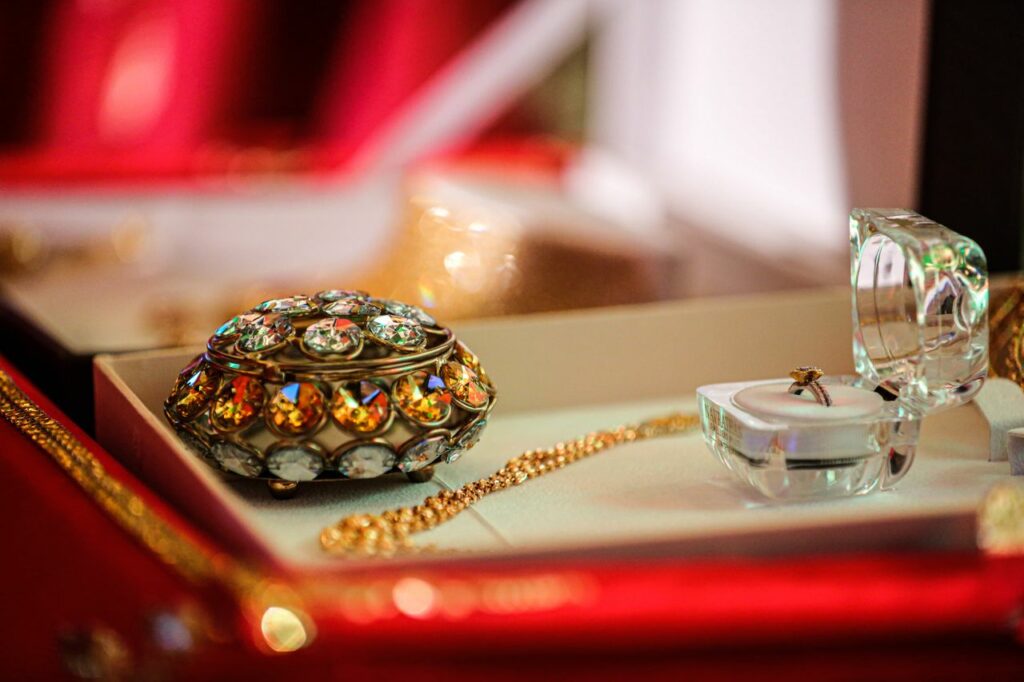
Jewelry in purity
If you ever want to hold such a testimony in your hand, it's good to know how to recognize a real one. Since 1994, authentic Murano glass has carried an official mark: the Vetro Artistico® Murano brand, a label that certifies that the piece was truly made on the island, according to tradition. For jewelry and small pieces, the label is blue; for vases and sculptures, it's red. It carries a code, and for a few years now, a QR code that you can check. A small sign that says one simple thing: that what you're holding in your hand has truly passed through the fire of a master's hand, not through the rush of a factory.
INTUITIVE ART #20
Every master lives bound to his art by a chain that is both a prison and a crown.
Mell
ARTICLE AUTHOR
MELL
Mell is the founder of the magazine TotUna – Essentia Momentum, an editorial space dedicated to the maturation of consciousness through direct experience and integrative reflection. Her writings do not start from theory, but from real journeys — from encountering life in its most fragile and revealing forms.
His interest in traditions such as Advaita Vedanta, Gnosticism, Kabbalah, and anthroposophy is not a comparative one, but an attempt to recognize the same divine thread that runs through different languages. For Mell, creative consciousness is not a concept—it is a living reality, present in all forms of existence, which he explores, writes about, and experiences. He does not direct; he recognizes. And by recognizing, he holds open the door that each reader must pass through for themselves.
CO-FOUNDER OF THEMEDITATION.ACADEMY


TotUna is not just a magazine. It is a co-creation space.
Submit your article!
If you feel the call to write, share, or contribute your voice, we are here.




