Egypt — Initiatory Journeys – TotUna 17
This section exists in TotUna magazine because the process of self-knowledge does not stop at the borders of a study or a meditation circle. It sometimes extends to places that know something about man — something that man has forgotten and that he only recognizes when he gets there.
We don't propose tourism. We propose conscious pilgrimage — to places where the earth is both master, mirror, and partner of transformation.
Egypt – Where the Gods Did Not Forget That They Are One
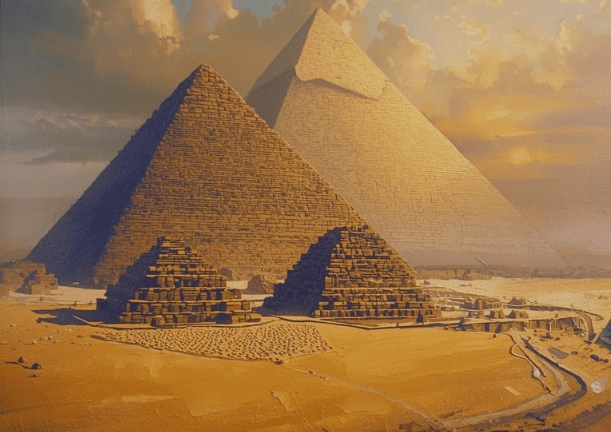
There are civilizations that built for power. There are civilizations that built for beauty. And there are civilizations that built for alignment—to set in stone, with a precision that defies ordinary explanation, their understanding of the relationship between man, the cosmos, and the divine. Ancient Egypt falls into the latter category.
The pyramids themselves are not Egypt's deepest mystery—though they raise questions to which modern engineering has yet to find satisfactory answers. The deepest mystery is another: how a civilization that lasted three thousand years managed to preserve, essentially intact, an understanding of the nature of reality that elsewhere has fragmented and been lost in a few generations.
That understanding was, at its heart, about unity. About how what seems separate—heaven and earth, masculine and feminine, life and death, human and god—is the expression of a single principle that looks at itself from different angles.
And in this edition of TotUna — dedicated to the inner androgynous, the healing of polarities, the reunification of the two fundamental principles — there is no more appropriate sacred destination than Egypt.
Isis and Osiris — The Mystery of Reunion
Before we talk about temples and pyramids, we need to delve into the myth that gave birth to them. Because in Egypt, architecture is not separate from theology — it is visible theology, thinking stone, initiating space.
The myth of Osiris and Isis is, on the surface, a story of death, tragedy, and love. At a deeper level, it is the most complete story humanity has produced about the reunification of divine polarities.
Osiris—the masculine principle, the king, the structure, the cosmic order—is killed and dismembered by Set, his brother, the principle of chaos. Isis—his sister and wife, the feminine principle, magic, unyielding love—searches for him throughout the world, gathers the pieces of his scattered body, reunites them, and, through the power of her love, restores his life long enough for them to conceive Horus together.
This is not a story about two gods. It is a map of what happens when the feminine principle seeks the masculine not outside, but in the fragments scattered throughout its own being—and has the courage and patience to gather them together, one by one, until the whole becomes possible again.
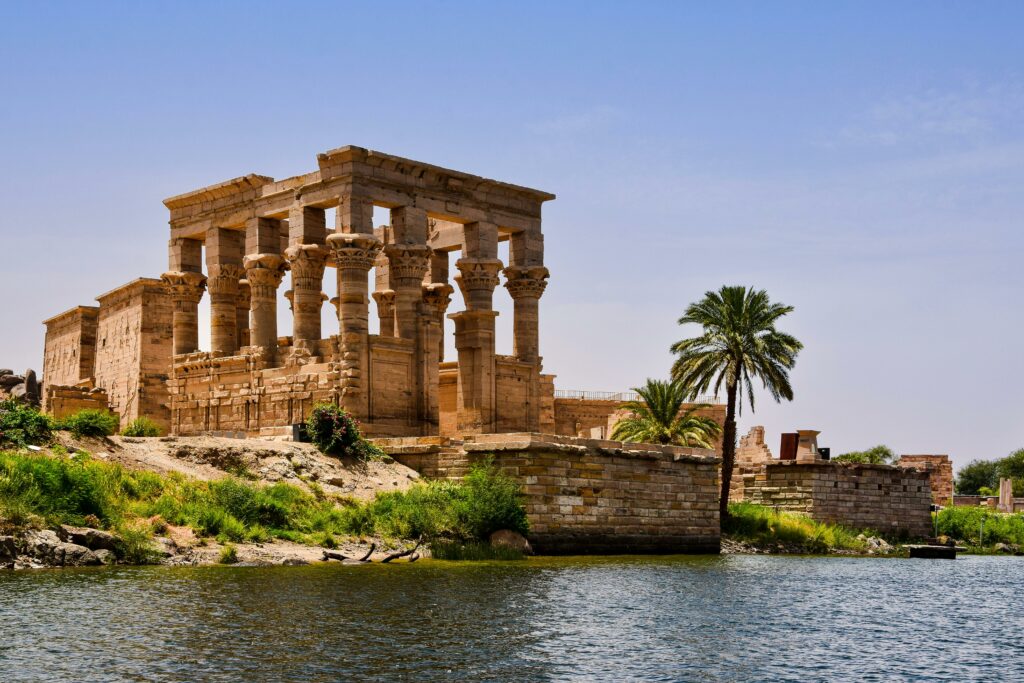
Egypt built temples to Isis in every era—from the earliest sanctuaries to the magnificent Temple of Philae, the last great temple built in the Pharaonic tradition, erected on an island in the Nile as if its sacredness required it to be surrounded by water on all sides.
Philae Temple — The Island of Unyielding Love
The Philae Temple, dedicated to the goddess Isis, is one of the most picturesque and energetically powerful sites in Egypt. Located on an island near Aswan, accessible only by boat, it exists on the border between water and stone, between the ordinary and the sacred world.
Isis is, in Egyptian tradition, more than a goddess of love. She is Weret-Hekau—the possessor of great magic—and Mwt-Netjer—the mother of the gods. She knows the secret name of Ra and through it holds power over creation. She is the one who knows—not as an accumulation of information, but as direct, living knowledge, anchored in love.
Visiting the Philae Temple is not a museum experience. It is a field experience. Those who arrive there with an open heart — not necessarily with knowledge of mythology, but with a willingness to feel — will understand why entire civilizations crossed the desert to reach this place.
Abu Simbel — Love Inscribed on the Mountain
280 kilometers south of Aswan, cut directly into the rock of the sandstone mountain, lies one of the most breathtaking monuments of love in human history.
Ramses II—who reigned for 67 years and built more than any other pharaoh—built not one but two temples at Abu Simbel. The great temple, of Ramses himself, with its four 20-meter-tall colossi representing the pharaoh. And next to it—something unprecedented in ancient Egyptian architecture—a temple of almost equal size, dedicated to his wife Nefertari and the goddess Hathor.
No pharaoh before Ramses had dedicated a temple of this magnitude to his wife. The inscription at the entrance has remained in stone for three thousand years: "For her whom the sun makes shine."
But what makes Abu Simbel truly initiatory is the astronomical phenomenon that occurs twice a year—on February 22 and October 22, the dates that mark the anniversary of Ramses’ birth and coronation. On those mornings, the first rays of the sun penetrate the temple’s entrance and traverse 65 meters of dark corridor, precisely illuminating three of the four statues in the inner sanctuary—Ramses, Ra, and Amun. The only statue that remains in shadow is Ptah—the god of darkness and the underworld.
The light that cuts through the darkness and touches exactly what it needs to touch. Not a millimeter more, not a millimeter less. An alignment calculated three thousand years in advance. The solar masculine and the nocturnal feminine in perfect dance.
Karnak Temple—The Largest Sacred Space Built by Man
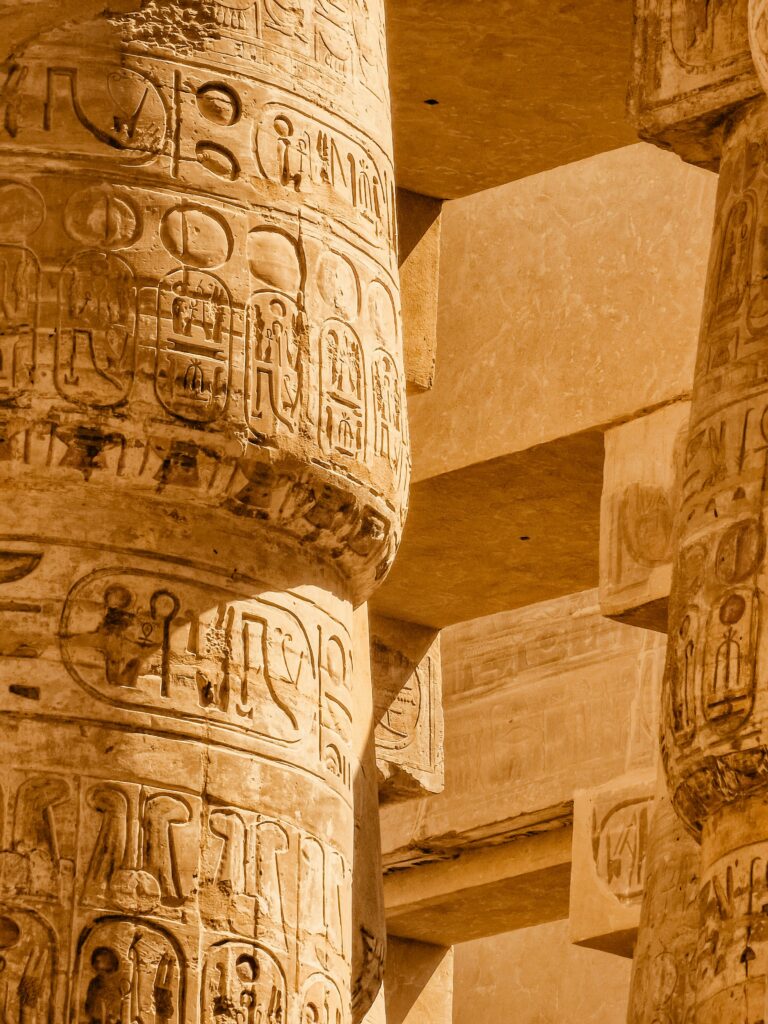
Luxor is home to the Karnak Complex—the largest temple complex ever built on earth. Built over two thousand years by successive pharaohs, each adding to the existing structure, Karnak is a stone encyclopedia of Egyptian cosmology.
The Hypostyle Hall — with its 134 gigantic columns, some 24 meters high — is one of those spaces where modern man realizes, viscerally, that there was a world that thought differently about the relationship between the human and the divine. Not small to the great. Not submissive to the master. But aligned. Part of the same field, expression of the same energy, conscious participant in the same cosmos.
The Valley of the Kings and Hatshepsut—The Feminine Who Ruled
On the west bank of the Nile, at Luxor, is the Valley of the Kings — the place where the pharaohs chose to be buried not in pyramids, but in tombs cut deep into the mountain rock, hidden from the eyes of the world, descending to the heart of the earth.
And near the Valley of the Kings stands one of the most remarkable monuments of ancient Egypt—the Temple of Queen Hatshepsut. Hatshepsut was one of the few female pharaohs in Egyptian history—and one of the greatest builders of her time. She ruled Egypt for twenty years with an efficiency and vision that surpassed many of her male predecessors and successors.
Her temple—with its elegant terraces built in contrast to the bare rock behind—is a testament to what happens when the feminine principle is not suppressed or reduced to a secondary role, but allowed to express itself in its fullness: it gives birth to beauty, order, and durability.
What the Soul Seeks in Egypt
There's a difference between seeing Egypt and traversing it. Seeing it means ticking off sights—pyramids, temples, museums, a Nile cruise. All beautiful, all impressive, all worthy of admiration. Traversing it means something else. It means letting the places look at you. To stand in front of a three-thousand-year-old temple and allow yourself to feel that something in you recognizes something in it. Not from intellectual memory. From memory older than memory.
Egypt is a place where the process of self-knowledge that you practice in the office, in a meditation circle, or in the pages of this magazine takes on a different amplitude. Not because the magical places do the work for you—but because their field provides you with a context in which what is essential becomes more visible. The noise is reduced. The signal is amplified.
The inner androgynous—the theme of this edition—is present in every stone in Egypt. Isis and Osiris, Hathor and Ra, Nefertari and Ramses, the solar masculine and the lunar feminine in continuous dance, separate in appearance, unitary in essence.
Whoever arrives there with this question in their heart—how do I heal my inner polarities?—will discover that Egypt does not answer with words. It answers with presence. With stone. With light that crosses every year, at the same angle, the same dark corridor—and touches exactly what it needs to touch.
Travel Details
November 27 – December 9, 2026 (with optional extension until December 11)
The route crosses Egypt from north to south and back — Cairo, Giza, Saqqara, Alexandria, Aswan, Nile cruise, Luxor, El-Gouna — with stops at the places with the strongest initiatory charge:
The Giza Plateau and the Great Pyramid of Cheops, the Temple of Philae — the island of Isis, the Temple and Obelisk of Abu Simbel — dedicated to Ramses' love for Nefertari, the Temple of Kom Ombo — dedicated to the two gods, Sobek and Horus, the Temple of Edfu — the best preserved temple in Egypt, the Valley of the Kings and the Temple of Queen Hatshepsut, the Temple Complex of Karnak with its hypostyle hall, unique in the world, the Temples of Dendera and Abydos — places of Isis and Osiris, three days of relaxation at sea to integrate the experience.
The optional extension includes the Monastery of Saint Anthony, the Monastery of Saint Catherine, and the climb to Mount Sinai.
initiatory journeys - Sacred Earth #17
Egypt is a place where the process of self-knowledge that you practice in the office,
Iuliana Chiriac
in a meditation circle or in the pages of this magazine it takes on a different amplitude.
initiatory journey guide
Iuliana Chiriac
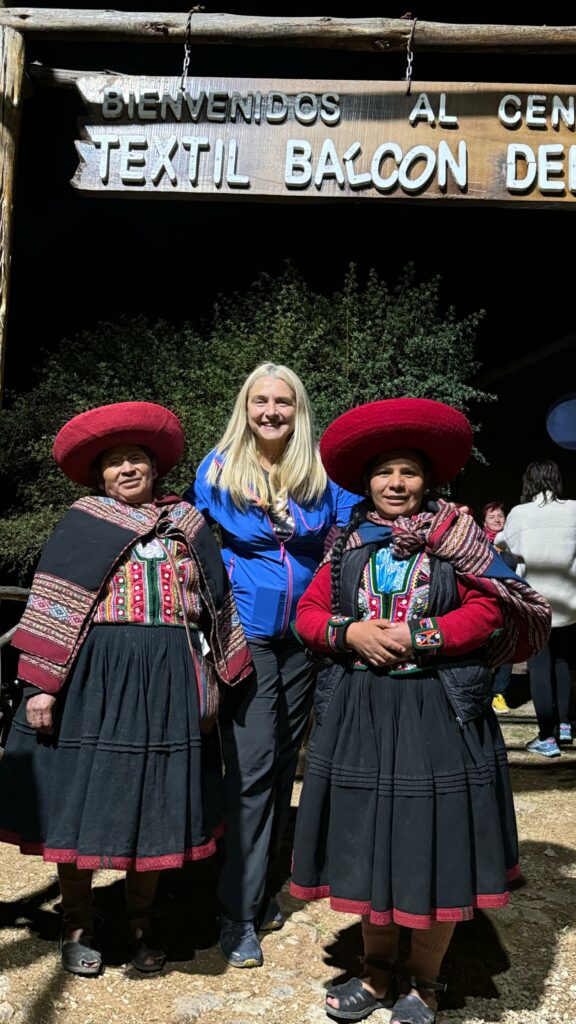
There is a fundamental difference between going to a place and being accompanied by someone who knows it not only geographically, but energetically and spiritually. Iuliana Chiriac has been organizing trips to sacred spaces for over a decade — not as a travel agent, but as a companion to the inner processes that these places accelerate.
Together with guides specialized in Egyptology and holders of the local living tradition, Iuliana creates a framework in which the outer and inner journey become inseparable. Ceremonies, meditations in sacred places, the spiritual context of each temple visited are an integral part of the route — not added options, but the heart of the journey.
Details about the 2026 trip can be found on the EDA Center website: centruleda.ro
founder ceda center

TotUna is not just a magazine. It is a co-creation space.
Submit your article!
If you feel the call to write, share, or contribute your voice, we are here.