What remains when everything falls | The Voice of the Self #22 | Alexandra Șchianu
Alexandra Șchianu writes an article about detachment and the space that opens up when we have the courage to let go of what has served its purpose — relationships, roles, attachments, or versions of ourselves that can no longer accompany us.
What remains when everything that is not essential falls away?
There's something about October that you can feel before you can explain it. It could be the changing light, the cooler air, or the way the days seem to be getting shorter. But beyond all of that, there's a change that's harder to name: it's as if something in us is starting to turn inward. After months when life seems to take place more outdoors, autumn brings a different kind of rhythm. We may move less, spend more time in our spaces, and have, sometimes without intending to, more contact with what's going on inside.
Maybe that's why autumn has something melancholic about it. Not necessarily because it's a season of loss, but because it makes us more aware of the passage of time. Some things that seemed important a few months ago no longer have the same intensity. Some plans have been left behind, some relationships have changed, some desires have faded or made way for others. And what during the summer could be covered by movement and noise now becomes harder to ignore.
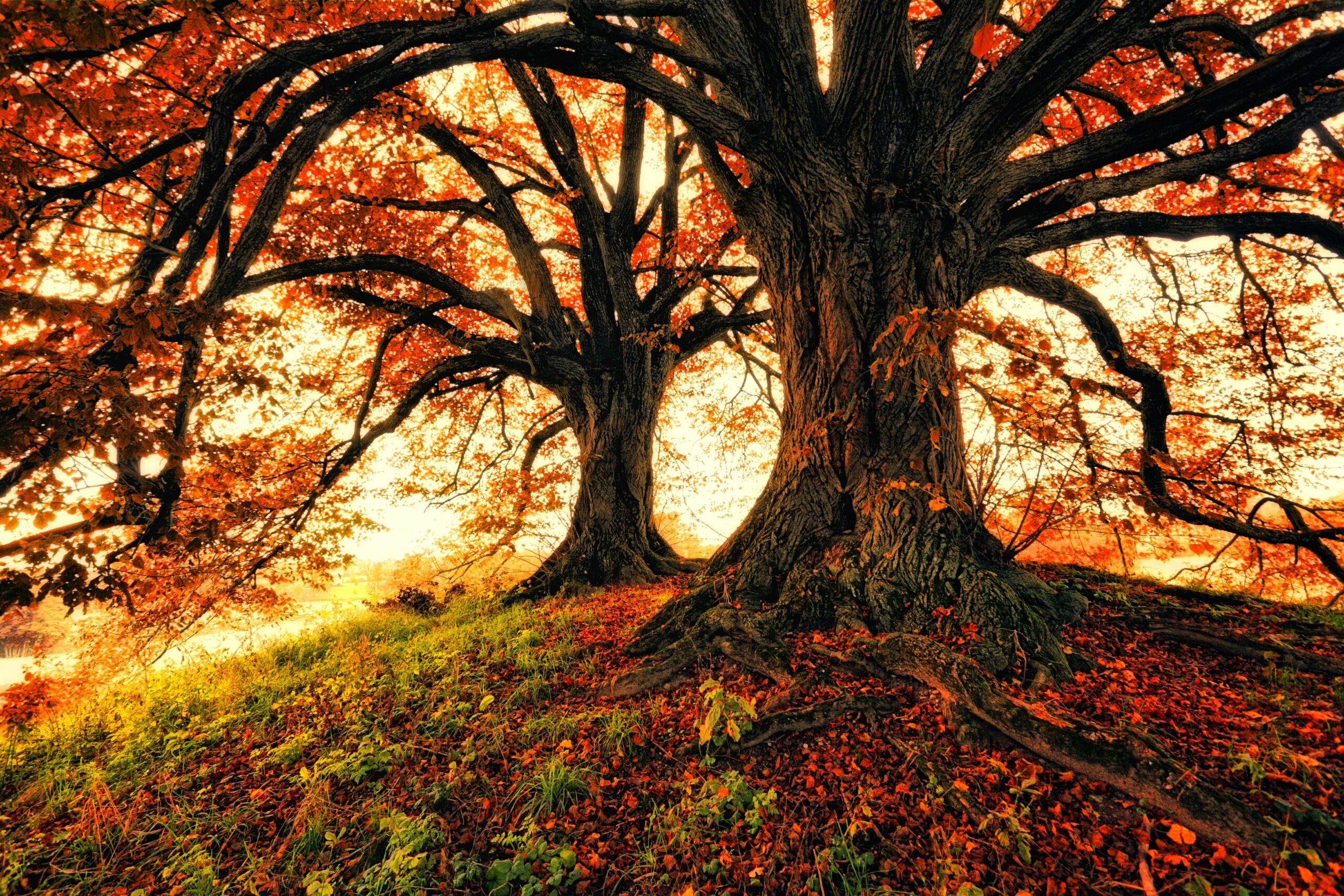
Trees do this without making a problem of change. They let go of what is no longer needed and draw their energy back into what remains. They do not try to hold on to their leaves at all costs, and they do not view the coming of winter as a failure. For them, there is a rhythm in which some things must go so that life can continue.
We often need more time to accept the same thing.
What is hard for us to let go of?
There are things we hold onto long after they've served their purpose. Not always because they're no longer good for us, but because we've grown accustomed to them. A relationship, a project, a role, an image of ourselves, or even a certain version of life can become so familiar that letting go of them seems harder to imagine than continuing.
And here arises an important difference between what is still alive and what we just continue to support.
Sometimes we know something is over, but we still invest energy in keeping it going. We try one more time. We explain one more time. We fix one more time. We wait one more time. We make one more plan. We tell ourselves that maybe things will change if we do something different. And perseverance, which in many situations is a quality, can become a subtle form of not accepting reality.
Perhaps one of the most difficult experiences is recognizing that some things can no longer be made to work simply because we still want them to work.
In therapy we often encounter this area. A person comes because they are suffering, but what keeps them stuck is not always just what is happening to them in the present. Sometimes it is the connection between what they are experiencing now and what they have already invested in that thing. The more time, hope, energy and identity we have put into a relationship or a project, the harder it can be to accept that that path is no longer ours.
Giving up can feel like a loss not only of the thing, but also of a part of ourselves.
When we become what we do for others
Maybe this is where the difficulty of letting go of certain things comes from. Because we don't just hold on to relationships or projects. Sometimes we also hold on to images of who we are.
We are the ones who solve problems. The ones who don't give up, the ones who take care, the ones who get things done. The ones that others can rely on. Over time, these roles can become so well-integrated into our identity that it's hard to imagine what it would be like to not be like that anymore.
For some people, caring for others becomes a way of feeling needed. For others, performance provides a sense of worth. For others, control and organization are ways of creating security. All of these mechanisms had a purpose at some point. They helped us function, adapt, gain appreciation, or get through difficult times.
The problem arises when what was once a resource becomes our only way of existing.
When we can no longer just be, we want to do. When a free time causes us anxiety. When, after the end of a relationship or a project, our first impulse is to immediately look for something new. When an empty space becomes so uncomfortable that we feel the need to fill it before we have time to see what is in it. I have noticed in myself, too, lately, this impulse to quickly look to what comes next when something ends. It is not necessarily a bad thing. Moving on is part of life. But I have begun to wonder if, sometimes, we rush to the next thing precisely because it is difficult for us to stay in the space between two stages.
In that space we have nothing to repair or anything new to build yet. And that's exactly why it can be so uncomfortable.
The space that remains
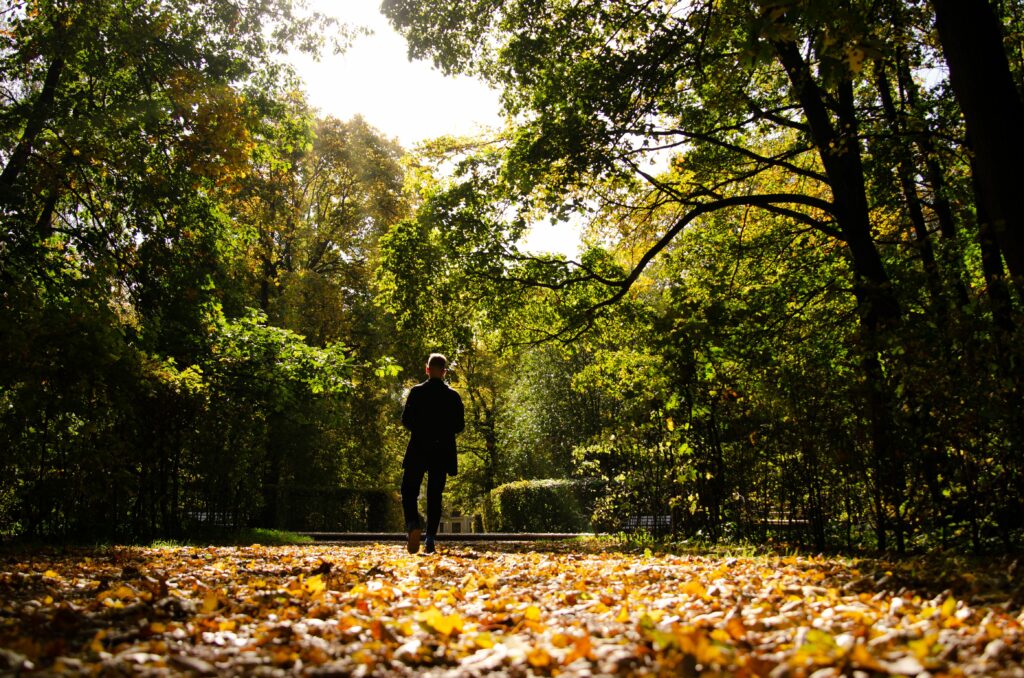
When something ends, we tend to focus on what we've lost. It's harder to notice the space that has emerged.
It can be a time when there is no longer the same hustle and bustle, the same meetings, the same responsibilities, or the same need to keep things moving. At first, this space can feel like emptiness. We can feel disoriented, bored, or even restless. Sometimes we wonder if we have made a mistake simply because the quiet is so different from what we used to know.
But not every gap needs to be filled.
There are spaces that need to remain empty for a while so that we can notice what appears in them. A desire that we haven't heard in a long time. A fatigue that we haven't had time to feel. A sadness that we covered with activity. A simple joy that we haven't made room for. Or maybe just the need to no longer have to be, for a while, anything in particular.
In a culture where we are constantly encouraged to build, grow, become, and do more, there is something almost countercultural about not intervening immediately. About letting things settle. About accepting that not all periods of life have to produce something visible.
Sometimes what happens on the inside can't be measured by results.
What is truly ours
Perhaps it is when some things fall that we can begin to see more clearly what remains.
The essential is not always what we have built with the greatest effort. It is not necessarily what we have considered important because it has been validated by others, nor what we once set out to become.
Sometimes the essential is much simpler.
They are the people we don't need to prove anything to. They are the places where we can breathe easier. They are the things we do even when no one is watching. They are the values we hold onto even when no one applauds us for them.
There are also those parts of us that don't need to be transformed into a project.
Perhaps the essential is best seen when we slow down. At the end of a day when we no longer have the energy to perform, very little remains of the image we try to present to the world. And perhaps it is then that we can more clearly see what nourishes us and what consumes us, what brings us closer to ourselves and what distances us.
Not everything we leave behind needs to be seen as a mistake.
Some things were right for a certain stage and are no longer right for the one we are in now. A relationship may have been important and yet ended. A project may have made sense and yet not continue. A version of ourselves may have protected us once and may no longer be necessary for us today.
Recognizing this doesn't undo what was. It just acknowledges its place.
What remains when everything that is not essential falls away?
Perhaps this is one of the things that autumn shows us so simply: not everything that falls is lost. Some things go because they have served their time. Others go because they no longer represent us. Some are put down with difficulty, after much resistance. Others disappear almost without us noticing. And perhaps we don't need to know right away what will come in its place.
There is a form of maturity in being able to stay, for a while, in a space that doesn't yet have a destination. Without filling it with everything. Without turning every ending into a mandatory new beginning. Without demanding to know immediately who we will be after we are no longer what we were. Maybe sometimes we just need to see more clearly.
What is alive and what we just keep supporting. What belongs to us and what we have taken over. What nourishes us and what consumes us and especially what we choose and what we do out of fear, habit or duty.
Autumn does not ask us to give up everything or become someone else. It only shows us, with a simplicity that we often complicate, that there is a time when the leaves must fall. And after they fall, the tree is not empty in the sense in which we look at it. Its life continues in a place that we cannot see.
Maybe we need such periods sometimes too. Not to produce something new, but to return to what is left after we have stopped keeping alive what is no longer ours. Maybe there, in that less spectacular and less visible space, something important begins to take shape.
Not necessarily a new version of us.
But one closer to who we are.
still recommends
The One Talk Podcast
Why are we ashamed of who we are? The psychology of intimacy in authentic relationships with emotional vulnerability with Alexandra Șchianu
voice of self #22
Not everything we leave behind needs to be seen as a mistake.
alexandra schianu
ARTICLE AUTHOR
ALEXANDRA SCHIANU
Alexandra Șchianu is a psychologist, regression therapist and the coordinator of the Glasul Sinelui column in TotUna Magazine. In her writings, she explores the human relationship with oneself and others, the emotional mechanisms that shape our choices and those moments in life when what we feel invites us to look beyond the immediate reaction. Her texts open a space for reflection in which psychology becomes a path of understanding, assumption and approaching one's own inner truth.
psychotherapist


TotUna is not just a magazine. It is a co-creation space.
Submit your article!
If you feel the call to write, share, or contribute your voice, we are here.