

Cherry, fleeting perfection | Conscious Food TotUna 18
Conscious Food is the section where, in each edition, a single food becomes the window through which we view our entire life. It is not a recipe section. It is an invitation to recognize, through the act older than all cultures — eating — that what enters our bodies carries with it history, symbol, biology, and meaning.
For this edition of the sovereign child, the food of choice is one whose mere appearance in the market marks the beginning of true summer. A fruit so small that it can be held between two fingers, so simple that it requires no preparation, and yet so rich in meaning that the entire conversation of humanity about fleeting beauty has been woven around its flower.
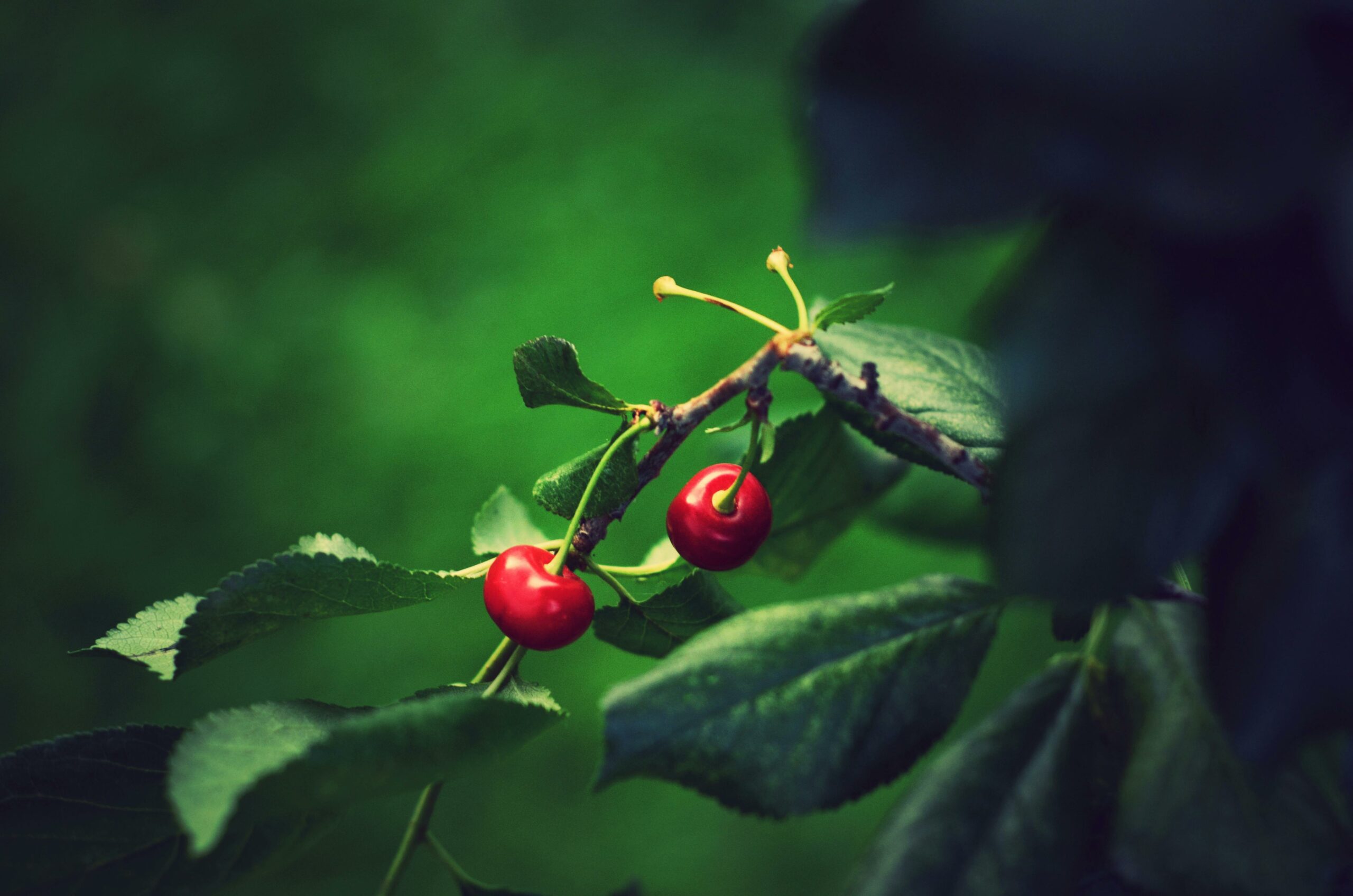
cherry
There's one month of the year when, wherever you look, you see one color. More precisely, several reds — from the coral red of stony cherries, to the ruby of bitter cherries, to the dark cherry of ripe cherries. June. The month when childhood, whoever you are, pulls you by the sleeve, even if only for a moment.
For most of us, the cherry is the first fruit we ate in our lives that we have a clear memory of. It was still cold from the morning when our parents put it in our hands. It was smaller than the palm of our hand. It had a thin green stem, like a handle. And when we bit into it, the taste opened something up for us — a room in our tongue, in our memory, in our relationship with the world — that we have never fully closed.
This edition is about that child who, under all the layers we've accumulated since then, still recognizes the taste of a fresh cherry as an act of pure happiness. And the fruit we call it by is, therefore, the most appropriate.
Through Time and Civilizations
The cherry is one of the oldest fruit trees that man has ever cultivated. At least 2600 years ago, cherries grew wild on the shores of the Black Sea, in what is now northeastern Turkey. The locals in that area had long known about the fruit—picking it from the wild trees, drying it, making it into a liqueur. But the Greco-Roman world still didn't know about it.
There is a persistent legend in classical literature: the Roman general Lucullus, after a military campaign against King Mithridates VI in 73-71 BC, returned to Rome bringing with him, among his treasures, an unknown tree — the cherry. More precisely, he brought it from the city of Cerasus — today Giresun, on the Black Sea coast. And the name of that city — Cerasus — gave the name of the fruit in all European languages: cerasus (Latin), cherry (English), cerise (French), cireș (Romanian), Kirsche (German).
The cherry tree traveled with the Roman legions. It entered Gaul, ascended to Britain, descended to Iberia. And everywhere it went, it was embraced — because, unlike demanding fruits that required rare earth, the cherry tree would grow almost anywhere, as long as it had sun and the right winter.
In Romania, the cherry tree has been documented for centuries. And in our cultural space, the cherry tree is not just a tree. It is a character of childhood — the tree that, in every village and every city, children climb unasked, with sticky fingers, red lips, with a feeling of sacred theft that is not really theft, because the tree actually demands to be climbed.
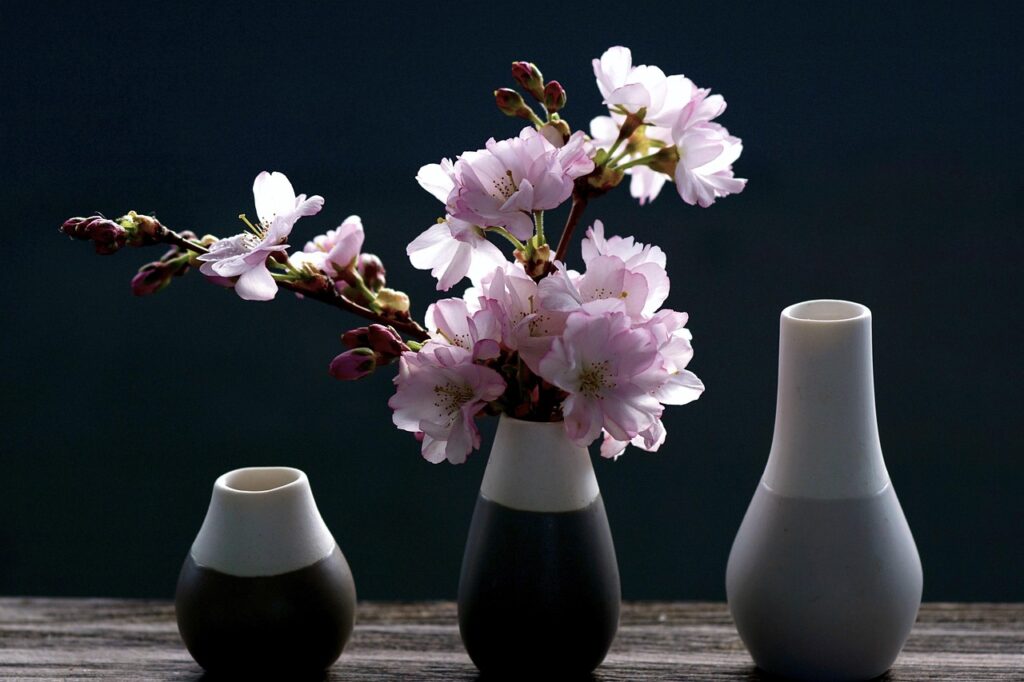
But before we talk about the cherry tree, we need to talk about the cherry blossom. Because although the fruit came to us through Rome, the flower was — and still is — spoken of all over the world as a being in itself.
In Japan, the cherry blossom — sakura — is perhaps the most revered natural symbol of the entire culture.
Sakura hanami
The festival of hanami (literally: “flower viewing”) has been around for over 1200 years. Families, friends, and colleagues sit under cherry blossom trees and watch. They do nothing else. They just watch. And what they watch, fundamentally, is not the beauty of the blossom. It is its passing. Because the cherry blossom only blooms for a few days a year, then falls, no matter how glorious the tree may be at its peak. This phenomenon gave rise to the central Japanese concept — mono no aware — which could be translated as “the tenderness of passing things.” The cherry blossom taught an entire civilization that true beauty does not last — and that is precisely why it is sacred.
In China, cherry trees and their flowers are symbols of feminine fertility, of young love, of defenseless beauty. There is a Chinese proverb that says: “He who plants a cherry tree, plants for another.” Because the life of the planter is too short to grasp the sweetest fruits of his own mature tree.
In medieval Christian traditions, the cherry appears as fructus paradisi — the fruit of paradise. In Italian Renaissance painting, the infant Jesus is often depicted with a cherry in his hand or in the arms of the Virgin Mary. The cherry, in this iconography, symbolizes the sweetness of the divine kingdom — the fruit that, from birth, is offered to the one who comes to bring love into the world.
In ancient Greece, the cherry tree was sacred to Aphrodite. And in mythology, the red fruit, with its skin that breaks easily when bitten, was a symbol of first love — fresh, alive, slightly bleeding.
And in Slavic and Balkan folklore — and therefore in our space as well — the cherry tree appears in songs, in doines, in children's games. "The blooming cherry tree..." — an entire corpus of Romanian songs starts from this image.
The cherry, then, is not a neutral fruit. It is a cultural figure with over 2000 years of history. And in every culture that has embraced it, it has been linked to the same set of themes: childhood, fleeting beauty, sweetness without technique, first love.
Cherry science
Underneath all this poetry, the cherry is a biological marvel.
A single small fruit contains: anthocyanins (pigments that give it its intense red color — among the most powerful antioxidants known in the plant world), vitamin C, potassium, magnesium, fiber, natural melatonin (especially in sour cherries, in significant concentrations for sleep regulation). Contemporary studies have shown that regular consumption of cherries — especially sour cherries — reduces systemic inflammation, supports muscle recovery after exercise, relieves arthritis symptoms, lowers uric acid levels, and improves sleep quality.
Glycemically, cherries are one of the most delicate fruits — their glycemic index is low, making them accessible even to those who carefully watch their sugar intake.
And the part that modern science has rediscovered with wonder is this: the cherry is, biologically, one of the purest forms of food available to man. It grows on its own, requires no processing, is eaten in its natural state, without salt, without sugar, without cooking. It is, in this sense, a childish food in its very nature — because it does not require any adult gesture of transformation from man. You pick it. You wash it. You eat it.
In the depths of the symbol, the cherry is, I think, the heart.
Look at it carefully: its shape is a small heart. The stone inside is, in turn, a smaller heart. And the green, fine tail that unites the fruit of the tree is like an umbilical cord between the child and the mother. The cherry is, therefore, the heart that is born from another heart — exactly what every initiatory tradition says about the sovereign child.
The Tall Symbol
In the tradition of this edition — the sovereign child as a recognized, not repaired, presence — the cherry teaches something extraordinarily simple, which, if we receive it, changes the way we eat.
The cherry does not ask to be deserved. It grows alone, offered freely by the land and the tree. It is not an elitist fruit. A poor child in a country courtyard has the same cherry as a prince in a palace. Equality in front of the cherry is one of the oldest and most real equalities known to humanity.
It requires no preparation. It requires no tools. It requires no skill. Just presence. You pick one up. You hold it in your hand for a moment. You eat it. Nothing else.
And that bite—if your attention is there—tells you everything you need to know about the sovereign child within you. Because the moment the cherry's delicate skin cracks under your teeth and its simultaneously sweet and sour pulp floods your tongue—at that moment, the adult mind stops. You can't think about anything. You can't plan your day. You can't ruminate on conflicts. The cherry leaves no room for anything but the cherry.
And that is, at that very moment, the sovereign child who receives. Not a small child. The perfect child—the one who has not yet learned to divide his attention between what he likes and what he must do.
This is, after all, the highest meaning of the cherry: a small fruit, so simple that it instantly brings you back to the state in which you came into the world. And through which, without ceremony, you recognize that that is, still, your truest presence.
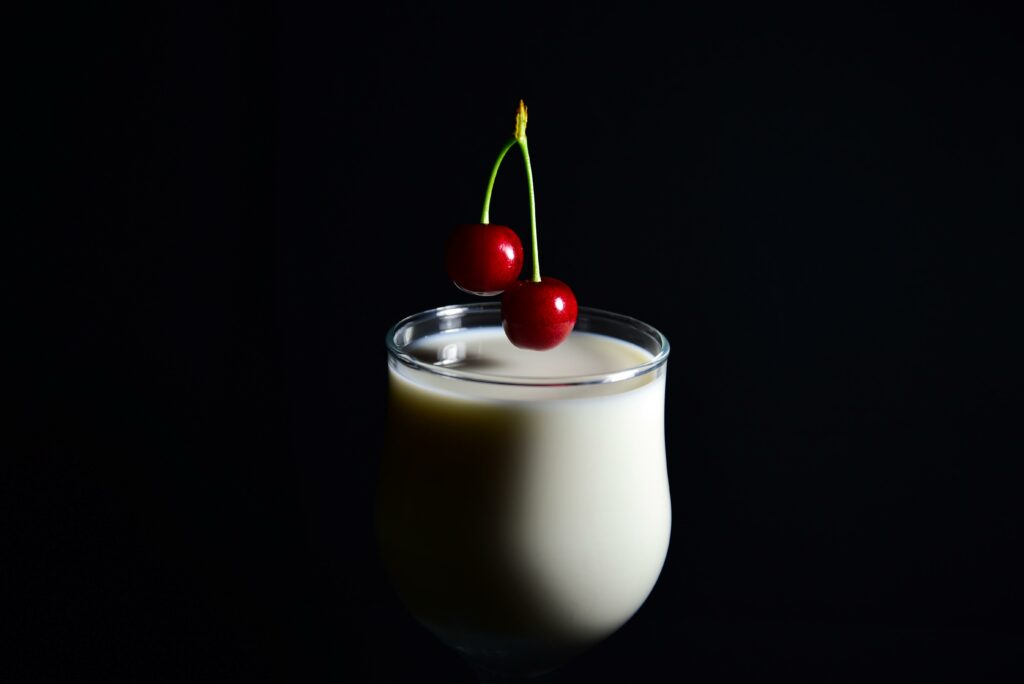
Cherries with almond milk and honey
- 200g fresh cherries
- 200ml cold almond milk, unsweetened
- 1 teaspoon linden or acacia honey
- A few drops of rose water (optional, but wonderful)
- 2-3 fresh mint leaves
Training:
Wash the cherries with cold water. Do not remove the pits. Serve them whole, with their green stems.
In a mug or bowl, mix the almond milk with the honey until completely melted. Add the rose water if using.
Pour the cold milk into a deep bowl. Place the cherries on top. Garnish with mint.
Serve immediately.
Ritual preparation
Sit down at the table. In front of you — the bowl of cherries on almond milk.
Before you eat, do this gesture:
Take a single cherry between your fingers. Not with a spoon. With your fingers. Just like you took it as a child, in the days when there were no cutlery in your world.
Hold it in your hand for a moment. Feel the temperature. Its light weight. Its fragile green tail. Its smooth skin.
Look at it. This is, right now, a being that has made an entire journey to get to your hand. It was a flower. It was wind. It was rain. It was sun. It was month after month of growth. And now, it's here.
Bite it slowly. With your eyes open or closed—as you wish. Feel the moment when the skin gives way. Let the flesh flood your tongue. For that moment, be nothing but taste.
Once you're done, take all the seeds you set aside. Wash them in cold water. Let them dry.
And the next few days—at an hour you remember—take them to a place where a tree can grow. A garden. A forest edge. A corner of the yard. A park. Plant them, just like that, without ceremony, a palm's breadth below the ground, in a sunny spot.
conscious food – living life #18
a being who has made an entire journey to arrive in front of you...
mell
ARTICLE AUTHOR
MELL
Mell is the founder of the magazine TotUna – Essentia Momentum, an editorial space dedicated to the maturation of consciousness through direct experience and integrative reflection. Her writings do not start from theory, but from real journeys — from encountering life in its most fragile and revealing forms.
His interest in traditions such as Advaita Vedanta, Gnosticism, Kabbalah, and anthroposophy is not a comparative one, but an attempt to recognize the same divine thread that runs through different languages. For Mell, creative consciousness is not a concept—it is a living reality, present in all forms of existence, which he explores, writes about, and experiences.
CO-FOUNDER OF THEMEDITATION.ACADEMY


TotUna is not just a magazine. It is a co-creation space.
Submit your article!
If you feel the call to write, share, or contribute your voice, we are here.




