
Fig | Conscious Food #20
In the middle of a small garden, by a small house in the village, grows a fig tree. I have known it all my life. It still occupies the entire central part of the garden, with its low branches, stretched close to the ground, like arms that call. As a child, I took refuge under them with a pleasure that was like nothing else. It was my place. A living, green tent, into which the light fell filtered and sweet.
And with every fig I dared to pick — because yes, there was always a daring, a little shyness in the face of the gift — I felt something rising within me, without yet knowing how to name it. A gratitude. A gratitude that poured out not only towards the fruit, but towards the entire tree, towards the entire garden, towards Mother Nature who made possible that nourishment that did not seem to be limited to humans. I felt, as a child, what I would only be able to put into words much later: that nourishment comes from a living whole, in which we are just a receiving part.
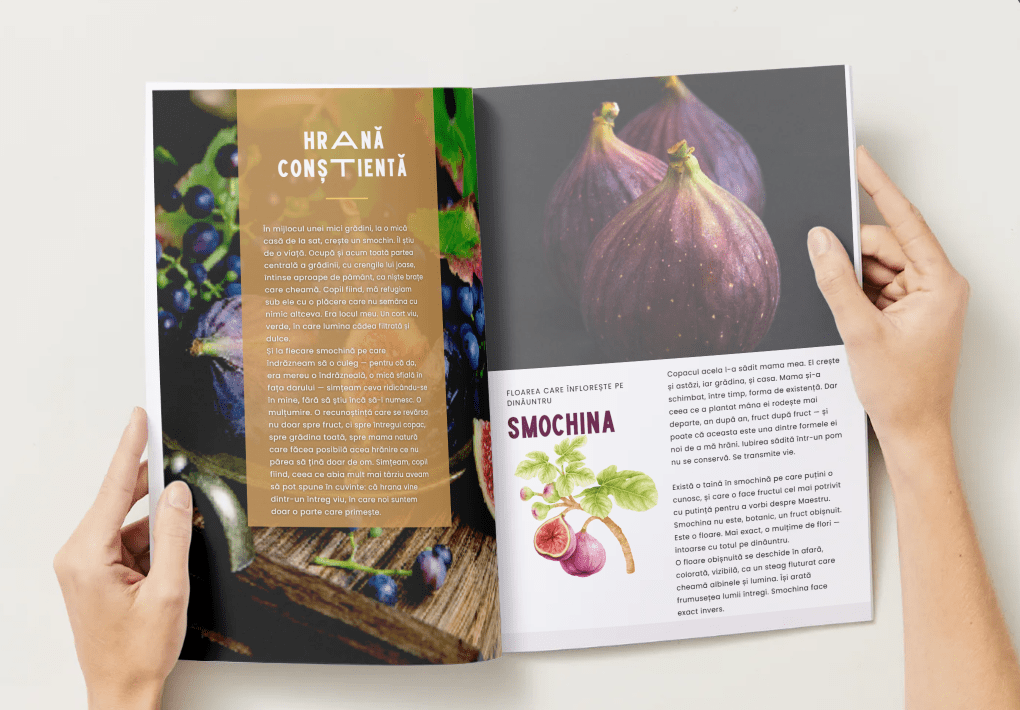
Fig
That tree was planted by my mother. It still grows today, and the garden, and the house. My mother has changed her way of life in the meantime. But what her hand planted continues to bear fruit, year after year, fruit after fruit—and perhaps this is one of her new ways of nourishing me. Love planted in a tree is not preserved. It is transmitted alive. There is a secret in the fig tree that few know, and which makes it the most suitable fruit possible for speaking about the Master. Botanically, the fig tree is not an ordinary fruit. It is a flower. More precisely, a multitude of flowers—turned completely inside out. An ordinary flower opens outward, colorful, visible, like a waving flag that calls for bees and light. It shows its beauty to the whole world. The fig tree does exactly the opposite.
It hides its flowers inside, in a closed, secret chamber that botanists call a syconium. What we think of as a fruit is actually an entire garden turned inward—hundreds of tiny flowers, between a hundred and four hundred, blooming in complete darkness, unseen by anyone.
The oldest witness
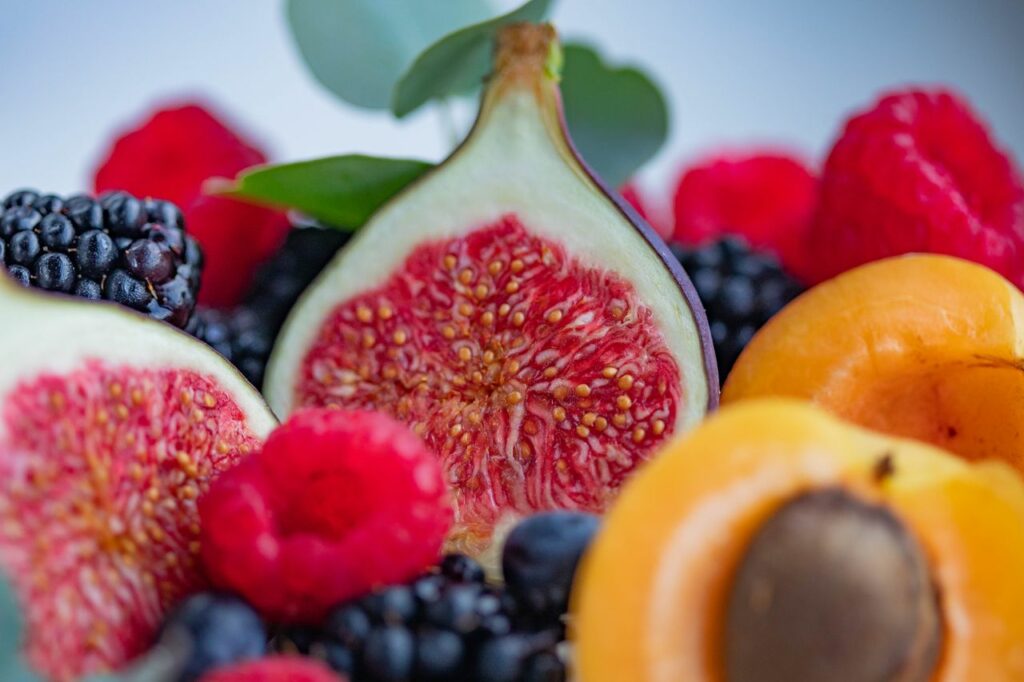
When you cut open a fig and you see those fine threads, those little dots in the pink core — they're not seeds. They're the flowers. Each dot is a flower that opened in the darkness and bore fruit without ever being seen by the sun. You're actually eating a hidden bloom. A beauty that unfolded entirely within and didn't need any eyes to admire it to be complete.
Can you find a more accurate image of the Master we have spoken about in the pages of this edition? The one who does not show himself, does not declare himself, does not wave any flag. The one whose flowering takes place inside, in spaces that the outside gaze does not reach. The one who bears fruit in secret and precisely for that reason bears fruit fully. The fig tree is the flower that does not need witnesses to bloom — because its true flowering is, from the very beginning, internal.
The fig has accompanied man since the beginning. It is among the first fruits he ever cultivated—the oldest evidence, charred figs found in Mesopotamia, is around twelve thousand years old, older, by some estimates, than wheat. When civilization was just beginning to open its eyes, the fig was already there, nourishing.
And not just by nourishing the body. In almost all traditions, the fig tree stands near the moments of awakening. Under a sacred fig tree—the Bodhi tree, a type of fig tree still called, in the local languages, Bodhi—the Buddha stood when he woke up. In the Garden of Eden, the fig leaf is the first thing with which man covers his nakedness, the first garment of self-awareness. The fig tree appears in the sacred texts of Judaism, Christianity, and Islam, always as a sign of abundance, peace, and spiritual fruit. It is no coincidence that the same tree that nourishes the body with the sweetest of fruits watches over the moments of awakening in so many traditions.
Species Keystone
And in nature, the fig tree is what science calls a keystone species. In many ecosystems, it bears fruit year-round, providing reliable food for birds, animals, insects—especially in times of scarcity, when nothing else has anything to give. It is the one who silently nourishes the whole, when others can no longer. The master who sustains life around it without asking for anything, without announcing itself, simply because that is its nature.
There is, at the heart of this mystery, something that moves to tears. How does the pollen get into that closed chamber, to the flowers that bloom inside? By a tiny wasp, the only one in the world that can do this, linked to the fig tree by a friendship that is over eighty million years old—neither can live without the other.
The wasp enters the fig tree through an opening so narrow that, as it squeezes through, it often loses its wings and antennae. It enters to give life, and in giving it, it ends its own life right there, in the heart of the fruit. The sweetness we taste is born, literally, from an act of total, unseen, dark giving. Someone gives themselves completely, in silence, so that the fruit can exist.
Isn't this the work of the Master? The one who gives himself without being seen, whose silent sacrifice makes possible the sweetness that others will taste without ever knowing what it cost. The sweet fruit always carries, hidden within it, a gift of self that language cannot express. The fig tree nourishes us with this too: with the memory that everything that is truly sweet in life was born, somewhere, from a gift that we have not seen.
Figs with honey
- Fresh, ripe figs, picked or bought that very day — as many as you can fit in the palm of your hand
- A teaspoon of raw honey (also donated by an entire, silent hive)
- A few walnut or almond kernels, broken by hand
- A drop, if you like, of rose water or a little cinnamon
Ritual preparation
Training:
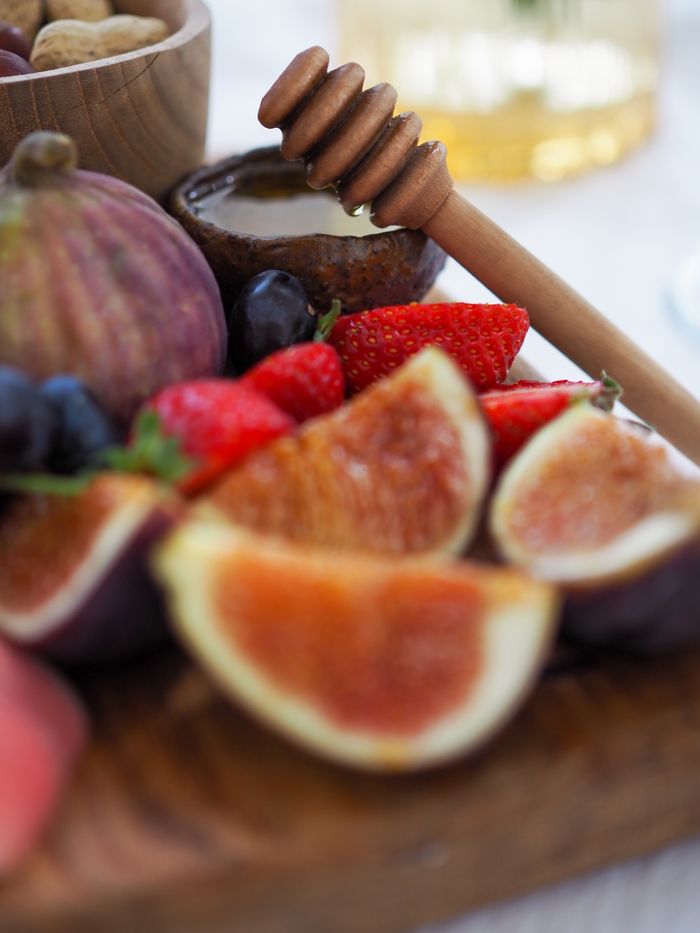
Place the broken figs on a beautiful plate. Drizzle the honey over them, sprinkle with the crushed walnut kernels, add, if you like, a touch of cinnamon. Don't cook. Don't transform. Just accompany the fruit with gifts as simple as it is. Each one—the fig, the honey, the walnut—is the fruit of an unseen gift.
First of all, stop. Don't cook yet. Take a fig in your palm and look at it. Feel its weight, the velvety skin, the warmth it has gathered from the sun. Remember that you are holding a flower turned inside out in your hand—an entire garden that blossomed in the darkness to reach you now.
Break it in two, gently, with your fingers—not your knife. Look at the pink core, the fine threads that are, in fact, hundreds of flowers. Look at the beauty that unfolded without a witness. Take a moment of silence here. This is the most important part of the recipe.
And if you eat even a single fig like this, you will have done more than nourish yourself. You will have honored the secret that this fruit has carried for twelve thousand years: that everything that is truly sweet blooms in secret, is given in silence, and does not allow itself to be kept—because it is alive, and the living is given only now. Like the fig.
conscious food – living life #20
everything that is truly sweet blooms in secret
mell
ARTICLE AUTHOR
MELL
Mell is the founder of the magazine TotUna – Essentia Momentum, an editorial space dedicated to the maturation of consciousness through direct experience and integrative reflection. Her writings do not start from theory, but from real journeys — from encountering life in its most fragile and revealing forms.
His interest in traditions such as Advaita Vedanta, Gnosticism, Kabbalah, and anthroposophy is not a comparative one, but an attempt to recognize the same divine thread that runs through different languages. For Mell, creative consciousness is not a concept—it is a living reality, present in all forms of existence, which he explores, writes about, and experiences.
CO-FOUNDER OF THEMEDITATION.ACADEMY


TotUna is not just a magazine. It is a co-creation space.
Submit your article!
If you feel the call to write, share, or contribute your voice, we are here.