

The Balance Between Light and Darkness – Meditative Practice
The spring equinox marks a rare moment of perfect balance between light and dark. It is not a triumph of one over the other, but a reminder that life is sustained by integrated polarity.
This meditative practice is an invitation to bring this balance to the center of our being — so that the new cycle begins from harmony, not from inner conflict.
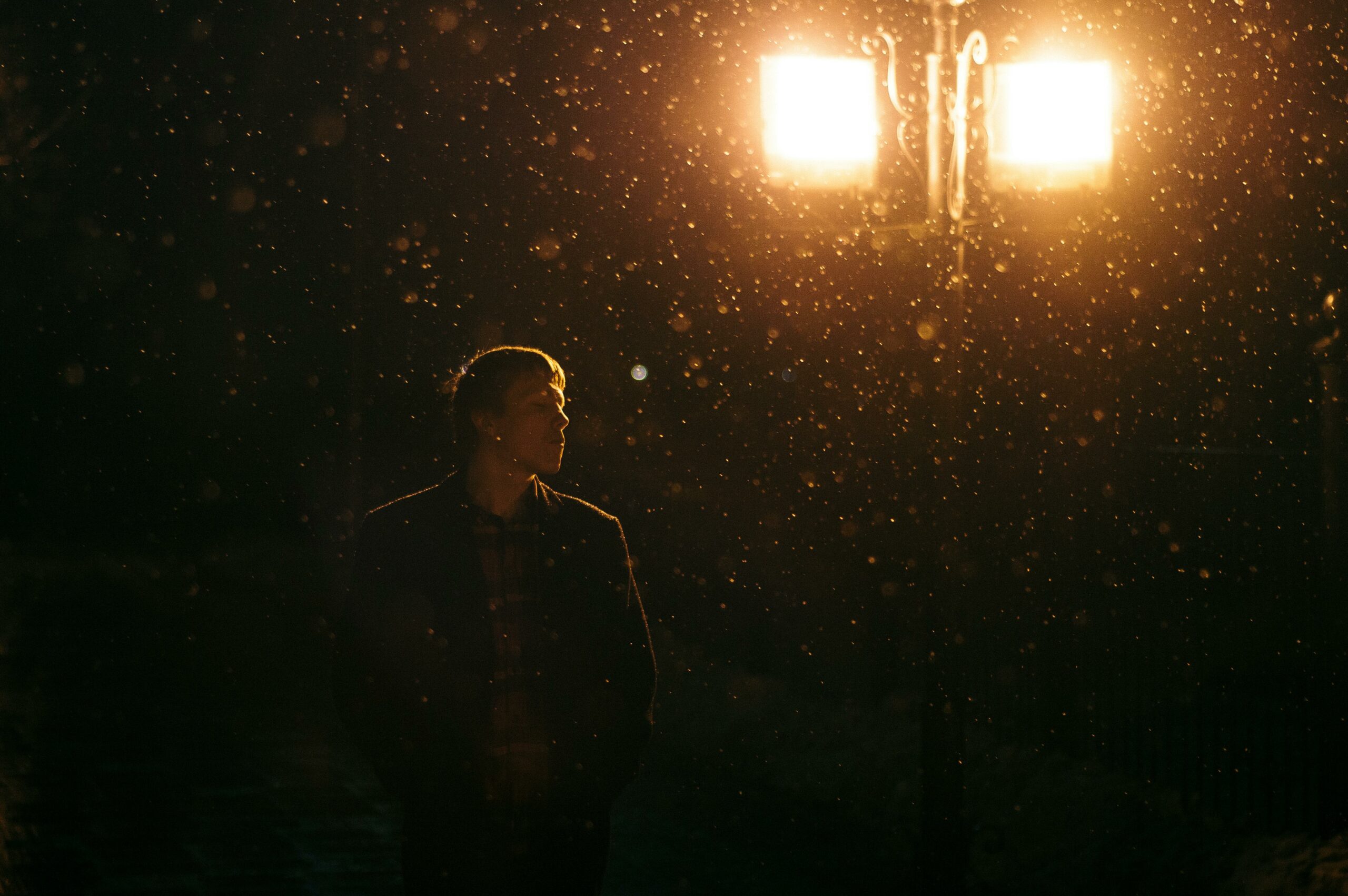
THE FIRE THAT BREATHES IN WATER
Rebirth is not possible without winter. Light is not complete without shadow.
guided trip
Close your eyes. Not to escape the world, but to enter it deeper.
Breathe. Feel the air go in and out, like a calm sea rising and falling within you.
March is not just a month. It is a threshold.
A moment when light and darkness look at each other and neither claims supremacy.
Within you there is the same horizon.
Let your consciousness gently descend into the inner space of the shadow.
It is not a place of fear.
It is a place of depth. They live there: – unspoken longings, – losses, – the silences, – non-conclusions, – unanswered questions
Don't chase them away.
Sit next to them.
Feel the darkness like fertile soil.
Cold, but alive.
Say, without words: "I see you."
Breathe.
Now, from a distance, light appears. Not dazzling. Not aggressive.
A warm, gentle light, like the dawn that doesn't force the night to leave.
This is your potential.
This is the life that wants to flourish through you.
Don't rush towards her. Allow him to come closer.
Say: "I accept you."
And now, let the light and the darkness
to touch.
They do not dissolve into each other.
It is not canceled.
It balances out.
A horizon is born in the center of your chest.
A perfect balance point.
There is no conflict here.
There is no fight here.
Here it is pure consciousness that allows the experience to manifest.
Stay.
Breathe.
Feel how the shadow gives you depth.
Feel how the light gives you direction.
Both are yours.
Both are you.
From this center, not out of fear, not out of haste,
a bud appears.
Small. True. Authentic.
Don't define it.
Don't project it.
Just let it be.
Spring does not defeat winter.
It includes it.
Renaissance does not erase the past.
It turns it into a root.
Take a deep breath.
And whispers inside: “I integrate the shadow. I honor the light. I am balance. I am a beginner.”
Stay silent for a few moments.

balance
When you open your eyes,
the world will be the same.
But your center will be more settled.
And from this center,
you can start again.
scientific basis
Meditative practice centered on the integration of polarities (light–dark) can be understood, from a scientific perspective, as a process of self-regulation of the nervous system, integration of emotional memory, and cognitive restructuring. Far from being a purely symbolic exercise, such a practice activates mechanisms documented in neuroscience, trauma psychology, and mindfulness research.
The human mind operates through polarities:
- pleasant–unpleasant, safe–dangerous, light–shadow.
Neurobiologically, these polarities correspond to the differential activation of the systems:
- insula (interoception and body awareness)
- amygdala (threat detection)
- medial prefrontal cortex (regulation and evaluation)
When we avoid psychological "darkness" (difficult emotions, loss, fear), amygdala activity remains elevated and limbic system reactivity is maintained.
Conscious integration of shadows—through non-reactive observation—favors functional connectivity between the prefrontal cortex and limbic structures, facilitating emotional regulation (Siegel, 2012; Davidson & McEwen, 2012).
In simple terms: looking at the darkness without avoiding it reduces defensive brain activation.
The role of breathing and body stabilization
The anchoring breath section of meditation has direct effects on the vagus nerve, heart rate variability (HRV), and parasympathetic tone. Slow, conscious breathing stimulates the parasympathetic nervous system, reducing sympathetic hyperactivation (fight/flight).
This allows:
- decreased cortisol
- increasing cognitive clarity
- access to emotional processing without collapse or avoidance
Thus, the practice is not an "imagination", but a physiological intervention.
Visualization and Neurolinguistic Reprogramming
In the exercise, the mental images of shadow and light are not passive metaphors.
Neuroimaging research shows that:
The brain does not completely differentiate between intensely imagined experience and lived experience (Kosslyn et al., 2001).
Guided visualization activates the visual associative cortex, emotional circuits, and cognitive prediction networks.
In NLP (Neuro-Linguistic Programming) , restructuring mental images — changing their size, distance, or intensity — is associated with diminishing emotional charge. In this edition’s meditation — the shadow is viewed without avoidance, the light is received without attachment, and both are integrated into an “inner horizon.”
This produces a symbolic reconfiguration of the relationship between experience and identity.
Shadow integration – psychodynamic perspective
From the perspective of analytical psychology (CG Jung) , the "shadow" represents the repressed or unintegrated aspects of the personality.
Their denial produces intrapsychic tension, while their integration produces coherence.
The meditative practice proposed for balancing the two valences facilitates tolerance to ambivalence, reduces cognitive dissonance, and increases psychological flexibility.
This is correlated with resilience and emotional maturation ( Kashdan & Rottenberg, 2010).
Balance as a neurocognitive function
The equinox symbolizes the balance of light and dark. Neurocognitively, balance is manifested by moderate activation of emotional systems, coherence between executive and affective networks, and hemispheric integration.
When the individual can simultaneously hold positive and negative experiences without fragmentation, what is called vertical integration in developmental psychology occurs (Siegel).
This is associated with identity stability, increased self-regulation capacity, and reduced impulsive reactions.
Quantifiable effects of the practice
Short term:
- reducing anxiety
- mental clarity
- somatic calm
In the medium term:
- increasing tolerance to emotional discomfort
- decreased defensive reactivity
- maturation of cognitive processing
In the long term (through repeated practice):
- restructuring avoidance patterns
- integration of minor traumatic experiences
- developing a more stable and flexible identity
The proposed meditative practice does not imply the acceptance of a spiritual doctrine. It can be understood as an exercise in neurophysiological regulation, or a technique for cognitive-emotional integration, or perhaps even a symbolic process of identity reorganization.
The symbol of light-shadow balance becomes a framework through which the brain learns to tolerate complexity without fragmenting.
In a polarized world, the ability to integrate duality is not just a spiritual endeavor.
It is an act of mental health.
meditation practice #15
Not the victory of light over darkness, but their equality.
mell
Not rebirth through denial of the shadow, but through integration.
This is spiritual maturity.
ARTICLE AUTHOR
MELL
Mell is the founder of the magazine TotUna – Essentia Momentum, an editorial space dedicated to the maturation of consciousness through direct experience and integrative reflection. Her writings do not start from theory, but from real journeys – from the encounter with life in its most fragile and revealing forms.
His interest in traditions such as Advaita Vedanta, anthroposophy, Kabbalah or Christian spirituality is not a comparative one, but an attempt to recognize the same thread of continuity that runs through different languages. For Mell, death, suffering and transformation are not abstract themes, but living processes of integration of consciousness into its own vastness.
Through the magazine TotUna and the spaces created around The Meditation Academy, she supports a lucid spirituality, devoid of drama and escapism, anchored in concrete life and open to its subtle dimension. Her approach does not seek followers, but inner maturity; it does not propose doctrines, but invites experience and assumption.
CO-FOUNDER OF THEMEDITATION.ACADEMY


TotUna is not just a magazine. It is a co-creation space.
Submit your article!
If you feel the call to write, share, or contribute your voice, we are here.




