
The Inner Androgynous — when polarities are no longer sought | Essentia Momentum TotUna #17
The inner androgynous
There's an image I keep encountering lately — in conversations, in workspaces with people, in the energetic imprint of the day that I "read" from the morphogenetic field of collective consciousness, or in the "news" that passes by me.
This image is of two forces looking at each other from opposite banks of a river. Each convinced that the other bank is wrong. Each with solid arguments, with real wounds, with a history that justifies it to stand exactly where it stands.
Looking at Romania at this moment — and not as an observer from an ivory tower, but as a person living in the same field of tension
— I see this image with a clarity that sometimes hurts. A society fragmented not along abstract ideological lines, but along very concrete collective wounds: who has the right to define the good, who belongs and who doesn't, who is light and who is darkness. Left and right. Tradition and progress. Faith and reason. Us and them.
And beneath it all — the same unspoken question: how can I be whole in a world that asks me to choose a half?
The same question came up for me recently, much closer. Not on a societal level, but at the kitchen table — in my relationship with my sister.

She and I grew from the same trunk. The same inner child formed in the same house, in the same family, under the same sky. And yet, when we talk, sometimes I have the feeling that we are on those opposite shores that I was talking about earlier. Where for me the answer comes from gentleness, from love applied with courage, for her the answer comes from firmness, from clear rules, from hierarchies in which Good and Evil are separated with a precision that leaves no room for gray.
I'm not judging her. I've been with this temptation for a long time and I've chosen not to put any faith in it.
Because what I see in her is not a less evolved or less luminous being. I see a being who built a shield out of a rigid value system — and that shield protected something real, a real wound, a fragility that the world did not receive gently. The harsh judgment, the church as the only reference point for feeling, the firmly drawn boundaries — these are not signs of darkness. They are the architecture that a being built to survive in a field where unconditional love was not available.
And yet—and this is the observation that stopped me in my tracks—its shadow is most clearly seen precisely under the brightest sun. The more intense the external light, the more visible, sharper, more present the unintegrated shadows become.
Jungian psychology calls this the shadow — that part of us that we have exiled because it did not fit the image we have constructed of ourselves. The man who identifies with the light will carry a proportionate shadow. And not the other way around — it is not the bad man who has a bigger shadow. The good man does.
THE SHADOW IS NOT THE ENEMY
But Jung noticed something even more subtle: the shadow is not the enemy. It is the bearer of resources that the conscious self has hastily abandoned. He who has exiled his anger has, in his shadow, a capacity for firmness that he needs. He who has exiled his gentleness—in the name of efficiency, justice, principle—carries in his shadow a capacity for compassion that his world lacks.
The inner androgynous is not, in this understanding, a romantic ideal of perfect balance. It is not the man who managed to be both tough and gentle, both rational and intuitive, both solar and lunar — with measure and grace. This is a beautiful image, but it remains an image.
The inner androgynous is something simpler and deeper at the same time: it is the moment when there is no longer an ego to manage the two forces. The moment when gentleness and firmness are no longer qualities to balance — but simply living responses to what life demands, without an inner judge to decide which is more appropriate.
Social Tension
I return to Romanian society because it is, at this moment, one of the clearest collective mirrors of this process.
The political tension we are experiencing is not, at a deep level, a tension between values. It is a tension between wounds. Each camp bears a legitimate wound. Those who defend tradition bear the wound of uprooting, of the feeling that their identity has been torn out from under their feet too quickly, without consent. Those who demand change bear the wound of suffocation, of the feeling that they have lived too long under a ceiling imposed by others. Both are real. Both are right about the pain — and neither is right about the solution, as long as the solution is the elimination of the other.
A maturing society is not a society that has chosen a side and won. It is a society that has collectively found the capacity to sit with the tension between values without resolving it through exclusion.
This is not a pretty idea. It is a painful, nonlinear process that requires each individual to start with their own inner self—not with reforming others.

FEELING OF SAFETY
I return to the kitchen table. To my sister. To that distance between us that sometimes seems greater than it should be between two people who love each other.
I've noticed that in the moments when I try to convince her — to bring her to a more nuanced, more open, more lenient perspective with exceptions — something inside her closes down. Not out of malice. Out of self-defense. Her value system is also her safety system. To question it is to question safety itself.
And I've noticed that in the moments when I give up trying to convince her — when I simply sit there, without an agenda, without the intention of changing her — something in the space between us calms down. The tension doesn't go away. It calms down.
I write for that spark that is the same in you as it is in me. For that part of consciousness that sometimes, in the quiet moments of the day, breaks away for a moment from the flow of thoughts and asks: what am I really building for?
Perhaps this is the only place where anything real can begin: not from conviction, but from presence. Not from being eloquent enough to prove you are right, but from being rooted enough in yourself that you don't need the other person to change for you to be okay.
Inner androgyny is not a goal to be achieved. It is not a state of grace reserved for those who have gone through sufficient stages of spiritual growth. It is a recognition—sometimes lightning-fast, sometimes slow as roots—that the polarities we thought were antagonistic are, in fact, expressions of the same capacity to be alive.
Masculine and feminine, understood not as gender but as principles—action and receptivity, structure and flow, clarity and mystery—are not two dancing partners. They are two ways in which the same being relates to life at different times.
And when this understanding descends from the head into the body — not as theory, but as lived experience, even for a moment — something in the inner struggle tires. It doesn't give in. It tires. And in that weariness a space opens up that no idea could have created.
A space of peace. Of recognition. Of unique breath.
Perhaps there—not higher, not further, but right there—begins what no mind can fully comprehend, but every being can, sometimes, reach. Union.
essence momentum #17
Masculine and feminine, understood not as gender, but as principles (…)
mell
there are two ways in which the same being relates to life at different times.
ARTICLE AUTHOR
MELL
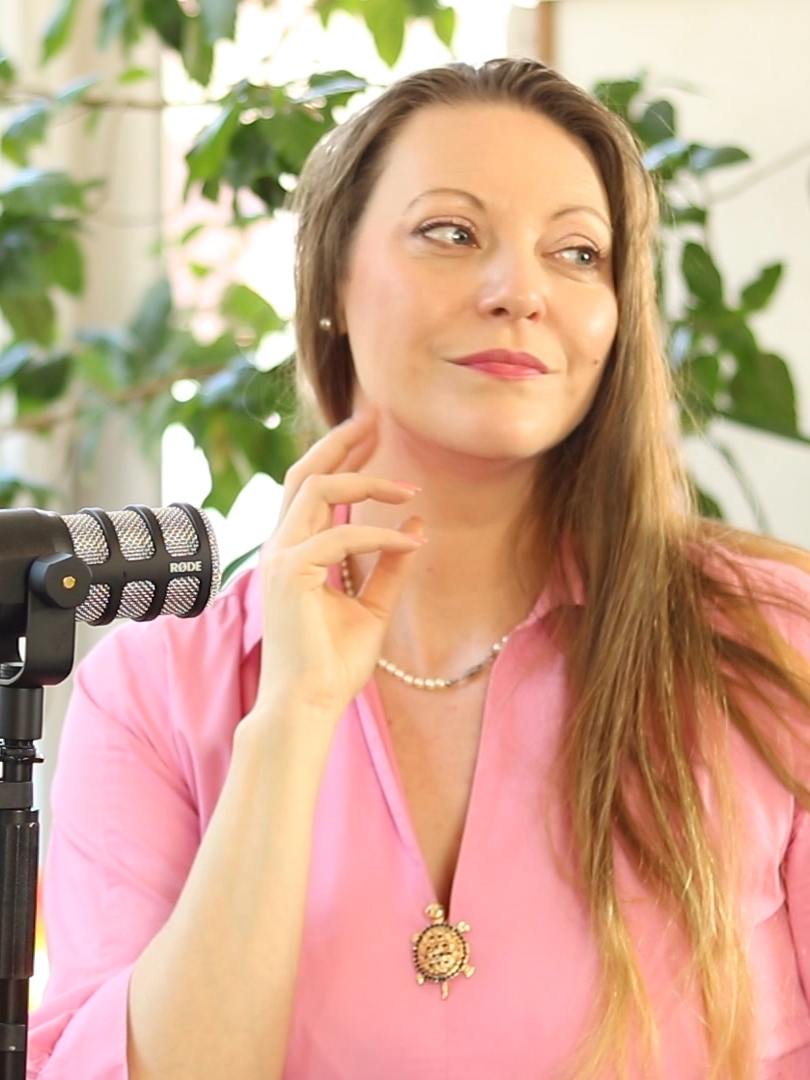
Mell is the founder of the magazine TotUna – Essentia Momentum , an editorial space dedicated to the maturation of consciousness through direct experience and integrative reflection. Her writings do not start from theory, but from real journeys — from the encounter with life in its most fragile and revealing forms.
His interest in traditions such as Advaita Vedanta, Gnosticism, Kabbalah, and anthroposophy is not a comparative one, but an attempt to recognize the same divine thread that runs through different languages. For Mell, creative consciousness is not a concept—it is a living reality, present in all forms of existence, which he explores, writes about, and experiences.
CO-FOUNDER OF THEMEDITATION.ACADEMY

TotUna is not just a magazine. It is a co-creation space.
Submit your article!
If you feel the call to write, share, or contribute your voice, we are here.