
The thread holds me | Meditation Practice #19
This meditation is shorter than the previous ones. And it is silent. It will not take you through a long architecture, it will not ask you to go down many rooms. It will ask you to do one thing: to stop pulling the thread.
The entire edition speaks of a peace that is not conquered, but received. Of an anchor whose point of attachment is not in the depths, but in the heights. This practice does not want to give you that state — because it does not give itself. It only wants to place you in the place where, if you stop looking for it for a moment, it can descend on its own.
You will have one sentence. You will let it repeat itself not as a command, but as a breath. Don't force it. Let it breathe you.
Read it in a warm, slow voice. Let the silences between sentences be as full as the sentences.
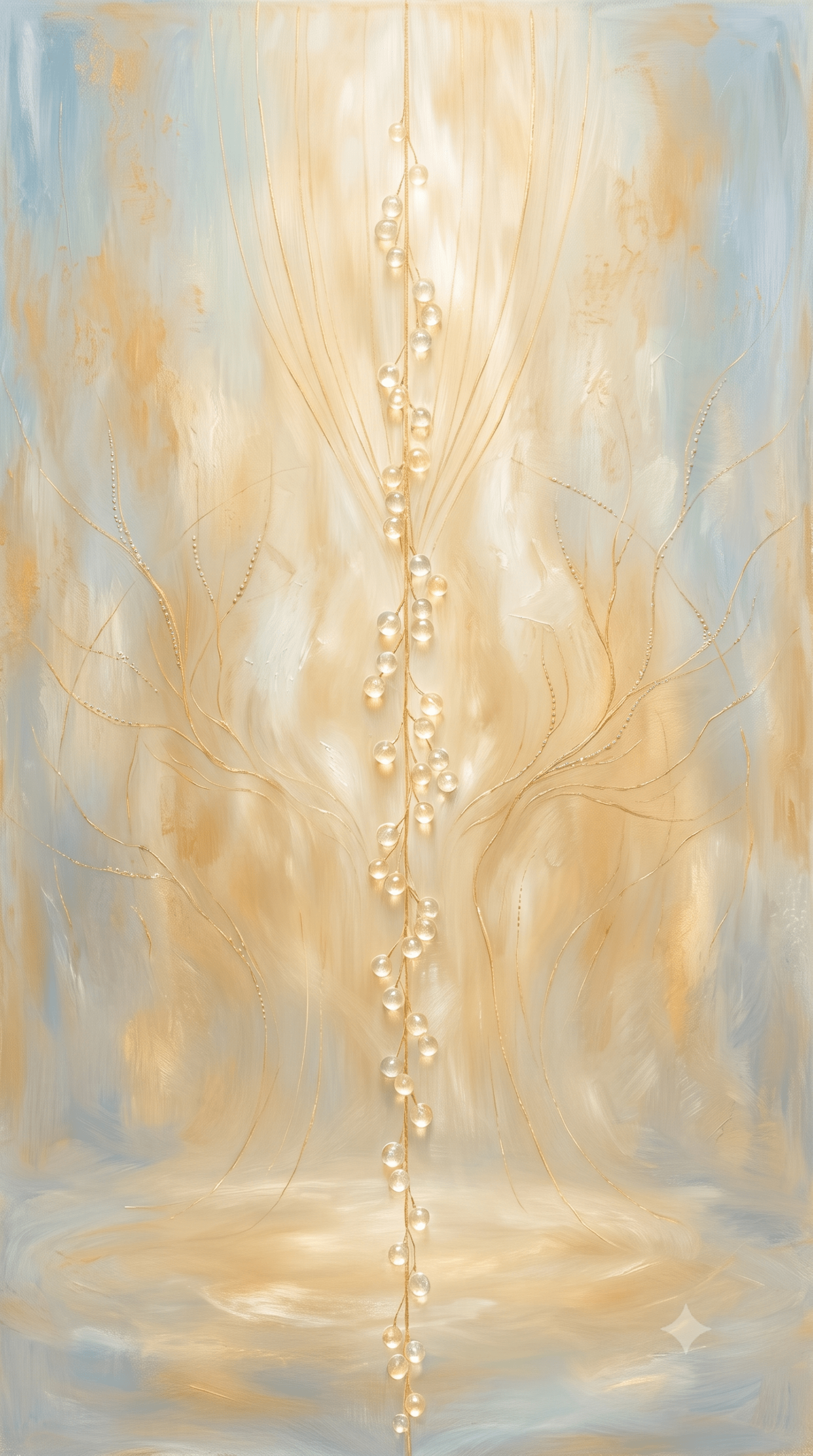
THREAD
Sit down.
Not correct. Just sitting. Let the weight of your body be received by what's holding you down.
You don't hold the body. The Earth holds it.
...
Now let a breath in. Alone. Without holding it in.
And let it come out. Without pushing it.
You don't breathe. You are breathed.
...
Notice, without changing anything, how many threads you are holding on to right now. How many things you are holding tight so they don't fall. How many thoughts you are keeping alive so you don't forget about yourself. How much of the world you think you are holding in your hands.
...
And now, just for a moment, let go of one. Not all of them. Just one. The easiest to let go of. Let go and see: nothing has fallen. The world has held on without you.
...
Now let this phrase come. And let it repeat itself, smoothly, to the rhythm of your breathing: I am not holding the thread. The thread is holding me.
...
(inhales) I'm not holding the thread.
(exhales) The thread is holding me.
...
Don't say it with your head. Let it sink into your chest.
I don't hold the thread. The thread holds me.
...
And if the mind rises again, with a bow, with a care, with a position to take — don't argue with it.
Just ask gently: is this a thread I need to hold? And you will almost always find that it is not. Let it go. And come back. I am not holding the thread. The thread is holding me.
...
Now feel, above your head, the point where your thread rises. Not down, towards the heavy. Up, towards the high.
You are anchored from above. And that is precisely why nothing from below can shake you.
...
Stay here as long as you want. There's nothing more to do. You're being held.
Water clears itself when you stop moving it.
Wait, and let it clear up.
...
When you are ready, don't rush back. Bring only the phrase with you. Let it remain beneath all the other thoughts of the day, like a silent thread that rises: I am not holding the thread. The thread is holding me.
And open your eyes, remaining anchored.
scientific basis
The thread is holding me.
What happens in this practice is not just poetic—it has a precise physiological counterpart.
When you stop “pulling strings” and allow your breathing to become slow and spontaneous, especially the prolonged exhalation, you activate the parasympathetic branch of the autonomic nervous system through the vagus nerve. This is the physiological pathway to the state called rest and digest — the opposite of the fight or flight state that the daily chaos keeps us in. Heart rate slows, its variability increases (a recognized marker of resilience and autonomic balance), and background muscle tension relaxes.
The repetition of a single short phrase acts as an attentional anchor. The mind, which tradition so aptly calls the “restless monkey,” naturally jumps from one thought to another—a phenomenon that neuroscience links to the default mode network, which is active when we ruminate, worry, and construct self-narratives. A rhythmically repeated anchor phrase provides attention with a point of return and diminishes the activity of this network, which subjectively translates into
by decreasing mental noise and by feeling settled.
The act of “letting go” and noticing that nothing is falling apart works at the level of cognitive regulation of anxiety. Much of our chronic tension comes from an overestimation of our own responsibility—the silent belief that everything is up to us. Experientially realizing, in the safety of meditation, that the world holds itself together without our constant control, weakens that hypervigilance and frees up resources that the body was using to “hold everything up.”
And the feeling of being anchored from above is not just an image. Directing attention to the space above the head, combined with a slightly elevated posture and calm breathing, induces a state that research associates with self-transcendence — a temporary attenuation of the boundaries of the self and a sense of connection to something larger. This is not an escape from reality, but a recalibration: we return from it not more empty, but more whole, better able to remain seated in the midst of movement.
Five minutes a day is enough. It's not the quantity that makes the difference, but the consistency of the gesture of reminding yourself, daily, that you are not in control.
meditation practice #19
I don't hold the thread. The thread holds me.
mell
ARTICLE AUTHOR
MELL
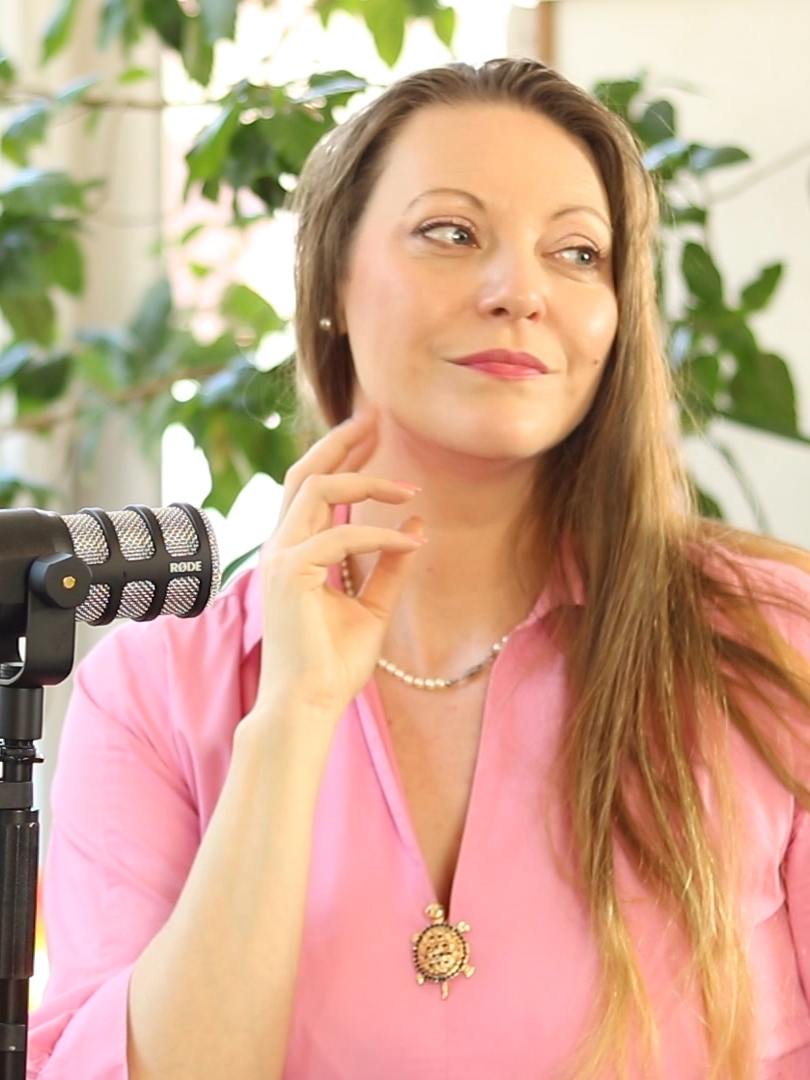
Mell is the founder of the magazine TotUna – Essentia Momentum, an editorial space dedicated to the maturation of consciousness through direct experience and integrative reflection. Her writings do not start from theory, but from real journeys — from encountering life in its most fragile and revealing forms.
His interest in traditions such as Advaita Vedanta, Gnosticism, Kabbalah, and anthroposophy is not a comparative one, but an attempt to recognize the same divine thread that runs through different languages. For Mell, creative consciousness is not a concept—it is a living reality, present in all forms of existence, which he explores, writes about, and experiences.
CO-FOUNDER OF THEMEDITATION.ACADEMY

TotUna is not just a magazine. It is a co-creation space.
Submit your article!
If you feel the call to write, share, or contribute your voice, we are here.