
Fire Breathing in Water – Meditative Practice
There are moments in life when the mind can no longer bear it, the body can no longer hide it, and the soul can no longer postpone it.
There are moments when true power comes not from effort, but from turning, from slowing down, from the simple act of breathing deeply enough to hear your own life. 2026 is such a moment.
2026 is such a moment. A year when fear can no longer be pushed to the sidelines, but must be encountered. A year when the Sacred Feminine – the energy that holds, hears, embraces and heals – once again becomes the space needed to move forward.
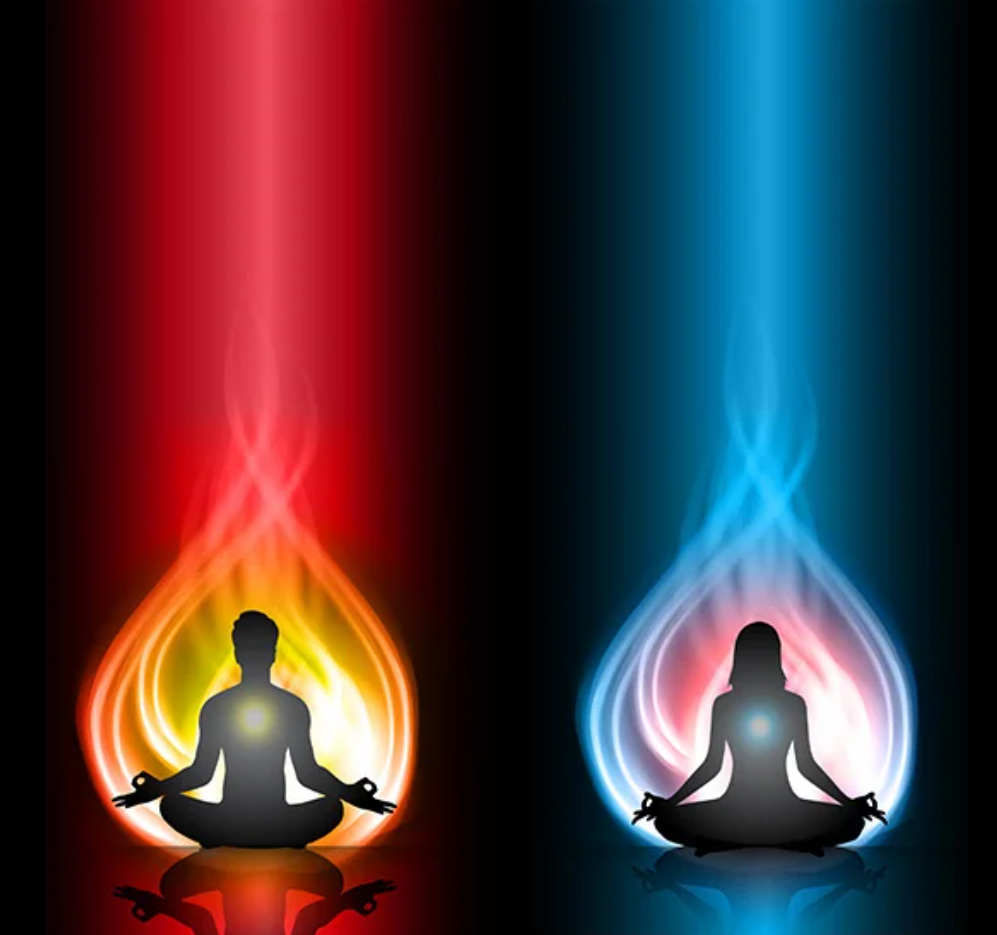
THE FIRE THAT BREATHES IN WATER
The meditation we propose in this edition is not a technical exercise, but an inner ritual. A slow path to the center.
A gentle dialogue with fear.
guided trip
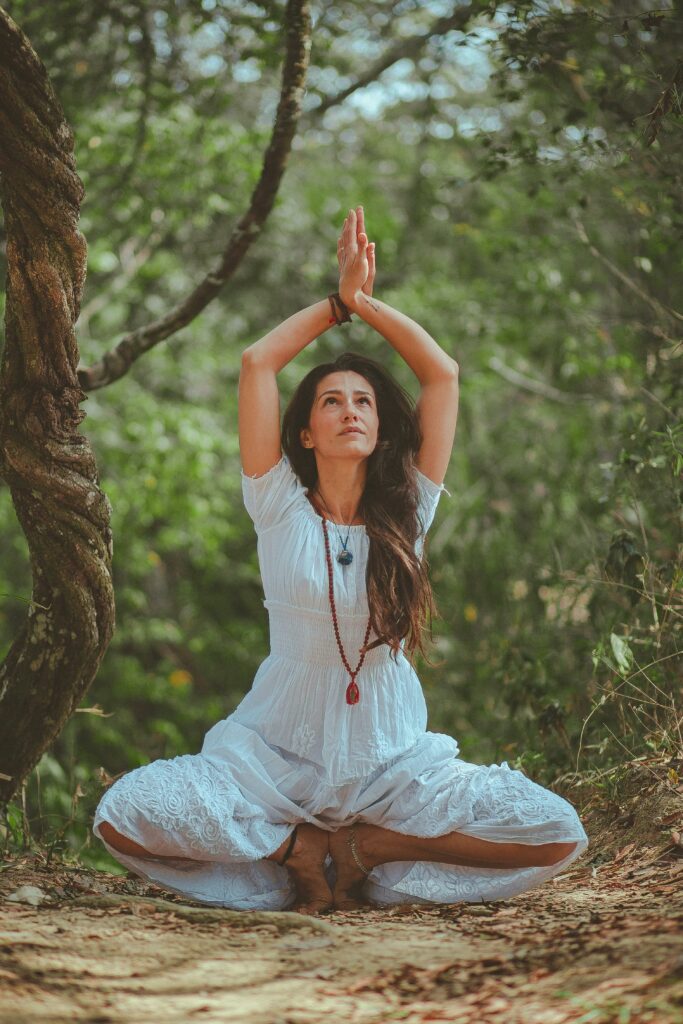
Sit in a position that does not require effort. Don't look for perfect posture.
Seek a posture in which the body can be inhabited, not controlled.
Let your eyes close naturally and allow your breath to flow as it is now, without correcting it, without deepening it, without rushing it.
Just notice the simple fact that you are breathing.
At this point, we're not trying to calm down. and we don't try to get active.
We sit in truth.
Allow your attention to gently move to your chest area.
Where, most of the time, the inner fire is felt in the form of tension, the desire to move, impatience, the impulse to do something.
Don't give this energy a name. Don't interpret it.
Just acknowledge her presence.
This is the fire.
It is not good or bad.
It is the life force that wants to circulate.
Now, without losing touch with the fire,
Let your attention slowly descend into your abdomen, in the pool, in the area that knows how to receive without asking for explanations.
Here is the water.
The space of emotion, of containment, of receptivity.
Don't look for a specific emotion.
If it appears, it's good. If it doesn't show up, that's just as well.

fire
Now we will bring in the breath as a bridge between fire and water.
Inhale through your nose, slowly, mentally counting to four.
Feel how the air brings clarity to your chest area.
Feel the fire, but don't light it.
Hold the air for a brief moment.
It doesn't matter. Just observe.
Exhale through your mouth, more slowly, counting to six or eight, letting your breath descend into your abdomen.
When you exhale, you don't take the fire out of you. You let it be embraced by the water.
I breathe in—the fire becomes conscious.
I exhale — the fire becomes contained.
Continue at your own pace. The breath knows.
Notice how, gradually, the warmth remains, but the tension dissolves.
The fire no longer demands to burn.
The water no longer asks to be extinguished.
They begin to collaborate.
In this space, there is no need to make decisions.
You don't need to understand anything.
It's enough to stay.
If thoughts arise, let them pass like air passes through you without leaving a trace.
Stay for a few breaths in this state of living balance, where movement is present without haste, and clarity is present without effort.
When you feel it's time, bring your attention back to your body, feel the support, feel the weight, feel the presence.
Don't get out of this practice. Just open your eyes.
Fire stays with you. Water stays with you.
The breath will remind them how to stay together.
scientific basis
In recent decades, research in neuroscience, psychophysiology, and somatic psychology has confirmed what contemplative traditions have long suspected: breathing is one of the few physiological functions that can be consciously influenced and which, at the same time, directly regulates the state of the nervous system.
From a scientific perspective, the practice The fire that breathes in water It acts on the autonomic nervous system, the structure that automatically regulates the body's activation and relaxation reactions.
Imbalance occurs when sympathetic activation (fire) remains dominant for long periods, without the possibility of returning to a functional parasympathetic state, which leads, over time, to exhaustion, irritability, anxiety, or emotional blockage.
Fire and water, in neurophysiological language
At a biological level, the two energies symbolically described in practice correspond to well-documented processes:
- fire → activation of the sympathetic nervous system
- –increased alertness
- – energy mobilization
- – accelerated heart rate
- – action orientation
– the ability to restore and adjust
Water → activation of the parasympathetic nervous system
- relaxation
- emotional integration
- slowing of the heart rate
RThe breath: introducing the element air
Slow, conscious breathing with prolonged exhalation — as proposed in this practice — has a direct effect on the vagus nerve, the main communication pathway between the brain, heart, and internal organs.
Studies show that:
- Attention brought into the body amplifies the integration of interoceptive signals
- Exhalation longer than inspiration favors parasympathetic activation
- the short, conscious pause between inspiration and expiration increases the ability to self-regulate
Thus, air is not just a missing symbolic element, but becomes the physiological mediator that allows fire to be felt without becoming reactive, and water to be accessed without withdrawal or numbness.
Quantifiable effects of the practice
Applied consistently, this breathing and awareness technique produces measurable effects:
- increased heart rate variability (HRV) — indicator of nervous system resilience
- decreased background activation level (hyperarousal)
- improving the ability to tolerate intense emotions without impulsive reaction
- increasing cognitive clarity in stressful situations
- regulation of the stress–recovery axis
These effects are not the result of mental suggestion, but of direct modification of physiological parameters through breathing and conscious attention.
An essential aspect is that the practice does not aim to induce a state of forced relaxation. From a scientific point of view, artificial relaxation can mask sympathetic activation without integrating it, leading to dissociation or emotional repression.
Instead, this meditation allows activation to be present, introduces gradual regulation, and supports integration, not suppression. In other words, the fire is not extinguished, but recalibrated.
From the perspective of contemporary neuroscience, the Fire Breathing in Water practice functions as a psychophysiological self-regulation mechanism, in which breathing becomes the instrument through which the energies of activation and containment are brought into a functional dialogue. What is symbolically described as a balance between fire and water translates, at a biological level, into a coherence between brain, heart and body, a state associated with clarity, emotional stability and an increased capacity for conscious choice.
meditation practice #14
You just have to be.
mell
That's just life.
It is precisely the light.
ARTICLE AUTHOR
MELL
Mell is the founder of the magazine TotUna – Momentum Essence an editorial space dedicated to the exploration of consciousness, inner transformation and the reconnecting of man with his profound essence. Its path is not built on the idea of spiritual authority, but on lived experience, continuous introspection and the living integration of traditions such as Vedanta, Kaballah, theosophy and Christian spirituality, viewed as different languages of the same truth.
His writings and testimonies are born from moments of profound lucidity, from a direct encounter with human fragility and from a living relationship with the mystery of existence. For Mell, consciousness is not a concept, but a space of responsibility and love, and transformation is not an ideal to be achieved, but a process of revealing what is already whole.
Through the magazine, awareness programs, and dialogue spaces created around The Meditation Academy , Mell supports a form of mature spirituality, anchored in real life, that does not separate man from the divine, but places them in a relationship of natural continuity.
CO-FOUNDER OF THEMEDITATION.ACADEMY

TotUna is not just a magazine. It is a co-creation space.
Submit your article!
If you feel the call to write, share, or contribute your voice, we are here.