

Waiting for Permission | Voice of the Self #20 | Alexandra Șchianu
There are times when the hardest threshold is not the one outside, but the one inside — the moment when you stop waiting for someone to tell you you can. In this issue dedicated to the Master, Alexandra Șchianu leads us, with her gentleness and rigor as a psychotherapist, precisely to this threshold: the need for permission, the way it is learned early, and the discovery, often painful, that the authority we expect will never come from the outside in the form we seek.
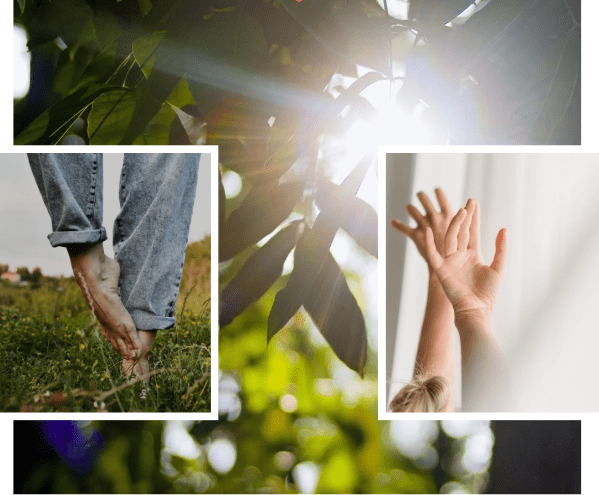
It is, without the article ever naming it, the very theme of the entire issue — the external master we project outward out of insecurity, and the recognition that the one who can finally give permission to live your own choice is yourself. Alexandra writes about this not from theory, but from the office and from her own journey, with that image that stays with you long after you've closed the page: the root that already knows the direction and is just waiting to be allowed to move.
The moment you stop waiting for permission
There's something you've been wanting to do for a long time, not necessarily something big or dramatic, maybe it's so familiar in your mind that you don't even feel it as a dream anymore, but as a constant presence, a thought that comes back periodically and that you let pass every time with the same set of well-trained reasons: it's not the right time, I'm not ready, I need more clarity, more time, or maybe the approval of someone who matters.
And meanwhile life goes on, and that thing remains there, unstarted, unspoken, unlived not because you don't want it, but because you're waiting for something to tell you that you can, a voice from outside that says: now you're ready, now you're allowed. And that voice is late, or doesn't come at all, or comes and still isn't enough.
A tree doesn't wait for permission to grow. But it doesn't grow anyway, it grows from the root, at its own pace, with the seasons that pass through it. And perhaps this is the image that is most often missing when we talk about the courage to start: not the spectacular leap, but the root that already knows the direction and that is just waiting to be allowed to move.
Where does it come from? the need for permission
Sometimes the need for permission is learned early, perhaps in a place where permission always came from outside and mattered too much, where you received, directly or subtly, the message that you didn't know enough yet to decide for yourself, that you still had to wait, to grow, to prove yourself. Or maybe you grew up in a place where guidance was lacking and you were left alone too early with questions that a child shouldn't have to figure out on their own: is what I feel okay, is what I want okay, can I trust myself?
Two very different experiences can leave behind the same doubt: maybe what I feel is not enough to guide me, maybe I need someone outside to confirm that I am allowed. And then, later, authority can take many forms: a parent, a boss, a partner, anyone we consider more prepared than us, not because we are inferior to them, but because somewhere inside us still lives that old safety system that says: before you go, check if you are allowed.
What you're feeling is not a character flaw. It's a signal that comes from deep down, from the place where your root learned to survive in a certain way and now needs not more survival, but more space to grow.

What does waiting look like?
Waiting for permission doesn't always look like obvious procrastination, sometimes it looks like prudence, like maturity, like responsibility. It looks like preparation that never ends: one more course, one more experience, a little more time to consolidate what you already know, like a tree that accumulates nutrients endlessly without daring to put out a shoot, ready for a spring that it always postpones.
Sometimes it looks like the need to ask what would you do, do you think I'm ready, do you think I can? not because you want a different perspective, but because you need the other person's answer to calm your doubt. And if ten people say yes, but one important one says I don't know, that I don't know can weigh more than all the other answers combined.
And there's also the waiting for the perfect circumstance, I'll do this when the relationship is more stable, when I'm more sure of myself, when life calms down, but life never settles completely, and sometimes years pass and that thing remains in us as a possible life that we didn't try, like a branch that never got to bloom because it waited for a season that didn't come exactly as it had imagined.
The permission you are expecting does not exist in the form you are looking for.
No one can guarantee that you will succeed, that you will not make a mistake, that the choice will be the right one, and perhaps this is precisely where waiting must give way to choice, not when fear disappears, not when you have all the answers, but when you can say: I don't know exactly how it will end, but I choose to take a step.
Asking for help, entering into a process, choosing not to do it alone is not weakness, it is one of the most responsible things you can do for yourself. The difference is subtle but important: it is one thing to ask for someone's perspective and another to give them the power to decide whether or not you are allowed to live your own choice. Maturity does not mean you no longer need others, it means being able to listen to their voices without them replacing yours.
The root doesn't know what the tree will look like before it grows. It only knows that it needs space and direction. And that spring, no matter how late, will come.
What I see most often and what I have experienced
There is a pattern that I frequently encounter in the office and that, every time, stops me a little, not because it's unusual, but because it's so human and so painful at the same time.
People who know. Who have known for a long time what they need, what they want, what they want to change, and who have known, in fact, for years. They didn't lack the information, they didn't lack the ability to see clearly. They lacked the permission given by someone, expected from somewhere, to tell them that it's okay to choose for themselves, that their needs are legitimate enough to deserve a place in their own lives.
And the hardest moment is not when they realize what they want. It's when they realize that they always knew and that they were waiting, all this time, for something that hasn't come and won't come from outside.
I know what this looks like from the inside. When I chose to combine psychotherapy with regression therapy, I stepped into a space where the two worlds rarely coexist—one working with scientific rigor and clinical structure, the other with depth and what can’t always be measured or explained immediately. In each, I was, in some way, a little outside the expected mold, a psychotherapist certified in less-charted territory, and a regression therapist with a solid clinical background. I didn’t quite belong in one place, and for a while I waited, without realizing that I was waiting for confirmation that this intersection was valid, that it made sense, that I was allowed to be in it.
The confirmation didn't come from outside. It came from practice, from the people I worked with, from the moments when I saw that this very unusual combination could get me to places where neither of the two separate approaches would have gotten me to on their own. And then I understood that sometimes permission doesn't precede the choice but follows it, and it comes from a completely different direction than you expected.
Because that permission, to be you, to choose for yourself, to occupy the space that belongs to you, was never someone else's to give you.
The first step is not the biggest
Maybe it's a big change for you, a new career path, a move, the end or beginning of a relationship. But maybe it's something smaller, a conversation you've been putting off for months, a project you started and abandoned three times, a wish you didn't say because you didn't know if you were allowed to want it, a no you're still preparing, or maybe a yes.
Whatever it is for you, and you know what it is, even if you don't want to look at it directly, it's worth asking yourself: what am I really waiting for before I take the plunge? More information, more time, or someone's permission to trust what I already know about myself?
Maybe someone will tell you that you can, and it's nice when that happens. But sometimes all the confirmations in the world aren't enough, because the permission you seek externally becomes, at some point, an internal choice. What you feel is a signal, not a defect. And that signal knows the way, it knew it long ago. It just needs you to finally give it permission to show itself.
You will be exactly as ready as you are now. There is only the moment when you choose to take the first step with all the part of you that is still hesitant.
still recommends
The One Talk Podcast
Why is it hard for us to be vulnerable in relationships? The psychology of intimacy in authentic relationships with emotional vulnerability with Alexandra Șchianu
voice of self #20
You will be just as prepared as you are now.
alexandra schianu
ARTICLE AUTHOR
ALEXANDRA SCHIANU
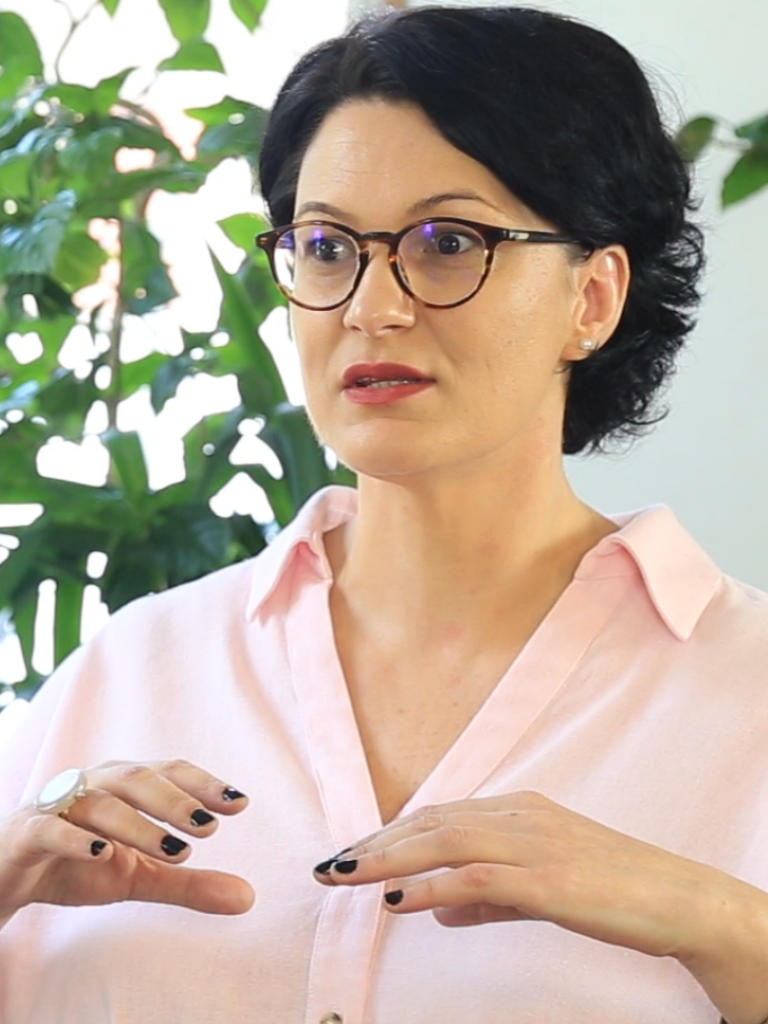
Alexandra Șchianu is a psychotherapist and facilitator of therapeutic processes, working at the rare intersection between clinical psychotherapy and regression therapy — two worlds that she weaves together with the rigor of one and the depth of the other. In the Voice of the Self section, she brings the warm voice of someone writing from the office, anchored in the direct experience of meeting people on the verge of their own choices.
In the spirit of this edition, Alexandra embodies a discreet way of being a master: not the one who gives permissions, but the one who helps the person discover that permission was never someone else's to give. She does not lead to an answer; she holds the space in which the other recognizes for himself the direction that his root knew long ago.
psychotherapist

TotUna is not just a magazine. It is a co-creation space.
Submit your article!
If you feel the call to write, share, or contribute your voice, we are here.




