

The longing for one's own suffering | The Voice of the Self #21 | Alexandra Șchianu
Alexandra Șchianu takes us to the quietest threshold of any transformation — the first contact with who we become, when who we were no longer fits us.

Longing for our own suffering: why is it so hard for us to be well?
About the fear of change, mourning the old self, and what happens when we are no longer just who we were
There is a silent house inside us that we sometimes live in for so long that we end up mistaking it for ourselves. It has familiar rooms, even if they are not necessarily bright, corners where we know where to retreat, and windows through which we have learned to look at the world. It can be the house of sadness, but it is not always just sadness. For some it can be anxiety, for others guilt, the need for control, hyper-responsibility, anger, or the feeling that they always have to be strong. Sometimes it is even the role of the one who repairs, who saves, who leads, who resists.
There are states and ways of functioning that, at some point, helped us get through something and which, precisely because they have been present for so long, end up sticking to the image we have of ourselves.
That's why there's a paradox that we rarely talk about: sometimes we're not just afraid of suffering again. We're also afraid that if we stop suffering, we won't know who we are anymore.
“I’m better, but I cling to the sadness as if it’s me. It’s hard to see myself in the new way.” It’s a confession that may seem contradictory. If we wanted to be better so badly, why would there be a part of us that turns to what hurt us?
Because the state we've lived in for a long time becomes familiar, and the familiar has a huge power over us. Even when it doesn't do us any good, we know it. We know how it works. We know how to move within it.
When what protected us begins to resemble who we are
We don't usually choose to suffer. But we can come to organize our lives around suffering. Sadness can become one of the ways we feel real. Anxiety can keep us constantly on guard and make us believe that if we anticipate enough, we can prevent what might hurt us.
Guilt can make us feel like we are good people because we care about others. Anger can be our way of protecting ourselves from helplessness. Control can become a form of safety.
And responsibility taken to the extreme can end up giving us a sense of value: if I take care of everything, then I am needed.
The problem arises when what was once a way of coping becomes a definition of who we are. We no longer say, “I have a lot of anxiety,” but “I am an anxious person.” We no longer say, “I am going through a sad time,” but “I am sad.” We no longer say, “I have learned to take care of others,” but “I am the one who takes care of everything.”
The boundary between protection mechanism and identity begins to disappear.
When you start to feel better and something inside you gets scared
And when things start to change, deep confusion arises.
Maybe you wake up one morning and notice that your thoughts aren't racing as fast. That a situation that used to upset you no longer has the same power. That you can say "no" without collapsing under guilt. That you feel like creating, playing, discovering, getting closer to people, or simply being.
And instead of just relief, something much harder to explain may also appear: a feeling of emptiness, insecurity, or even a subtle desire to return to what you knew. Not because you want to suffer.
But because the new does not yet have the same shape as the old.
The Old Self had a logic. It knew what to do. It knew how to defend itself, how to anticipate, how to resist. Maybe it even knew how to receive love. The New Self, on the other hand, doesn't yet have an instruction manual.
He doesn't always know how to be good without feeling guilty. He doesn't know how to receive without giving something in return. He doesn't know how to be strong without constantly being in a fight.
And perhaps this is where the real magic begins: not when the old disappears, but during the period when the old no longer works the same, and the new still doesn't feel like yours.
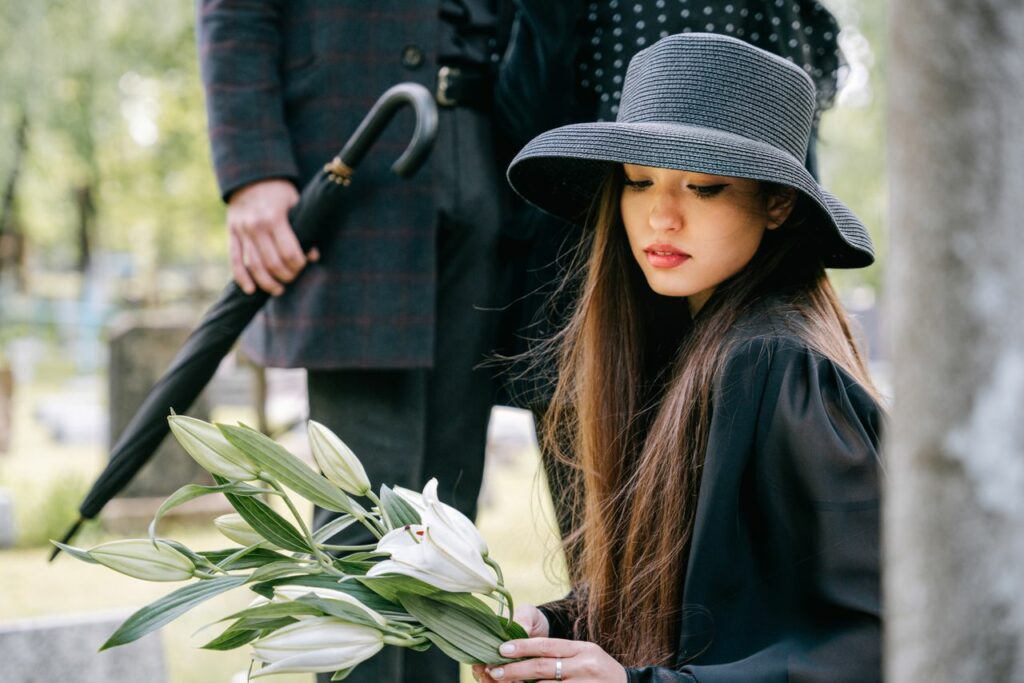
Mourning the person you were
There is a mourning that occurs when we transform.
We don't just mourn what we lost. Sometimes we also mourn the person we were. The person who learned to endure, who cared about others, who tried to make amends, who carried things that were perhaps too heavy for her.
And somewhere deep down, the question arises: if I leave this behind, does it mean I'm abandoning the part of me that needed all these strategies?
If I'm no longer sad, does that mean that what I've experienced no longer matters? If I'm no longer the one suffering, who am I?
Perhaps this is where we need a different perspective on change. We don't have to kill the old version of ourselves in order to become someone else. We don't have to view the past as an enemy. We can understand why we became what we became and recognize that, at some point, those adaptations made sense. Sometimes what ends up being transformed is not the part that tried to protect us, but the place it occupies in the present.
If I let go of pain, what is left of me?
Here things get even more subtle. Sometimes we're not just afraid of losing the pain. We're afraid of losing what grew inside us with it. Maybe we became sensitive because we felt a lot. Deep because we had to understand complicated things. Creative because our imagination gave us a space to breathe.
Intuitive because we needed to quickly notice what was happening around us.
And then a very human fear arises: if I let go of suffering, won't I lose these parts of myself too? If I'm no longer sad, am I still deep? If I'm no longer anxious, am I still mindful? If I don't have to fight, am I still strong? Maybe sadness didn't create these things. Maybe it was just the ground in which they grew. We can keep sensitivity without keeping suffering, depth without sadness, intuition without hypervigilance, creativity without chaos. We can keep the fire going without needing a fire.
Maybe the adult is not the man who carries everything
This transition is also related to the way we learned to view adulthood. For many of us, the adult was the responsible person, the one who works, pays, solves, leads, doesn't complain, and knows what he's doing. If this is the image we've received, it's no wonder that sometimes it's hard for us to truly want to be adults.
Who would want to enter a world that seems built only of obligations?
But maybe there is another form of maturity. One in which responsibility does not mean carrying everything, but choosing what is worth carrying. In which you can ask for help without feeling weak. In which you can say “no” without constructing an endless justification. In which you can not know, change your mind, play, be curious and do things that have no immediate utility.
Maybe maturity is not the weight we can carry, but the freedom with which we choose what we carry.
Stop being small in front of those who made you feel small.
As we transform, we sometimes encounter old authorities. People in front of whom we felt small, rules that we internalized, expectations that we confused with our own desires.
Suddenly, we can look at them differently. Maybe even from a different height. And this new position can be almost dizzying at first. We can wonder if it's real, if we're allowed to take up so much space, if we're exaggerating. Maybe we don't have to become bigger than others. We just have to stop shrinking ourselves to fit into the image that others have of us.
When you have nothing left to prove
In this process, there can also be a need to demonstrate. To show that we can. To succeed where someone made us feel incapable. To fight, to hold on, to resist. And there is something deeply human about this need. There is a real satisfaction in the moment when we can say, “Look, I did it.” But there is a difference between demonstrated power and assumed power.
The first needs a witness. The second begins to exist even when no one is looking.
At some point, the question may arise: Do I still need someone to see me to know I can do it?
Perhaps this is one of the most important steps in maturing: to be able to fight when needed, but to no longer need to fight to know who we are.
What if there's a part of you that you don't want to tame?
Maybe there's a part of us that doesn't want to be completely domesticated. A creative, instinctual, curious, erotic, mysterious, a little wild part. A part that doesn't fit perfectly into the rules of others and that can start to make itself heard precisely when we're no longer just busy with survival.
Maybe this part scares us because it's new. But maybe we don't need to turn it into something more "good" just to feel safe.
Perhaps becoming is not about becoming more like what is expected of us, but about becoming whole enough that we can make room for those parts of ourselves that have long been kept on the sidelines.
We don't leave ourselves.
So maybe it's not about sadness after all. Or not just about sadness. It's about familiarity, about loyalty, about the fear of the unknown, about the roles we've played for so long that we've come to confuse them with ourselves. It's about the difficulty of letting go of an identity that once gave us meaning, even if today it's become too narrow.
Maybe freedom doesn't begin when we no longer have any hurt, fear, or sadness. Maybe it begins when they no longer have to organize our entire lives.
When we can be deep without being sad. Sensitive without being permanently vulnerable. Responsible without carrying everything. Strong without always being in a fight. Creative without needing chaos. And alive without needing suffering as proof that we exist.
Maybe the question isn't "How do I get rid of the person I was?"
Perhaps it is much gentler and, at the same time, much more difficult: What of who I was is worth coming with me?
Maybe we don't need to abandon ourselves to transform. Maybe we just need to learn, slowly, to leave the places where we survived without forgetting who we were there. And discover that there is life beyond what has hurt us.
still recommends
The One Talk Podcast
Why are we ashamed of who we are? The psychology of intimacy in authentic relationships with emotional vulnerability with Alexandra Șchianu
voice of self #21
Maybe we don't need to abandon ourselves to transform.
alexandra schianu
ARTICLE AUTHOR
ALEXANDRA SCHIANU
Alexandra is a psychologist and facilitator of therapeutic processes, accompanying people in their encounter with their own depths. She writes from her office, where theory melts into living encounter, and words are born from what has been experienced, not just thought.
In the column Voice of the Self, she gives voice to those inner movements that we often feel without being able to name them — and puts them into the light with a delicacy that doesn't rush anyone.
psychotherapist

TotUna is not just a magazine. It is a co-creation space.
Submit your article!
If you feel the call to write, share, or contribute your voice, we are here.




