

The moment I chose to stay | The Voice of the Self TotUna 17 | Alexandra Șchianu
There is a voice within us that knows. Not the voice that analyzes, compares, and draws conclusions—but the deeper, quieter one that speaks rarely and only when we make room for it. The voice of Self never shouts. It whispers. And that is precisely why it is so easy to miss it—in the noise of the days, in the routine of relationships, in the comfort of what is good enough not to question.
In this edition, Alexandra Șchianu explores one of the most subtle and common ways we lose ourselves — not in major crises, not in obvious betrayals, but in the accumulated silence of all the moments when we chose to be safe instead of present.

The moment I chose to stay
Maybe you've ever felt this, being next to someone and at the same time feeling alone. Not because he or she isn't there, not because there's no care or affection, but because something harder to name is missing, something you don't know exactly how to ask for and aren't even sure you have the right to want. And then you shut up, and the day goes by, and things go on.
Many people live in this silence for years, not because the relationship is bad, but because it's good enough that you don't question it and incomplete enough that you feel, deep down, that something is wrong. Not with the other person, not with you, but with the way you ended up being together without really choosing it.

There is a difference between staying and choosing to stay. And it feels in the body, even if you can't name it.
You stay out of habit, out of fear, out of the feeling that maybe it's too late to change something or that it's not worth the trouble, that so many years have passed and what's the point, that the other person isn't bad, that you're probably asking for too much, that maybe this is what an adult relationship looks like and you just didn't understand it. You stay and keep quiet, and you adapt, and with each adaptation you leave behind a small piece of yourself, so small that it's not felt at the moment, but which accumulates, over time, in a fatigue that you can't explain.
Choosing to stay is something else. It doesn't mean that everything is fine or that nothing hurts. It means looking with open eyes at what is, not what could be, not what once was, and saying, consciously, with all the weight of the word: I want this, and I choose to build this, with everything I know today about myself and about us.
They are two completely different states. And the difference between them is not visible to anyone from the outside, but you feel it. In the way you breathe when you get home. In the way you wake up in the morning. In the way, sometimes, you look in the mirror and you don't know exactly who the person is there.
I remember what someone said to me, after months of searching for the right words.
"It's a good relationship. I have nothing to complain about. And yet it's not mine." He added, after a pause: "It's like living in a house I didn't choose. It's comfortable, but it's not mine."
I spent a lot of time with these phrases, because there was something in them that I recognize in many people who end up talking openly about their relationships, not the drama, not the betrayal, not the obvious conflict, but the very absence of it. The absence of a moment when you truly said yes, that's what I choose. And in place of that moment, a long string of days where things moved forward, and you moved with them.
Maybe you've found yourself in this before. Maybe you're finding yourself in this right now.
It's no one's fault that we get there. But it's our responsibility to recognize when it happens.
No one enters a relationship with the intention of gradually disappearing from it. But life happens, pressures come, children come, fatigue and routine come and all the little compromises that seem reasonable at the moment, and without realizing it, we end up being more present in the agenda than in the relationship. More present in the roles than in ourselves.
And then intimacy becomes something we remember having once, or something we think others have and it eludes us, we don't know exactly why.
Intimacy doesn't disappear because of big conflicts. It disappears silently, little by little, from all the moments when we chose to be safe instead of present.
Of all the dates you felt something and didn't say. Of all the evenings you were tired not from work, but from the effort to look good. Of all the mornings you chose not to open a conversation because you didn't know how it would end.
And the other person feels it even if they don't say anything, even if you're not even aware that it's happening. Distance doesn't come from arguments, but from the silence in which everyone is left with what they're thinking and no one dares to really ask: how are you, really?
To choose means to come back. Not once, but as many times as needed.
And before all this, the choice is made with yourself, in that moment of stopping when you honestly ask yourself: what do I really want? And am I really still here?
Not because you have answers. But because the question itself is an act of presence. And presence towards yourself, towards the other, is the only place from which something real can begin.
On May 16 , during the event Intimacy in Relationships · Woman–Man: Unspoken Aspects, we will be in exactly this space, of the questions that matter, of the unspoken things, of what it means to be truly present in a relationship. If anything you have read has touched you, perhaps that place is meant for you too.
You can't truly be with someone if you're not, first, truly you.
still recommends
The One Talk Podcast
Why is it hard for us to be vulnerable in relationships? The psychology of intimacy in authentic relationships with emotional vulnerability with Alexandra Șchianu
voice of self #17
Transitions never look the way we imagine when we experience them.
alexandra schianu
ARTICLE AUTHOR
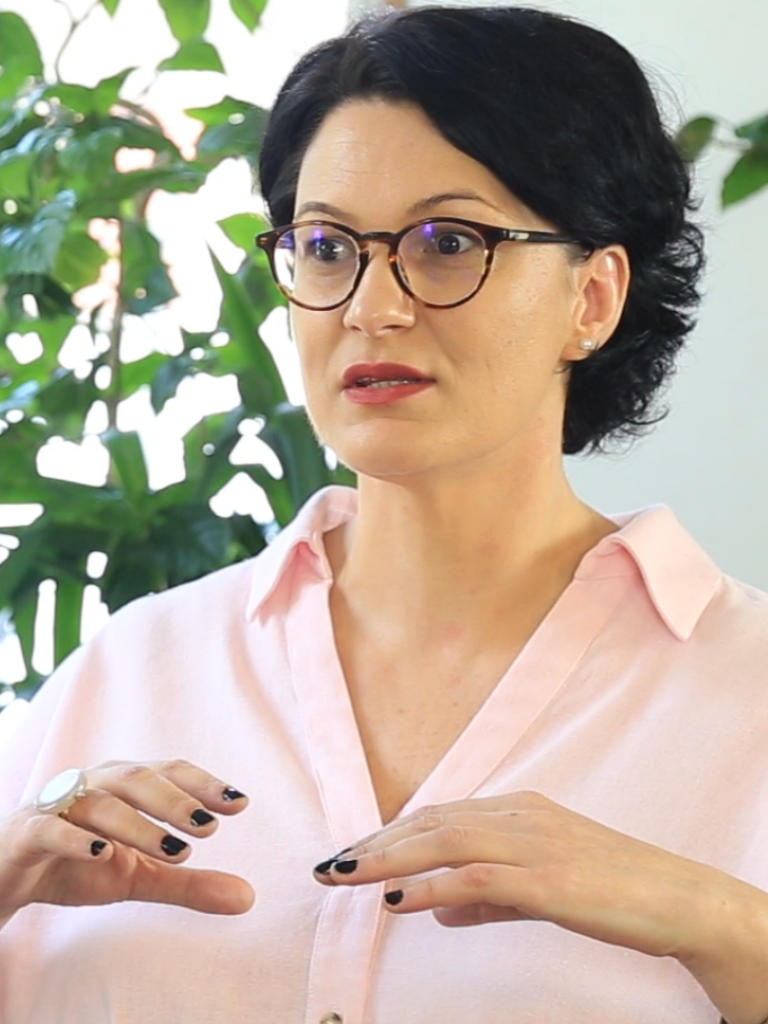
ALEXANDRA SCHIANU
Alexandra Șchianu is a psychologist and facilitator of therapeutic processes, dedicated to exploring the space between what we consciously choose and what we experience without truly choosing.
In his practice, he works with people in the midst of difficult questions about relationships, presence, and belonging to the self—those moments when the difference between staying and choosing to stay can no longer be ignored.
His professional interest focuses on intimacy as an inner practice—not as a state that emerges in relationships, but as a capacity that is first cultivated in relationship with oneself. His writings combine psychological rigor with a deeply human sensitivity, inviting a kind of courage that is not about having answers, but about remaining present with questions until something real can be born from them.
psychotherapist

TotUna is not just a magazine. It is a co-creation space.
Submit your article!
If you feel the call to write, share, or contribute your voice, we are here.




