

Sakura, Japan — Initiatory Journeys – TotUna 18
Initiatory Journeys is the section where, in each edition, we choose a destination not for its touristic beauty, but for what the place itself does in the being of the one who goes to meet it. There are points on Earth where the process of self-knowledge is supported by the very energy of the place — places where the questions you have been carrying with you for weeks or years suddenly find answers that you have not forced. These places are not visited. They are made on a pilgrimage.
For this edition about the sovereign child, the chosen destination is one where the entire civilization has made looking into a spiritual act. And where, for two weeks a year, the cherry trees bloom.
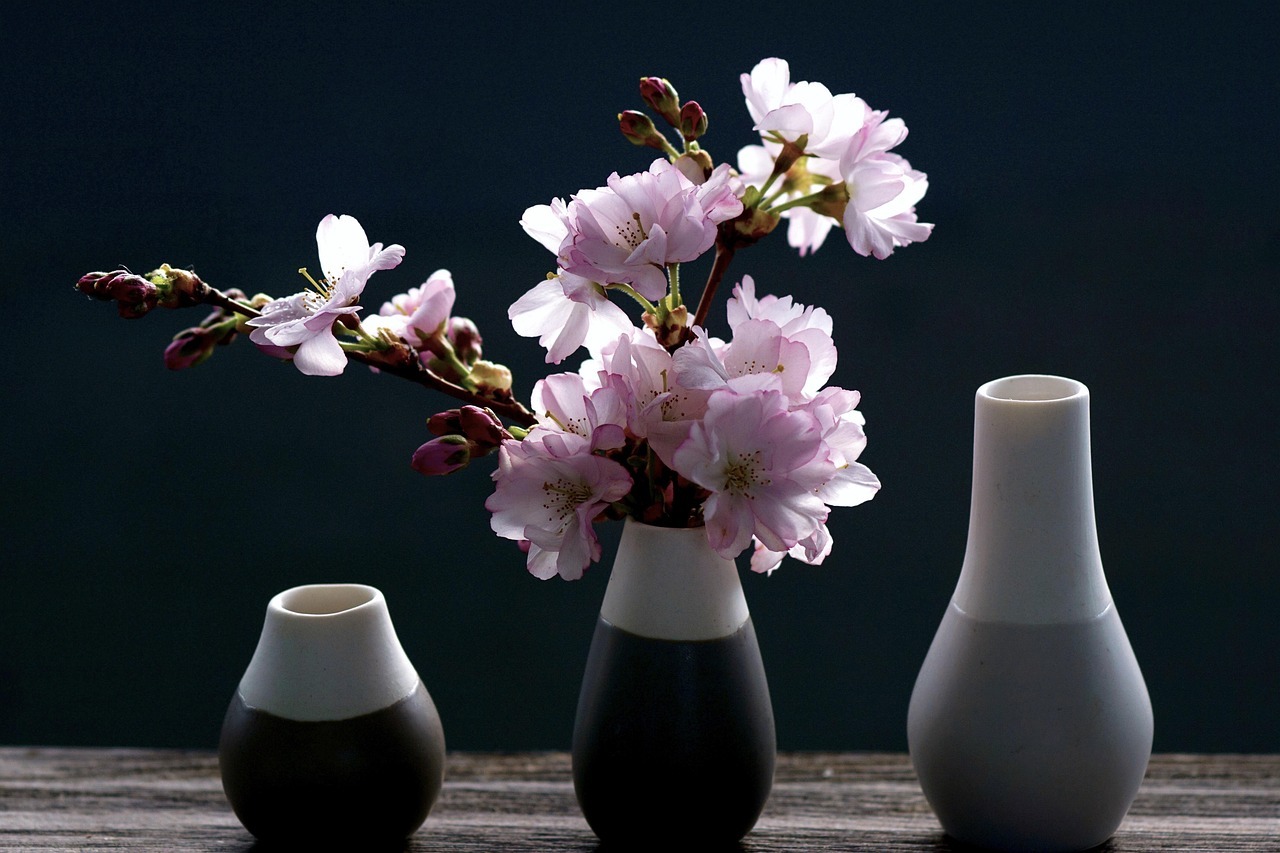
Sakura Japan as a pilgrimage under the cherry trees
Every year, somewhere between late March and early April, something extraordinary happens in Japan. The cherry blossoms begin to bloom.
It is not a metaphor. It is a civilizational event. All Japanese people, from fishermen and farmers to corporate executives in Tokyo, watch, with an attention that other cultures reserve for rare astronomical phenomena, the flowering front — sakura zensen — that climbs, week after week, from the southern island of Kyushu northward through Honshu to Hokkaido. Sakura weather becomes almost a weather forecast. Families reserve their seats under specific cherry trees in specific parks months in advance. Companies organize hanami (literally: "flower viewing") as a team activity. And, fundamentally, it is not about beauty. It is about passing.
The cherry blossom only blooms for a few days a year. After that, it falls, no matter how glorious the tree. The Japanese don't look at the cherry blossoms in bloom like we would—admiring and moving on. They look at them knowing that in five days the blossoms will fall.
Japan – The Sacred Land
This undivided awareness—the presence that does not forget impermanence—is, in its depth, the essence of all Japanese culture. It has a name: mono no aware—the tenderness of the passing of things. And it is, in the philosophy of the sovereign child that this edition explores, one of the purest forms of recognition.
All civilizations have created rituals through which humans reconnect with the sacred. But very few have made the act of looking — simply looking, without doing anything else — a central act of their spirituality. Japan has.
In Japanese traditions—Shintō, Zen Buddhism, the tea way, ikebana, ritual gardening—there is a fundamental assumption: attentive presence in front of a certain thing transforms the beholder more than any action could. Kyoto temples are built to be looked at, not explained. Zen gardens are arranged to be contemplated, not interpreted. And cherry blossoms are there to stop the gaze—for a few days—so completely that the adult beholder becomes, without realizing it, the child who came into the world.
This type of spirituality is, I think, exactly what the reader of our magazine is looking for who feels like taking a journey into himself. Not a journey with learned prayers, not with formal meditations, not with complicated instructions. A journey where you don't have to do anything. Just look at the cherry trees. And let yourself be looked at by them.
There are five-year-old Japanese children who, on their first experience of hanami, sit for hours under a cherry tree without getting bored. There are eighty-year-old grandparents who, on their eightieth spring, cry under the same cherry tree. And between child and old man, the gaze is the same. This is, in depth, what Japan can offer you in two weeks in April — the return of your gaze to its childlike state. And through that gaze, the recognition of the sovereign child that you still carry, intact, beneath the layers of adult life.
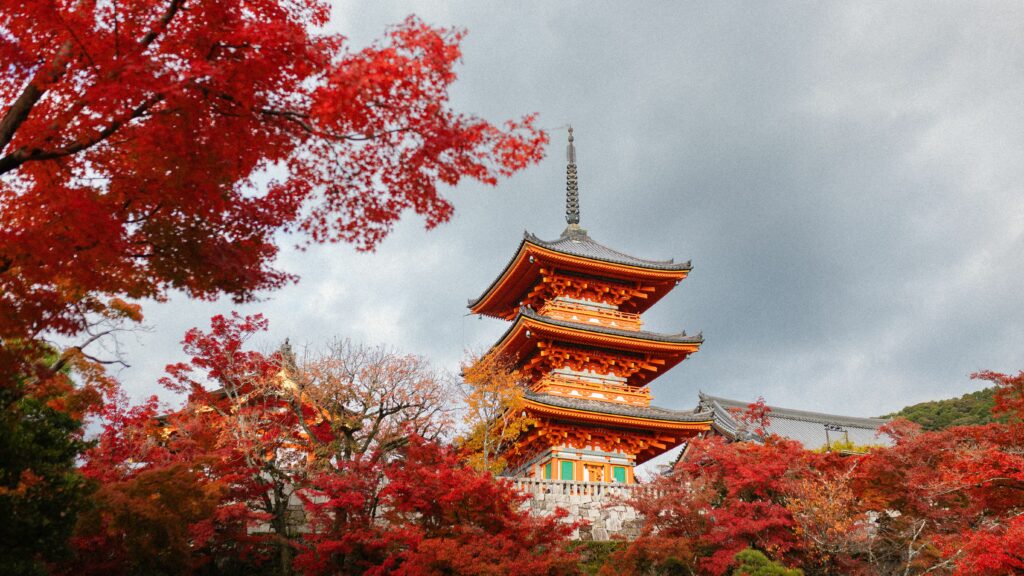
Kyoto
Japan, during cherry blossom season, is like a room with a hundred doors. Here are a few that a serious traveler shouldn't miss.
Kyoto is undoubtedly the heart of the destination. It was the capital of Japan for a thousand years (794-1868), and every corner of the city still carries this charge. For cherry blossoms, the essential places are:
Tetsugaku no Michi — Philosopher's Path. A two-kilometer path along a canal, lined with hundreds of cherry trees. It was named after the philosopher Nishida Kitaro (1870-1945), one of the most important modern Japanese philosophers, who used to walk along it daily, meditating. Walk this path at sunrise, before the tourists arrive. Under the cherry blossoms, listen to the water. That's all you have to do.
Maruyama Kōen — the park in the city center, famous for a hundred and fifty-year-old cherry tree, shidare-zakura, whose branches fall like a waterfall. In the evening, the tree is illuminated. The Japanese call this experience yozakura — “night cherry blossoms” — a different, more intimate, more enchanted look.
Ginkaku-ji — The Silver Pavilion and its Zen garden. Here, beneath the cherry trees surrounding the pavilion, is the kogetsudai, a sand mound shaped like Mount Fuji, built to reflect the moonlight. Stand in front of it for ten minutes. Something inside you settles.
Ryōan-ji — the most famous rock garden in the world. Fifteen stones set on combed sand. You can never, from any angle, see all fifteen at once. Only in meditation, when the gaze has become unified with the object, do you “see” all the stones. Ryōan-ji is a temple of the child-sovereign disguised as a garden.
Nara
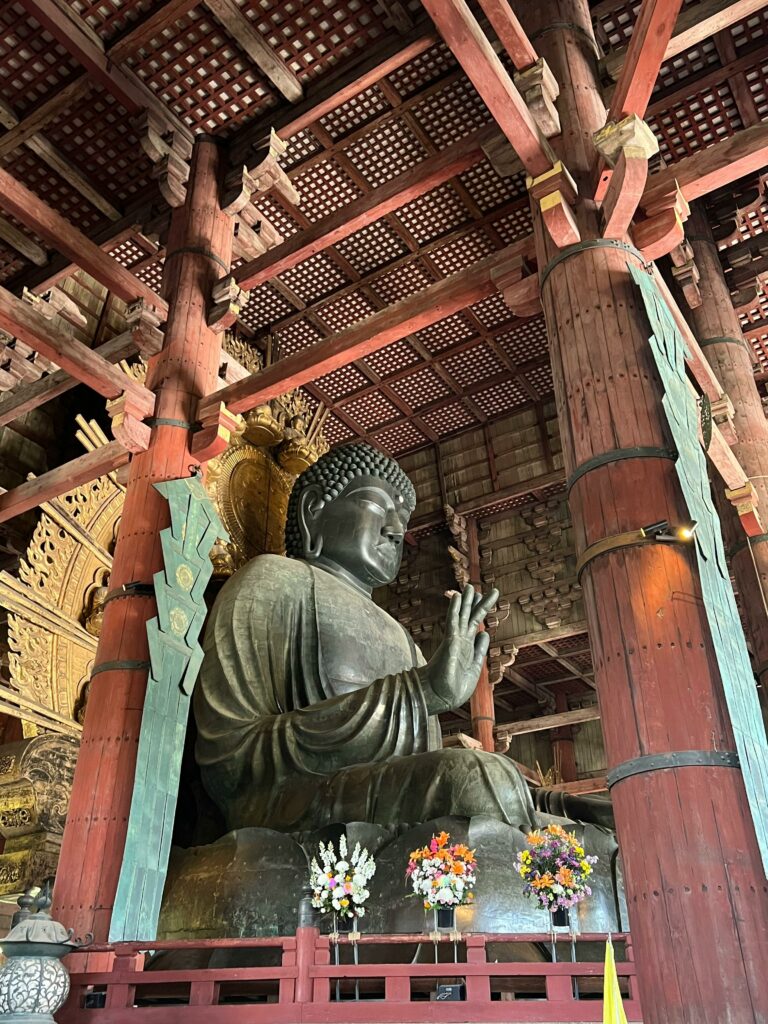
Nara, the old capital before Kyoto, is an hour away. You have to go here for Tōdai-ji — the temple with the Great Buddha (15 meters of bronze, in the largest wooden building in the world) — and for the sacred deer in Nara Park. Hundreds of free deer, considered messengers of the Shintō gods, walk among visitors. They come to you if you have biscuits, they bow when you greet them. For a traveler who has received as a lesson the recognition of the sovereign child, the encounter with a deer that looks you straight in the eye, without fear and without hostility, is an unforgettable experience.
Mount Kōya (Kōyasan)
Mount Kōya (Kōyasan) — for those who want to go deeper. It is the sacred mountain of Shingon Buddhism, founded by Kūkai in the 9th century. You go up by funicular train among cherry trees. At the top, there is Okunoin — Japan's largest necropolis, with over 200.000 tombs and Jizō statues, under giant cedars. You can stay in shukubō — temple accommodation — and attend the monks' morning service. Two nights on Mount Kōya changes something in a person. Those who have been there know.
Hanami practice
There is a correct way to do hanami. It's not complicated. But it is precise.
Go early. The best time for hanami is between 6 and 8 am. The places are almost empty. The light is golden. The air is cool. The cherry trees are just starting to wake up.
Take only a small amount with you. A thermos of tea, an onigiri (rice ball), a thin blanket. Hanami is not a picnic in the European sense. It is sitting in the presence of the tree.
Sit under a cherry tree. Choose a tree. Sit under it. Don't go from one to the other. Don't take compulsive photos. Sit with that tree.
Look. Don't look at the flowers. Just look. Let the look be a look, without becoming a thought. Just as the child you were at five years old looked at the first butterfly. Like that. If a gust of wind comes and the petals fall—and they will—be there when they fall. This is the purest moment of hanami. The falling petals are simultaneously beauty and loss. And the presence that observes them without fixing or pushing them—that is the sovereign child.
Wait at least an hour. Hanami is not done in ten minutes. Cherry blossoms take time, like all slow creatures.
Leave without closing the experience with a conclusion. Don't tell yourself "how nice it was." Just leave. What has settled within you will work itself out in the days to come.
When — the sakura season varies from year to year depending on the winter. For Kyoto and the Kansai region, the safest time is between March 25 and April 10. Further south (Kyushu), it starts earlier. Further north (Hokkaido), it doesn't start until May.
How long — a real pilgrimage requires a minimum of 10 days, ideally 14. Less than that, you rush and miss exactly what you came to find.
Proposed itinerary for 12 days:
- Days 1-2: Tokyo (acclimatization, visit to Meiji Jingu and Yasukuni)
- Days 3-7: Kyoto (with a day trip to Nara)
- Days 8-9: Mount Kōya (with accommodation in shukubō)
- Days 10-11: Osaka (the more accessible city, as a transition to everyday reality)
- Day 12: return
Indicative budget — For a 12-day pilgrimage with average-good accommodation, meals, internal transport (JR Pass) and visits, the budget is between 3500 and 5000 euros per person, excluding airfare.
What do you bring back...
Those who returned from Japan in April say almost the same thing. They can't explain exactly what has changed. But something has changed.
Their gaze has stopped being so hurried. Their conversations have a few pauses that they didn't have before. When they see, in their own backyard in Romania, the first cherry tree that blooms in May, they stop. They stand under it, at least for a few minutes. And they remember, without words, that this is exactly the task of the sovereign child in the world: to recognize, in small and fleeting things, the presence that never truly passes.
Japan teaches you something you can't learn anywhere else, because it's not taught through words. It teaches you that if you look long enough at a flower that will fall in a few days, you begin to understand that you yourself are a flower that will fall. And that understanding, far from being sad, is the very beginning of freedom—because the moment you recognize that, everything finally becomes precious.
And the preciousness is, after all, the child's sight. The one that, under the cherry trees of Kyoto, in the golden light of an April morning, you have the best chance of recovering.
Welcome home, even if you haven't left yet.
initiatory journeys - Sacred Earth #18
The task of the sovereign child in the world: to recognize, in small and fleeting things, the presence that never truly passes.
Mell
article author
Mell
Mell is the founder of the magazine TotUna – Essentia Momentum, an editorial space dedicated to the maturation of consciousness through direct experience and integrative reflection. Her writings do not start from theory, but from real journeys — from encountering life in its most fragile and revealing forms.
His interest in traditions such as Advaita Vedanta, Gnosticism, Kabbalah, and anthroposophy is not a comparative one, but an attempt to recognize the same divine thread that runs through different languages. For Mell, creative consciousness is not a concept—it is a living reality, present in all forms of existence, which he explores, writes about, and experiences. He does not direct; he recognizes. And by recognizing, he holds open the door that each reader must pass through for themselves.
founder of themeditation.academy


TotUna is not just a magazine. It is a co-creation space.
Submit your article!
If you feel the call to write, share, or contribute your voice, we are here.




