

Letters to a Young Poet – RM Rilke | Reading & Inspiration #21
My Dear Conscious Reader/Listener,
Some readings do not calm, but clarify. They do not comfort, but mature. They do not provide answers, but teach us to ask the right questions. They do not add knowledge, but activate the memory of what we already knew, before forgetting.
This section remains a living space, open to dialogue.
If there are books that have accompanied you in moments of inner reconfiguration, that have helped you understand how you construct the reality you live in, or that have shown you the architect within you in a moment of unexpected clarity, we invite you to share them with us.
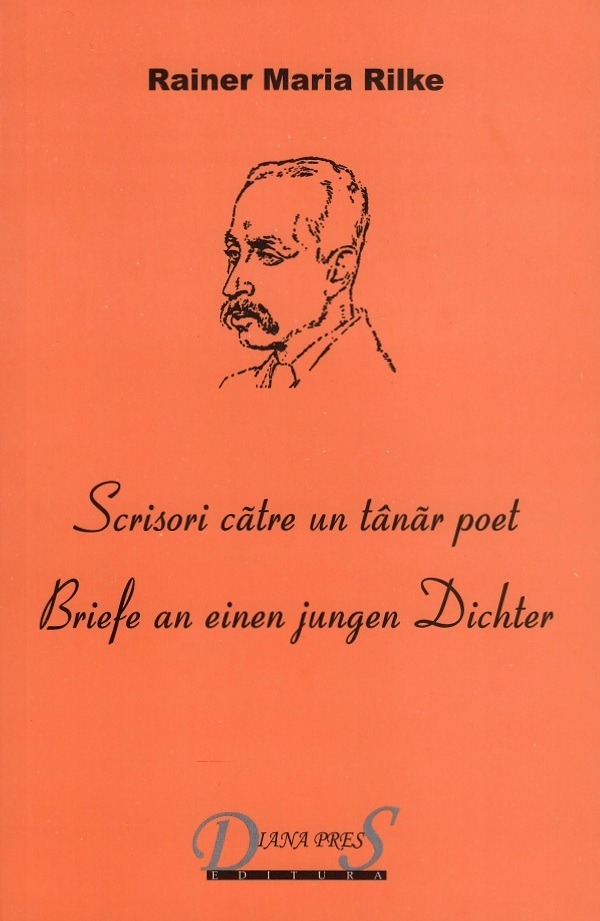
Letters to a Young Poet
In the fall of 1902, a nineteen-year-old cadet at a military academy sent some of his verses to a poet he admired, asking one thing: to tell him if he had any talent. The poet was twenty-seven years old and his name was Rainer Maria Rilke. The answer he gave was not what he expected—and that is why it has become one of the world's most beloved books of wisdom.
Rilke did not judge his verses. He gently refused even the role of critic. Instead of a verdict, he wrote the young man something entirely different: about loneliness, about doubt, about love, about the patience to experience one's own becoming without rushing to answers. From that first letter comes the exhortation that carries the entire book — no one can advise you, no one can help you; there is only one path, and that leads inward.
The ten letters, written between 1903 and 1908 and collected much later, three years after the poet's death, make up a book small in number of pages and immense in depth. It has no treatise structure, no chain of arguments. It has something rarer: the voice of one man speaking to another man about how to live a real life.
I chose her for the edition on First Contact because she is a first contact herself — and because she teaches us exactly the gesture we all need right now.
The most famous passage of the book is a plea that Rilke addresses to the young man: to be patient with everything that is unresolved in his heart, and to try to love the questions themselves, like locked rooms or books written in a foreign language. Not to look for the answers that cannot yet be given to him, because he could not live them. And that is precisely what it all comes down to: to live the questions now. Perhaps, by living them, he will come, imperceptibly, one distant day, to live the answer as well.
Rainer Maria Rilke
Rainer Maria Rilke was born in Prague in 1875, into a family that dreamed of a military career for him—the very academy from which the young man he would later write would emerge. He chose poetry instead, and devoted himself to it with an intensity that marked his entire life. He wandered all his life through the capitals of Europe, without a permanent home—Prague, Munich, Paris, Rome, Sweden, Spain—often living in the solitude that he would later call the necessary condition of all true creation.
If there are books that have accompanied you in moments of transition, that have changed your perspective or brought you closer to an inner truth, we invite you to share them with us. Together, we can cultivate a reading space that nourishes not only the mind, but also the silence from which understanding is born.
Together, we can create a reading space that nourishes the mind and soul.
Reading & inspiration #21
Silence is essential.
Thich Nhat Hanh
ARTICLE AUTHOR
MELL
Mell is the founder of the magazine TotUna – Essentia Momentum, an editorial space dedicated to the maturation of consciousness through direct experience and integrative reflection. Her writings do not start from theory, but from real journeys – from the encounter with life in its most fragile and revealing forms.
His interest in traditions such as Advaita Vedanta, anthroposophy, Kabbalah or Christian spirituality is not a comparative one, but an attempt to recognize the same thread of continuity that runs through different languages. For Mell, death, suffering and transformation are not abstract themes, but living processes of integration of consciousness into its own vastness.
Through the magazine TotUna and the spaces created around The Meditation Academy, she supports a lucid spirituality, devoid of drama and escapism, anchored in concrete life and open to its subtle dimension. Her approach does not seek followers, but inner maturity; it does not propose doctrines, but invites experience and assumption.
CO-FOUNDER OF THEMEDITATION.ACADEMY


TotUna is not just a magazine. It is a co-creation space.
Submit your article!
If you feel the call to write, share, or contribute your voice, we are here.




