

Hand on the Wound – Holistic Healing #19
Essentia Momentum looked down from above. It saw chaos as settlement, it spoke of the anchor caught high and the peace that descends in the one who stops pulling on his own thread. All true. But now we descend. Because man does not live at altitude — he lives in a body, and the body, when it suffers, does not heal from beautiful ideas. It heals from safety.
And security, we'll see, isn't conquered. It's received. It's the same anchor, only this time lowered into the nervous system.
This article is about a strange healing: the one that comes precisely when you stop forcing it.
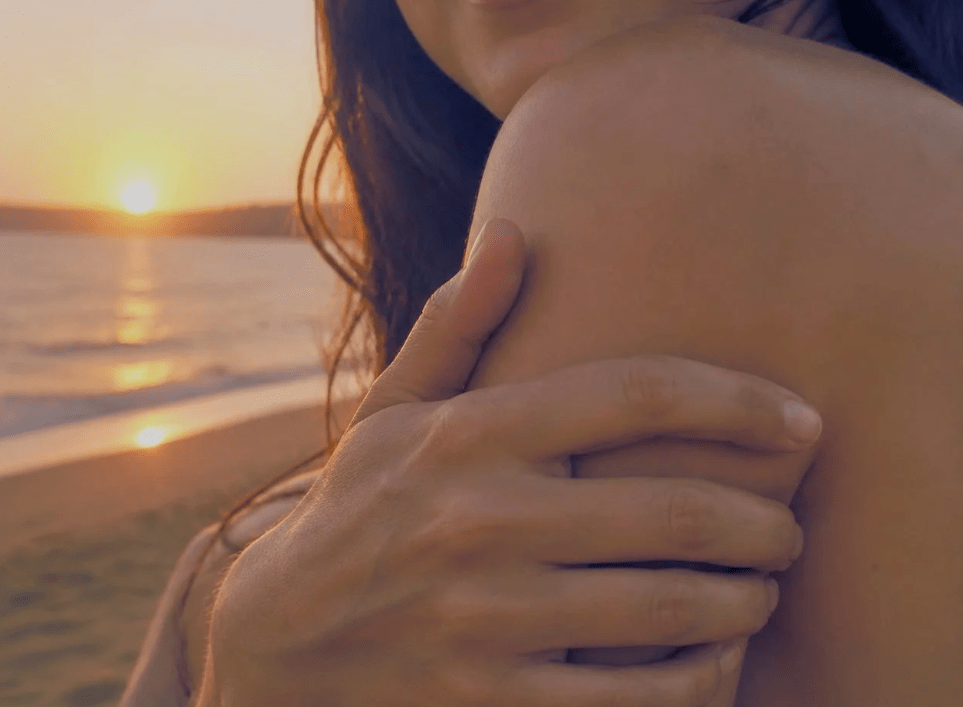
The hand clenched on its own wound
I have met, over the years, people who were doing everything right and yet were not healing.
They had read the books. They went to therapy. They did the exercises, the breathing, the journaling, the meditation. They knew their trauma by heart, they could tell it in technical terms, they had dissected it from every angle. And yet something was not moving. They sat there, year after year, more and more tired, more and more frustrated that “it’s not working,” more and more convinced that they had to do something more, try something more, dig down another layer.
And only later did I understand what I was actually seeing. I was seeing a hand clenched over its own wound.
Imagine a cut on your hand. And imagine that, for fear of it reopening, you hold it down day and night, constantly touching it, lifting the bandage every hour to check if it is healing. It is precisely this constant vigilance that keeps it from closing.
Skin needs peace to recover. It needs to be left alone. But your fear of reopening keeps it open.
So much chronic suffering is exactly that. Not the wound itself. But the hand clenched over the wound. The constant vigilance. The effort to heal has become, itself, what sustains the disease.
We live in a culture that has taught us that all good things come from hard work. Work harder, want harder, fight harder, and you will succeed. And for many things in the outside world, that's true. But the body doesn't work by the laws of the market.
Healing is not a conquest. It is a process that happens by itself, if the conditions are given — and its fundamental condition is not effort, but certainty.
What the will misunderstood
Here is the misunderstanding that so many good and serious people carry: they believe that if they try hard enough, they will heal. But effort is a form of tension. And tension is the exact opposite of the condition that healing needs. The more you force yourself to relax, the more you signal to the body that something is not yet certain, that there is still something to fight for, that you are not allowed to give up yet. And the body, obediently, remains on alert.
It's like trying to force yourself to sleep. The harder you try to fall asleep, the longer you stay awake. Sleep is not taken. It is earned—and it only comes when you stop chasing it. So is healing.
Body language: fight or safety
Let me break this down into physiology, because that's where it gets very concrete.
The autonomic nervous system has, in simple terms, two major modes of operation. One is mobilization mode — what is commonly called fight or flight. The heart beats faster, muscles tense, attention narrows, digestion and recovery stop, because all the body's resources are thrown into immediate survival. It's a brilliant mode for a few minutes' emergency. It's catastrophic as a permanent state.
The other way is rest and digest, supported by the parasympathetic branch and the vagus nerve. Here the heart slows down, the muscles relax, digestion begins, tissues repair, the immune system does its job, and the mind clears. Here, and only here, does healing occur. The body does not recover in battle. It recovers in safety.
And the problem with so many people who suffer from chronic pain, anxiety, burnout, stress-related illnesses, is that they're stuck in mobilization mode. Their nervous system has forgotten how to come home. They live with their foot on the accelerator and wonder why they don't rest. And then they add another layer of effort on top of everything else — the effort to heal — which is just another step on the accelerator.
Healing, in their case, doesn't ask them to do more. It asks them to do less. It asks them to take their foot off the accelerator. It asks them to surrender.
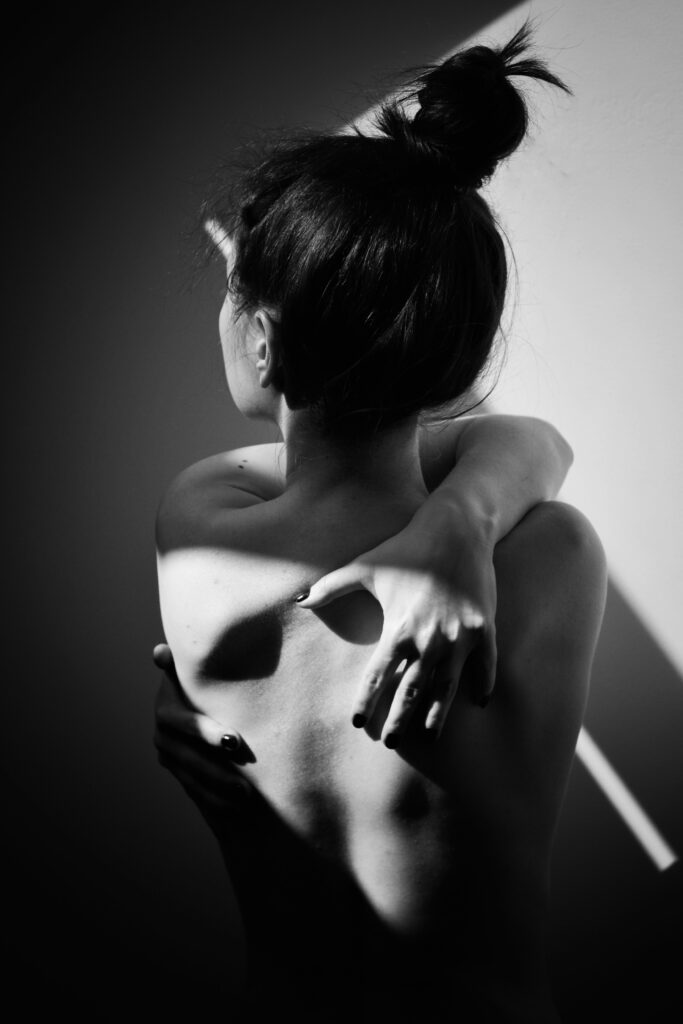
Surrender is not giving up.
And here we have to be very precise, because the word "teaching" is easy to misunderstand.
Surrendering doesn't mean giving up. It doesn't mean giving up, resigning yourself to always suffering, doing nothing. Giving up is also a form of tension—it's despair disguised as passivity.
True surrender is something else. It's the cessation of the fight against your own body. It's the moment when you stop treating the symptom as an enemy to be defeated, but as a message to be listened to. It's the moment when you stop asking "how do I get rid of this?" and start asking "what is this trying to tell me?" It's the hand that finally lifts off the wound and lets it breathe.
Surrender is active. It takes more courage than fighting. Because fighting the symptom gives you at least the illusion of control. Surrender is trusting — trusting in the wisdom of the body that, if given security, knows how to heal itself. Just as the cut on your hand will heal itself when you leave it alone. You don't heal the skin. The skin heals. You just give it the peace in which it can do so.
What is the name of the back fuse?
How, specifically, do you restore the body to the safety from which it heals? Not by forcing it—I've seen that doesn't work. But through small, repeated gestures that signal to the nervous system that the danger has passed, that it's okay to let go.
By taking a long breath. The long breath activates the vagus nerve and tips the balance towards recovery mode. You don't have to meditate for hours. A few breaths in which the exhalation is longer than the inhalation, repeated several times a day, are a direct message to the body: it's safe now.
By naming where you are safe right now . So often, the body is on alert for a danger that no longer exists—an old wound that it treats as present. Looking around and simply noting, here, now, I am safe, helps the nervous system step out of the past and settle into the present, where most of the time there is no longer any threat.
By letting go of a single thread. Exactly the gesture from the meditative practice of this edition. Ask yourself what you are holding on to right now and let go of just one thing. You will discover, as there, that nothing collapses. And each thread let go is one less degree of tension in the body.
Through gentle touch, warmth, slow pace. A warm hand on the chest, a heavy blanket, an aimless walk, a pace that doesn't rush. The body reads safety from simple, animalistic signals, older than words.
And by reminding yourself that you're not in control . Much of our hypervigilance comes from the silent belief that everything depends on us, that if we're not constantly vigilant, everything will fall apart. Letting yourself be anchored from above—believing, even for a moment, that the world holds up without your constant control—frees up the immense resources that the body was using to "hold it all together." And those resources, once freed up, go back to their real job: healing.
The rising watch
So that's the silent medicine of this edition.
If you've been healing for a long time and still aren't healing, ask yourself if you're not holding your own wound in your hand. If your effort to be well has become, itself, the tension that keeps you sick. If your body has been waiting for one thing from you for years: permission to let go.
Healing is not yet a battle to be won. It is a battle to be ended. It is the vigilance that finally rises from the wound and lets it breathe.
The body knows how to heal itself. It always has. All it expects from you is more effort.
It's the safety in which he can do his ancient work in peace.
Leave the water. It will clear up on its own.
holistic healing #19
Healing is not a conquest. It is a process that happens on its own,
mell
ARTICLE AUTHOR
MELL
Mell is the founder of the magazine TotUna – Momentum Essence an editorial space dedicated to the exploration of consciousness, inner transformation and the reconnecting of man with his profound essence. Its path is not built on the idea of spiritual authority, but on lived experience, continuous introspection and the living integration of traditions such as Vedanta, Kaballah, theosophy and Christian spirituality, viewed as different languages of the same truth.
His writings and testimonies are born from moments of profound lucidity, from a direct encounter with human fragility and from a living relationship with the mystery of existence. For Mell, consciousness is not a concept, but a space of responsibility and love, and transformation is not an ideal to be achieved, but a process of revealing what is already whole.
Through the magazine, awareness programs, and dialogue spaces created around The Meditation Academy , Mell supports a form of mature spirituality, anchored in real life, that does not separate man from the divine, but places them in a relationship of natural continuity.
CO-FOUNDER OF THEMEDITATION.ACADEMY


TotUna is not just a magazine. It is a co-creation space.
Submit your article!
If you feel the call to write, share, or contribute your voice, we are here.




