

Walnut — The Silent Architect of the Mind | Conscious Food TotUna
Conscious Eating is not a diet. It is not a nutritional protocol and it is not a list of prohibitions. It is an invitation to a different relationship with what we choose to put on the table and in our bodies — a relationship in which we ask not only what is healthy, but what supports who I want to be, what builds this choice in me, from what place I am feeding now — out of care or out of automatism, out of presence or out of flight.
This section exists in TotUna magazine because the process of self-knowledge does not stop at the kitchen door. The body is not a container in which consciousness temporarily resides — it is one of the most concrete expressions of consciousness in the world. And what we offer it as food becomes, literally, the substance from which we build thoughts, emotions, decisions and presence.
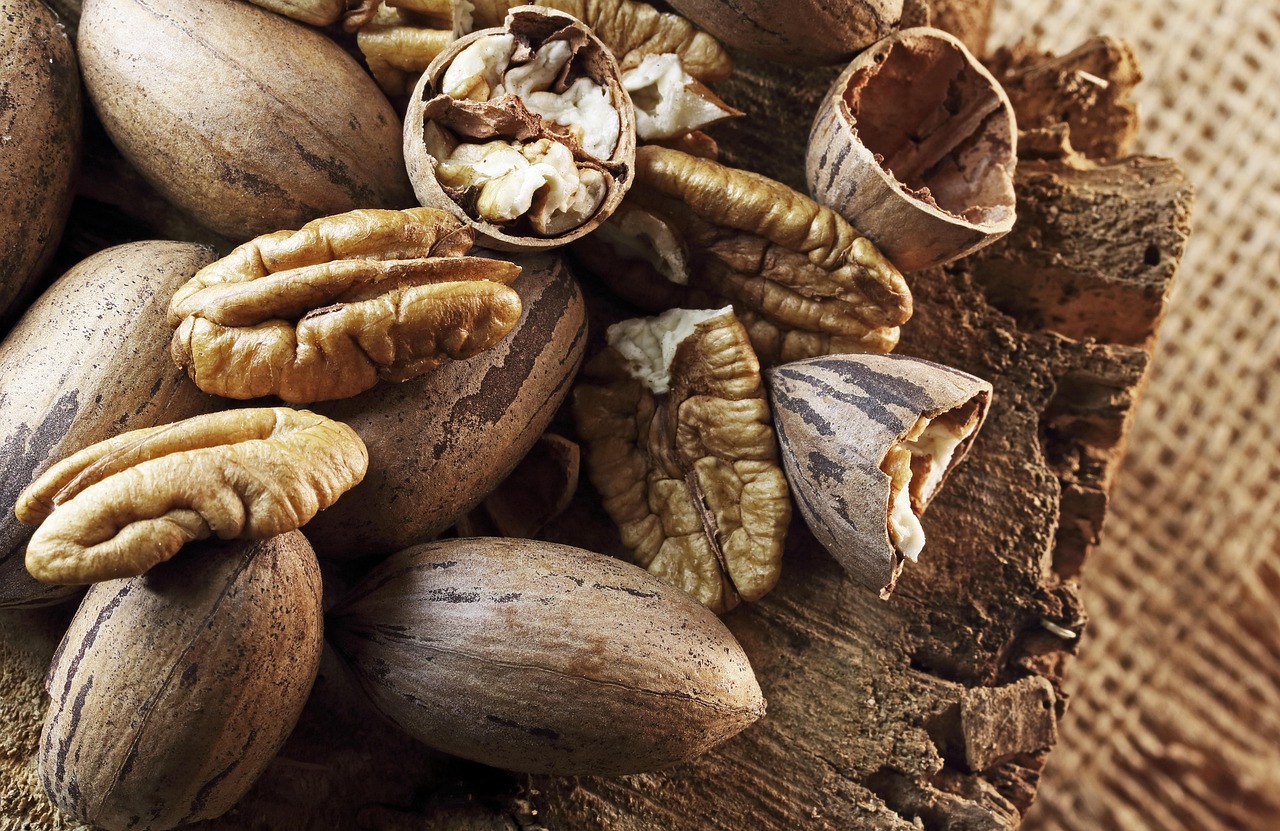
Nut
April brings with it an old and discreet guest—one that makes no noise, does not impose itself, does not seduce with bright colors or intense aromas. It sits quietly in its shell, waiting to be opened. And inside, hidden under a bitter membrane, it carries something that no other seed has dared to wear so visibly: the shape of the human mind.
The walnut kernel is not just food. It's a message in edible form.
In medieval European traditional medicine, there was a principle called the Doctrine of Signatures—the idea that nature visibly marks what it heals. Plants and foods that resemble an organ in the body support that organ.
A carrot cut crosswise resembles the human eye and supports vision. Tomatoes have four chambers, like the heart, and support it. Beans resemble the kidneys — and nourish them.
The walnut is the most spectacular example of this principle.
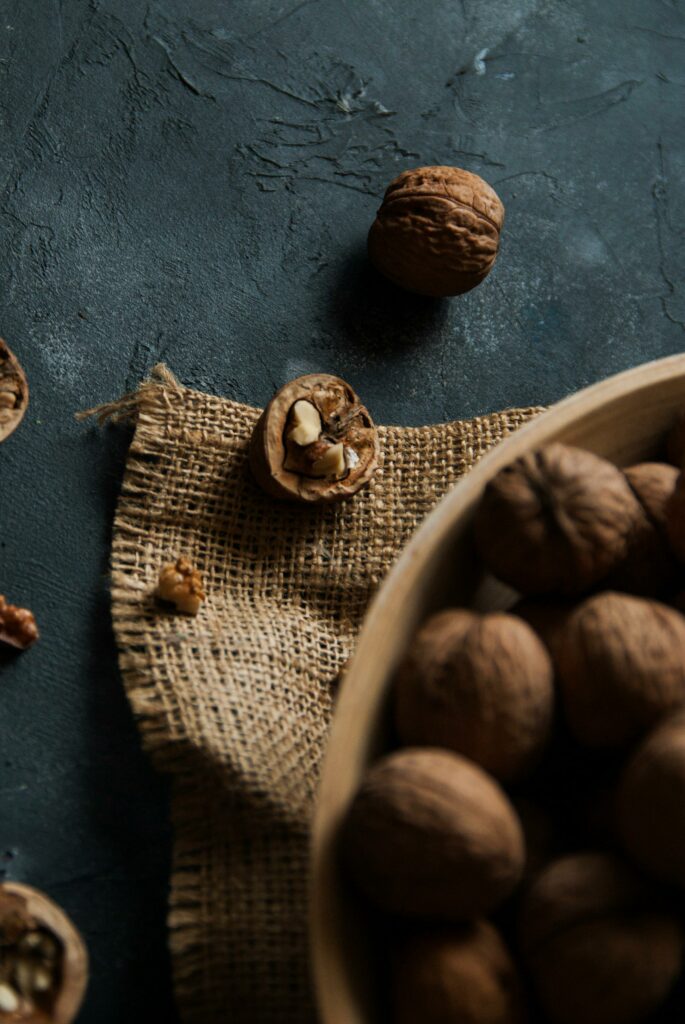
The Doctrine of Signatures
The hard outer shell—the skull. The brown, bitter inner shell—the meninges, the membrane that protects the brain. And the core itself—with its two hemispheres, its wrinkled surface that faithfully reproduces the convolutions of the cerebral cortex—is the most accurate image that nature has ever created of the human brain.
Paracelsus, the 16th-century Swiss physician and alchemist, didn't see this as a coincidence. He saw an intention. A signature of the Creator in created matter.
Sofia would say: The architect left his mark on the seed.
Through time and civilizations
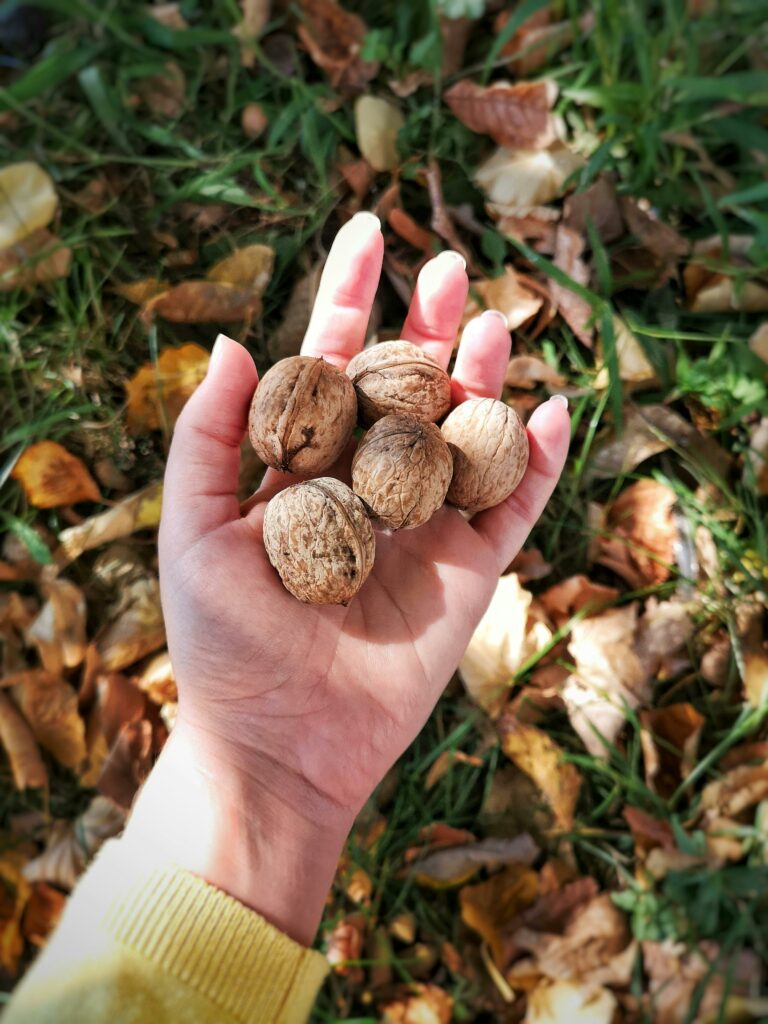
The walnut — Juglans regia — is one of the oldest trees cultivated by man. Its origins are lost in Central Asia, from where it traveled over the millennia to the Middle East, Greece, Rome, and throughout Europe.
The ancient Greeks called it karyon basiliko n — the royal nut. Not because it was rare, but because they recognized its status. They associated it with Zeus and divine wisdom. Plutarch mentions that in ancient times, when people lived in communion with the gods, they ate nuts — the food was simpler, the mind was clearer, the connection with the divine more direct.
In ancient Persia, nuts were reserved for the ruling class and priests—not out of lack, but out of recognition that a food that supports the mind should be consumed with discernment, by those who need clarity in their decisions.
The Romans used them in wedding ceremonies — the nuts thrown into the crowd symbolized fertility, abundance, and the transition to a new stage of life. Juglans — the Latin name — comes from Jovis glans, the acorn of Jupiter, the god of the sky and wisdom.
Walnut – the king of man
In Ayurvedic tradition, walnuts are considered medhya — a food that nourishes the mind and supports intelligence. It is recommended for those who engage in intense mental activity, those in deep learning processes, and those going through periods of transition and inner reconfiguration.
In traditional Chinese medicine, walnuts tonify the kidneys and support the ancestral energy—jing—considered the deep source of vitality and creative capacity. A strong kidney means, in this tradition, a clear mind and a stable will.
And in Romanian tradition, the walnut is the tree that marks the household. It is not planted randomly — it is planted with intention, at the birth of a child, at the founding of a house. It is the tree that lasts for generations, that provides shade, that nourishes, and that marks the passage of time with an imposing and silent presence.
What is building? the walnut kernel inside
Modern science has confirmed what traditions intuited: walnuts are one of the most nutrient-dense foods for brain and nervous system health.
Omega-3 fatty acids — especially alpha-linolenic acid — of which walnuts are the richest plant source, are essential structural components of neuronal membranes. The human brain is composed of approximately 60% fat, and the quality of these fats directly influences the quality of interneuronal communication — processing speed, clarity of thought, emotional stability.
Vitamin E, present in significant amounts in the kernel, has a strong neuroprotective effect — it protects neurons from oxidative stress, one of the main factors of cognitive decline.
Walnut polyphenols—especially from the bitter inner membrane, which many people remove—reduce systemic inflammation and support the gut microbiome. And the gut-brain connection, extensively documented in recent years, shows that the state of the gut flora directly influences mental state, anxiety levels, and cognitive clarity.
The magnesium in walnuts supports the nervous system and regulates stress response—an essential mineral for the interior architect who wants to build from tranquility, not reactivity.
Melatonin present in nuts — one of the few direct food sources — supports sleep quality, and sleep is, neuroscientifically speaking, the time when the brain consolidates what it has learned, integrates the day's experiences, and reconfigures neural connections.
In other words: walnuts nourish the brain while it sleeps — and prepare it for construction during wakefulness.
Symbolism and higher meaning
In Kabbalah , the walnut tree is associated with the structure of the Tree of Life —a system with deep roots, a strong central trunk, and branches extending in multiple directions, each supporting and balancing the others. This image was used in the Hasidic tradition to describe the human soul in its expansion—deeply rooted in the divine essence, manifested in diversity.
In alchemy, the walnut appears as a symbol of putrefactio—the process by which something old must decay so that something new can emerge. The hard shell that must be broken, the bitter membrane that must be accepted, the core that reveals itself only to the one who does not give up—is a map of inner transformation.
The bitterness of the inner membrane is not a defect. It is a lesson: that which protects the most valuable is often wrapped in something that is not easily consumed.
The conscious architect knows how to work with bitter materials.
Practical recommendations
Best eaten raw, unground, at room temperature — not fried, because heat oxidizes the omega-3 fatty acids and significantly reduces the nutritional value.
The bitter inner membrane is preserved — it contains the highest concentration of polyphenols and antioxidants. If the bitterness is too intense, the nuts can be soaked in cold water for a few hours before consumption — this reduces enzyme inhibitors and makes the nutrients more bioavailable.
Consuming it in the morning, on an empty stomach or as a first snack, provides the brain with the structural materials necessary for the day's mental activity. In the evening, a few hours before bedtime, it supports sleep through natural melatonin.
It combines well with raw honey, dried fruits, mature cheese or ripe apples. It is not recommended to combine with large amounts of refined sugar — it cancels out the anti-inflammatory effect of polyphenols.
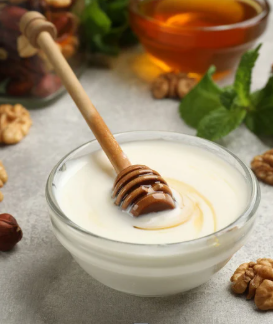
Walnut cream with honey and cardamom
- 14 walnut halves, soaked in cold water overnight
- 1 tablespoon raw, unheated honey
- ¼ teaspoon ground cardamom
- a pinch of cinnamon
- 1-2 tablespoons cold water (depending on desired consistency)
- optional: a few drops of rose water
Ritualized preparation :
- In the morning, drain the nuts and rinse them. Do not remove the bitter membrane — it remains.
- Put them in a blender with the water, honey, and spices. Process until you get a smooth or semi-smooth cream, depending on your preference.
- Before adding the honey, let it sit at room temperature for a few moments if it has been refrigerated — honey does not heat up, does not mix with hot ingredients. It is added cold, to keep its enzymes alive.
- Serve in small bowls. You can add a few pieces of whole walnuts, a drizzle of honey, and a pinch of cardamom on top.
Before the first sip, sit for a moment with the bowl in your hands. Feel its weight. Its temperature. The smell of nutmeg and spice.
And say to yourself, even in your mind: I am feeding the architect. The construction can begin.
conscious food – living life #16
The Conscious Architect also knows how to work with bitter materials.
mell
ARTICLE AUTHOR
MELL
Mell is the founder of the magazine TotUna – Essentia Momentum, an editorial space dedicated to the maturation of consciousness through direct experience and integrative reflection. Her writings do not start from theory, but from real journeys — from encountering life in its most fragile and revealing forms.
His interest in traditions such as Advaita Vedanta, Gnosticism, Kabbalah, and anthroposophy is not a comparative one, but an attempt to recognize the same divine thread that runs through different languages. For Mell, creative consciousness is not a concept—it is a living reality, present in all forms of existence, which he explores, writes about, and experiences.
CO-FOUNDER OF THEMEDITATION.ACADEMY


TotUna is not just a magazine. It is a co-creation space.
Submit your article!
If you feel the call to write, share, or contribute your voice, we are here.




