

Peru & Bolivia — Where Earth Becomes Heaven | Sacred Earth TotUna
This section exists in TotUna magazine because the process of self-knowledge does not stop at the borders of a study or a meditation circle. It sometimes extends to places that know something about man — something that man has forgotten and that he only recognizes when he gets there.
We don't propose tourism. We propose conscious pilgrimage — to places where the earth is both master, mirror, and partner of transformation.
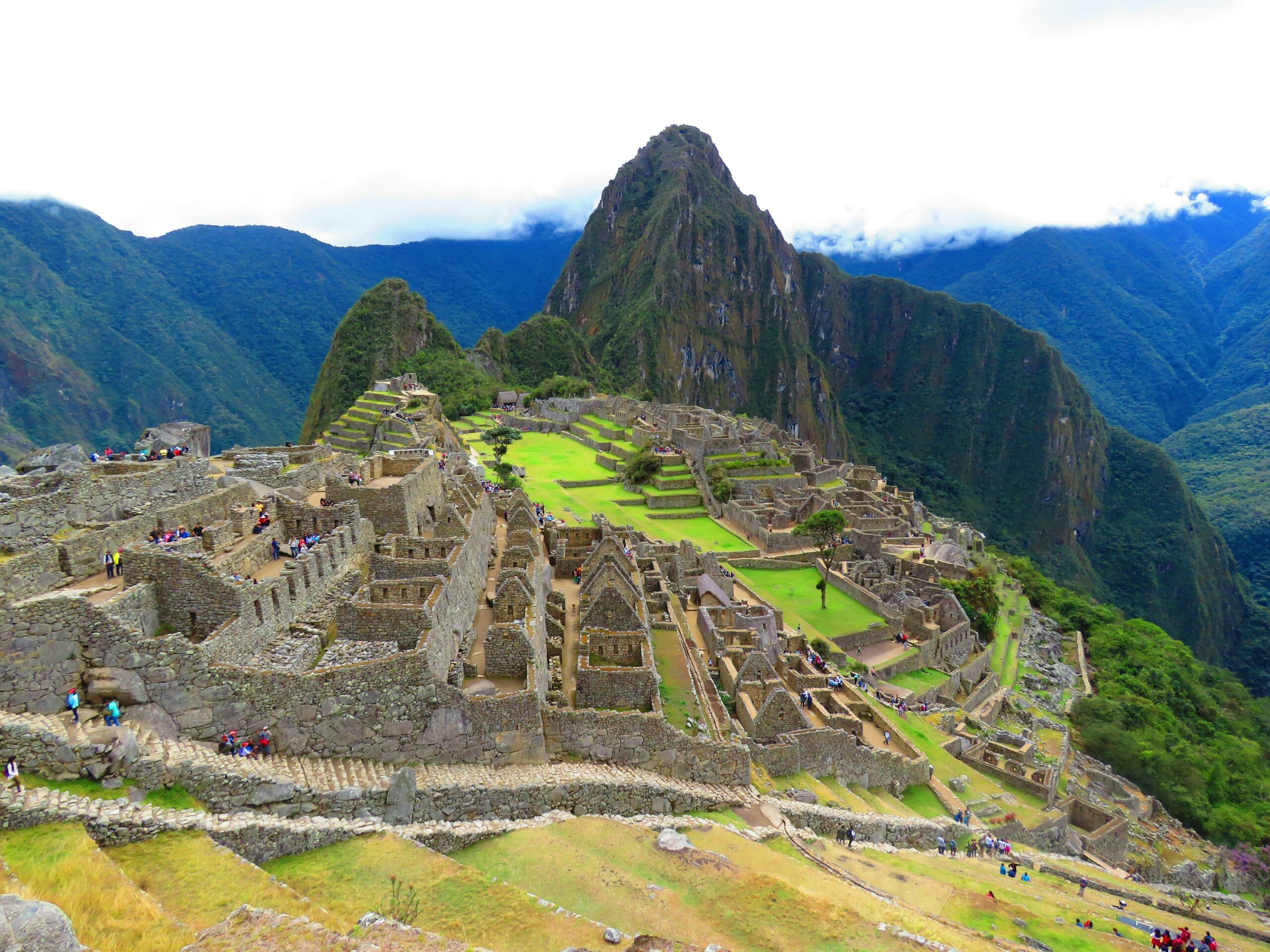
Peru & Bolivia – Where the earth becomes sky
There are places where you arrive with a plane ticket and come back with beautiful pictures. And there are places where you arrive with a question — even if you don't know you're carrying it — and you come back different than when you left. No richer in experiences. Different inside.
Peru and Bolivia are in this second category. Not because they are remote. Not because their landscapes are spectacular — and they are, with a breathtaking intensity. But because in these places, the land itself carries a memory. A memory of what the world looked like when man did not consider himself separate from the cosmos.
When he built temples not to impress, but to align. When he knew that the outer architecture was a mirror of the inner one—and he built accordingly.
Cusco — the navel of the world
The Incas did not choose Cusco by chance. They built the city in the shape of a puma — a sacred animal, a symbol of the power of the middle world, of life lived with strength and presence. And in the center of the city they built Coricancha — the Temple of the Sun — once covered entirely with gold plates, designed so that, at the solstice, light would enter through windows at a perfect angle and illuminate the inner altar.
It was not decorative architecture. It was an alignment machine—a device built to synchronize man with the cosmic rhythm, to remind him, once a year, that he and the sun are expressions of the same principle.
The Conscious Incan Architect did not build for posterity. He built for the present.
The Sacred Valley—with the temples of Pisac, Ollantaytambo, and Moray—is an initiatory trail in itself. Each site serves a different function: Pisac was an astronomical and agricultural center, Ollantaytambo a fortress and water temple, Moray—a circular terraced amphitheater whose exact purpose remains mysterious even to archaeologists—seems to have functioned as a laboratory of energies, a space for experimenting with the relationship between form, climate, and consciousness.
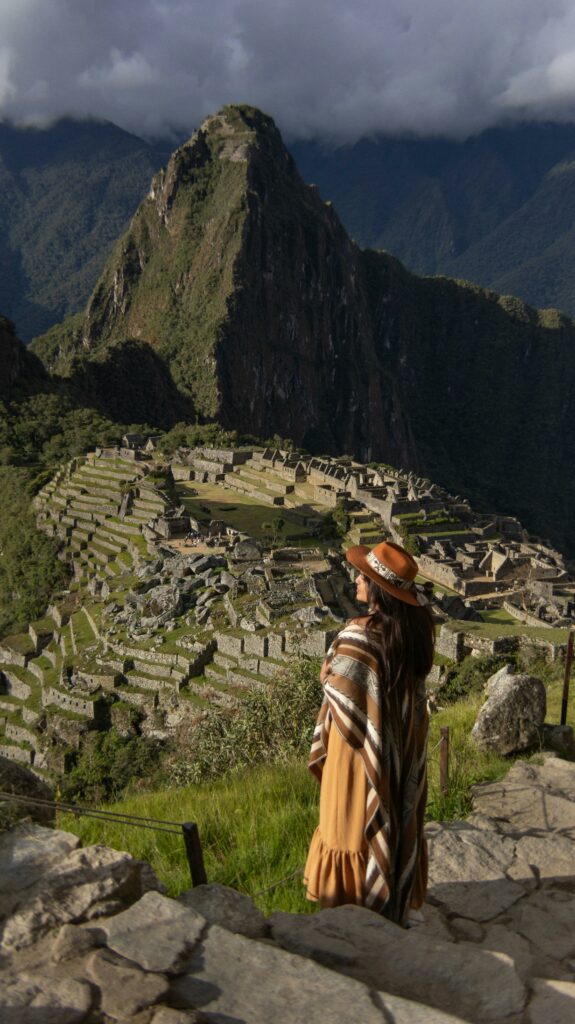
Machu Picchu—the city that was never meant to be found
The Incas didn't leave any maps to Machu Picchu. They hid it—or rather, they left it where it was, knowing that those who needed to find it would find it in due time.
Rediscovered in 1911 by Hiram Bingham, Machu Picchu continues to defy definitive interpretation. No one knows for sure what it was built for, who inhabited it, or why it was abandoned. What we do know is that its stones were cut with a precision that leaves unanswered the question of how—without mortar, without room for a knife blade between the blocks, in an area where the transportation of materials defied all engineering logic available at the time.
What one feels when one gets there is harder to explain than to experience. There is a quality of silence in that place that is not the absence of sound. It is a presence. As if the place itself is looking at you—and recognizing you.
Lake Titicaca—the cradle of the world
At 3.812 meters above sea level, Lake Titicaca is the highest navigable lake in the world. But for Andean tradition, it is much more than just a body of water at altitude. It is the place from which, according to Inca mythology, the first humans emerged—Manco Cápac and Mama Ocllo, sent by Inti, the Sun god, to bring civilization to the world.
Sun Island and Moon Island — the two sacred islands in the middle of the lake, now in Bolivian waters — are places where time behaves differently. Not in a metaphorical sense. Those who get there invariably describe a feeling of dilation — as if a day there contains more than a week in ordinary life.
The Amaru Muru Vortex—a rock-cut gateway near the lake that local lore says is an interdimensional portal—is one of those places where skepticism becomes hard to sustain. Not because it’s visually impressive—it’s a relatively modest opening in the rock. But because in front of it, something in the body recognizes something the mind can’t name..
Bolivia—the end of the world and the beginning of heaven
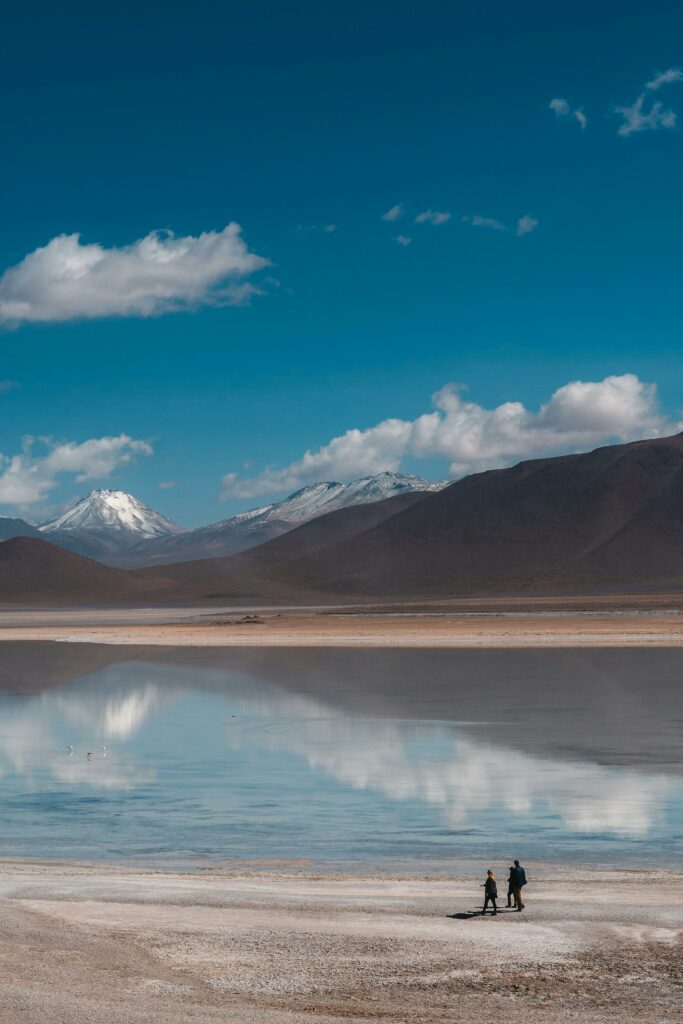
The Uyuni Salt Flats — 10.000 square kilometers of white salt at over 3.600 meters above sea level — is one of those landscapes that no longer belongs to the ordinary world. When the thin layer of water covers the surface after rain, sky and earth become indistinguishable. The horizon disappears. You remain suspended in a reflected infinity — with no top and no bottom, no inside and no outside.
It is, involuntarily, a meditation on nonduality. About that point where the Architect and his construction become the same thing.
The temples of Tiwanaku and Puma Punku—with their hundreds-ton blocks of andesite, their impossible millimeter cuts, their structures whose purpose remains up for debate—are places where the question of how? becomes secondary to the question of why? What did those who built them know about the relationship between form, stone, and consciousness?
Sacred Earth – initiatory journeys #16
When you give things a name, they become important.
Evelina
From nothing, they become everything.
initiatory journey guide
Iuliana Chiriac
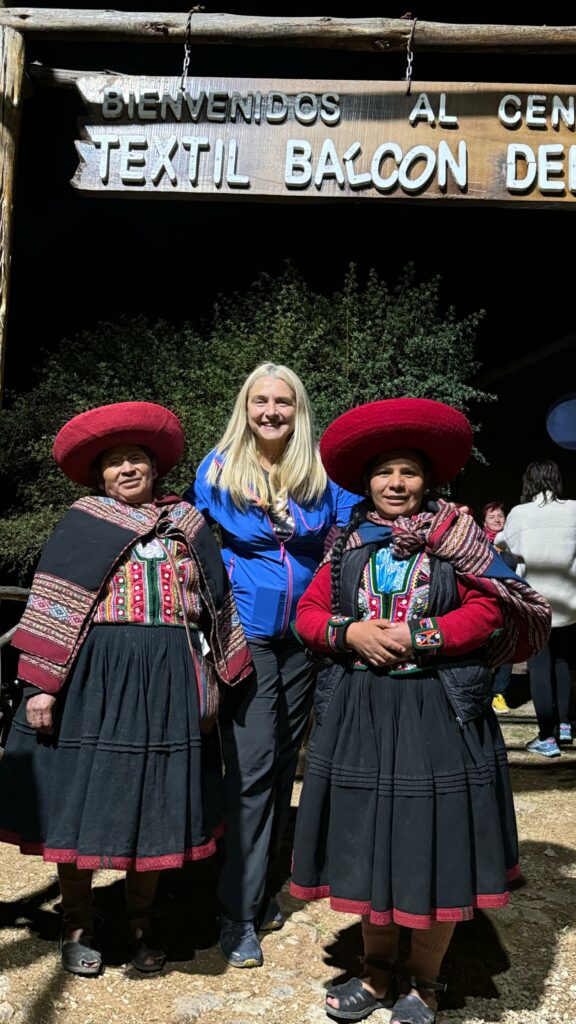
There is a fundamental difference between going to a place and being accompanied by someone who knows it not only geographically, but energetically and spiritually. Iuliana Chiriac has been organizing this trip to Peru and Bolivia for over a decade — not as a travel agent, but as a companion to the inner processes that these places accelerate.
Together with don Jorge Luis Delgado — author of An Inca Guide to Mystical Peru , a profound expert on Inca culture and internationally recognized spiritual guide by the BBC, History Channel and Gaia Organisation — and other local wise men of the places of power, Iuliana creates a framework in which the outer and inner journey become inseparable. Ceremonies, meditations in sacred places, meetings with the keepers of living tradition are an integral part of the route — not added options, but the heart of the journey.
Details about the 2026 trip can be found on the EDA Center website: centruleda.ro
founder ceda center

TotUna is not just a magazine. It is a co-creation space.
Submit your article!
If you feel the call to write, share, or contribute your voice, we are here.




