

The Return | Meditation Practice #21
The following meditation doesn't ask you to believe anything. It just asks you to let a memory come back and re-enter its quality. The reason this simple gesture has real effects has to do with the way our nervous system is built.
A memory is not stored in the brain as a file, in one place. It is distributed — reconstructed each time from many fragments: an image, a sound, a bodily sensation, an emotion. That's why when you recall a meaningful memory, it's not just "what happened" that comes back, but also the state you were in at the time. Your heartbeat, muscle tone, breathing, and emotional chemistry are reactivated along with the image. The body doesn't make a clear distinction between experiencing something and reliving it intensely: many of the same networks fire in both cases.
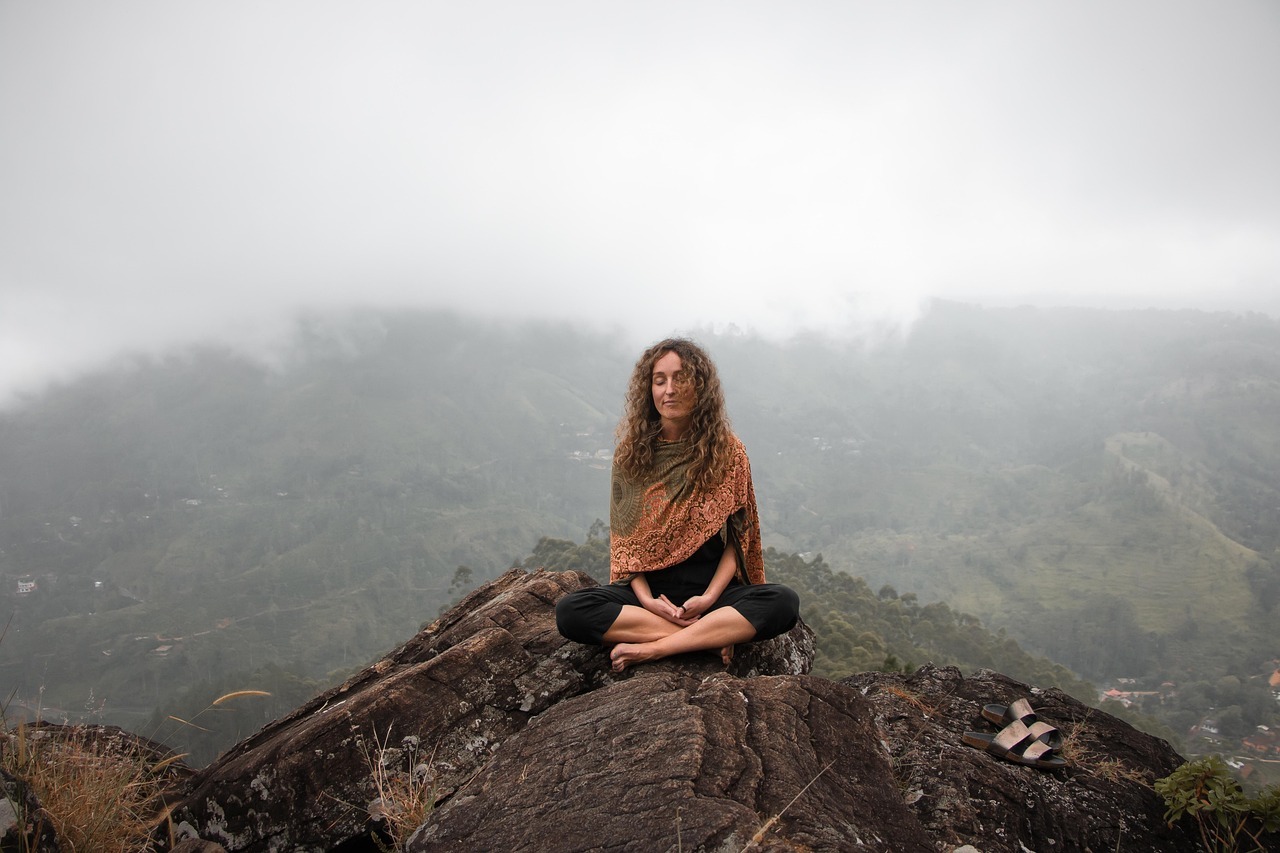
a return to the quality of first contact
Sit down as you are.
You have nothing to prepare for. Nothing to achieve.
Let your body rest on whatever is holding it—the chair, the floor, the ground beneath you. Something is already supporting you, without you doing anything.
...
And, if you want, let your eyes close.
One breath, a little deeper. Not to control it. Just to feel it.
Air coming in. Air going out.
And one more.
...
Now, without searching, let your attention descend. From your head, where thoughts reside, lower down—into your chest, into your belly, where you don't think, but feel.
There's no need for words down here.
...
And, from this silence, allow a memory to come by itself.
Don't choose her wisely. Don't look for the right one.
Just let a moment arise, of its own accord, when something touched you for the first time. A moment when the world looked different than you knew it. Something opened up, and after that nothing was ever quite the same.
...
Maybe it's clear. Maybe it's just a feeling, without a face. Whatever it is, it's good. It's yours.
Let her come closer.
And now, the most important step.
Don't tell your memory. Don't explain it.
Enter it. Feel what it was like then, in that moment, when everything was new.
...
Freshness. As if the air itself were different.
That opening in the chest, when something unexpected entered and there was no room for defense.
The amazement — before any words. When you still didn't know what was happening, but you knew that something real was happening.
...
Let the body remember that state. Not the mind. The body.
He knows her. He was there.
...
And, while this state fills you again, listen to something.
The quality you feel now—the freshness, the openness, the wonder—is not in the past.
The memory is from the past. But the quality, this ability to really be in touch, is alive. It's here. It's right now, in you, because you're the one feeling it right now.
You never lost it.
You just thought it was related to that moment. But it was yours. It was always yours.
A threshold that opened once and never completely closed.
...
Stay here for a moment, in this opening.
Nothing to do. Just available. Just open.
Just as you were then, not knowing what was coming—and therefore ready to receive.
...
Maybe something wants to touch you now. Don't force it. Just leave the door ajar.
Contact is not required. It is allowed.
...
And now, slowly, you're starting to come back.
Feel your body again, its weight, the place that supports it.
Air coming in. Air going out.
...
And when you're ready—without rushing—open your eyes.
...
You don't carry the memory with you. The memory has done its job.
You carry the threshold that remained open with you.
scientific basis
First Contact
We are not working with the story of the first contact, but with its state—because the state is still inscribed in the body and can be re-accessed. The freshness, openness, and wonder of that time have not disappeared; they have remained as a pattern that the nervous system can recognize and re-enter.
There’s a reason why “first contact” moments are so deeply imprinted. When we encounter something truly new, the brain registers a slight mismatch between what was expected and what happens—a signal of novelty that heightens attention and marks the moment as important. Neurochemically, these moments are accompanied by an increased openness to learning: the field becomes, for a brief moment, more malleable. That’s why the first time remains vivid years later, while the hundredth time fades. Novelty opens up.
By deliberately re-entering the quality of such a moment, we are not simply engaging in an exercise in nostalgia. We are reactivating the very state of openness and receptivity that accompanies authentic contact—the state in which defenses are lowered and perception is broadened. And repeated practice of this state has a known effect: what we reactivate often becomes easier to access. Over time, availability ceases to depend on a specific memory and becomes a readily available capacity.
So, when at the end of meditation the "open threshold" remains, it is not an empty metaphor. It is the description of a real physiological state: a nervous system shifted from defensive vigilance to receptive openness. The memory was only the key. The state is what remains.
meditation practice #21
You don't carry the memory with you. The memory has done its job.
mell
You carry the threshold that remained open with you.
ARTICLE AUTHOR
MELL
Mell is the founder of the magazine TotUna – Essentia Momentum, an editorial space dedicated to the maturation of consciousness through direct experience and integrative reflection. Her writings do not start from theory, but from real journeys — from encountering life in its most fragile and revealing forms.
His interest in traditions such as Advaita Vedanta, Gnosticism, Kabbalah, and anthroposophy is not a comparative one, but an attempt to recognize the same divine thread that runs through different languages. For Mell, creative consciousness is not a concept—it is a living reality, present in all forms of existence, which he explores, writes about, and experiences.
editor-in-chief totuna.live


TotUna is not just a magazine. It is a co-creation space.
Submit your article!
If you feel the call to write, share, or contribute your voice, we are here.




