

Invisible Symphony – Color and Sound – Holistic Healing
There is a language older than words, deeper than thought – the language of pure vibration. Sound that becomes color in the inner eye. Color that resonates as melody in the cells of the body. Emotion that translates into frequency, and frequency that heals.
Visionary artists like Kandinsky and Schubert intuited this truth: that sound, color, and mood are not separate entities, but manifestations of the same vibrational reality. Our subconscious constantly translates between these languages, orchestrating in every moment the invisible symphony of health or the dissonance of illness.
Let's explore together this magical territory where art becomes medicine, and healing becomes composition.
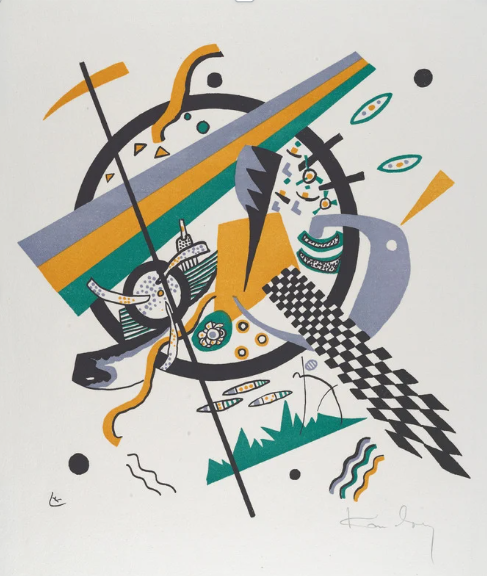
The Invisible Symphony – Color, Sound, and the Alchemy of Healing
Before the word was sound. Before the form was vibration. And everything in the universe – from the smallest atom to the most distant galaxies – vibrates at certain frequencies. The human body is no exception. Every organ, every cell, every thought has its own vibrational signature.
What we call “disease” is, in essence, a dissonance – a loss of natural vibrational harmony. And what we call “healing” is, in fact, the re-tuning of the system to its original frequencies of health and balance.
But how can we access these frequencies? How can we communicate with the deep layers of the subconscious that orchestrates this vibrational dance of health? Through the language that the subconscious understands best: sound and color.
The subconscious as a universal translator
There is a profound truth that visionary artists have intuited: the subconscious does not make rigid distinctions between senses. To it, sound has color. Color has tone. Emotion has frequency. They are all manifestations of the same vibrational reality, translated into different languages for our separate senses.
Kandinsky, the painter and musician, literally saw colors when he listened to music. It wasn't a poetic metaphor—it was a direct experience of what science now calls synesthesia. But what appears to some people as an "anomaly" is actually a window into how perception really works at the deepest level of consciousness.
When Schubert composed, he did not just build sound structures. He translated emotional states into the language of sound. Each key had for him a specific emotional color. D major – triumphant brightness. B minor – silvery darkness. F sharp major – pastoral, green-gold. It was not fantasy. It was recognition of the truth that sound, color and emotion are the same thing experienced through different channels.
the mechanism of the subconscious
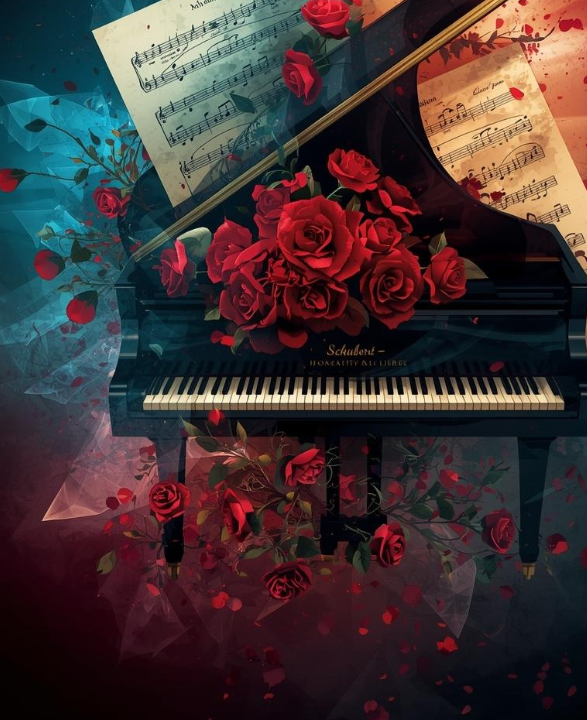
Let’s understand the mechanism: when your subconscious hears a certain combination of musical notes – say a C major chord – it doesn’t just process it as auditory information. It instantly translates it into a color field (golden yellow, expansive) and an emotional state (openness, clarity, solar energy). This translation is not arbitrary. It is encoded in the very structure of the nervous system, in the way that different frequencies resonate with different energy centers in the body.
E.g:
- High frequencies (high tones, violet-white) resonates with coronal, with spirituality, with transcendence
- Low frequencies (deep tones, red-brown) resonates with the root, with survival, with the earth
- Average frequencies (midtones, green-blue) resonates with the heart, with balance, with relationships
When you are exposed to certain sound combinations, your subtle body – the chakra system, the energy meridians – responds. It tunes in. It harmonizes. Or, if they are dissonant, it becomes unbalanced.
The Invisible Anatomy of Healing
Kandinsky attempted to create a grammar of this invisible language. In his theoretical work "On the Spiritual in Art" , he describes with mathematical precision how each color has an "inner sonority":
- yellow – a shrill, expansive, eccentric trumpeting
- blue – a deep, introspective, focused cello
- Red – a pulsating, violent, vital drum
- greenery – quiet silence, neutrality, static peace
He wasn't describing arbitrary psychological effects. He was describing frequencies and their measurable effects on consciousness. When he painted, Kandinsky composed. Each painting was a visual score—a combination of colors and sounds meant to produce a certain resonance in the viewer. He didn't want you to "understand" his paintings with your mind. He wanted you to feel them with your whole body, like a symphony.
Art as engineering of the psyche
Schubert went in the opposite, but complementary, direction. He took complex emotional states—melancholy mixed with hope, despair pierced by beauty—and translated them into the language of sound. His Lieder are sound maps of the human inner landscape. Each bar is a precise emotional nuance. And when you listen to them—if you listen with your whole body, not just your ears—you feel your subconscious translating those sounds back into colors, into bodily sensations, into subtle energetic movements.
A descending minor chord becomes a blue shadow descending through the chest. A major modulation becomes a luminous opening in the solar plexus. An obsessive repetition becomes a red spiral in the root. These are not metaphors. They are actual translations that your subtle body makes automatically, continuously, every time it experiences sound or color.
Healing as a work of art
Ultimately, sound and color healing is not a mechanical technique. It is an art. Each person has their own unique vibrational signature. What heals one may not have an effect on another. That is why it is essential to develop inner sensitivity – the ability to listen to your body’s subconscious response to different frequencies. To become your own composer of healing. Your own painter of inner balance.
Art is not just for contemplation. Art is medicine. And in the modern era, as we begin to understand that everything is vibration, we rediscover what shamans and mystics have always known:
The Healing Protocol
The first step is to become aware of your own dissonances. Where in your body do you feel a blockage? What color is that blockage? If it had a sound, what would it sound like?
Don't try to think logically. Let your subconscious answer. The first impression is the correct one – because it comes from the layers where the sound-color-emotion translation happens spontaneously. Once you have identified the area and the "color" of the blockage, you choose the complementary frequency:
- Who is green-stagnant blockage (indecision) → violet-dynamic sounds (fast violin, high vocalizations)
- Who is dark red blockage (swallowed anger) → blue-cold sounds (whistle, high Tibetan bowl)
- Who is blue-cold blockage (chronic sadness) → warm yellow sounds (guitar, trumpet)
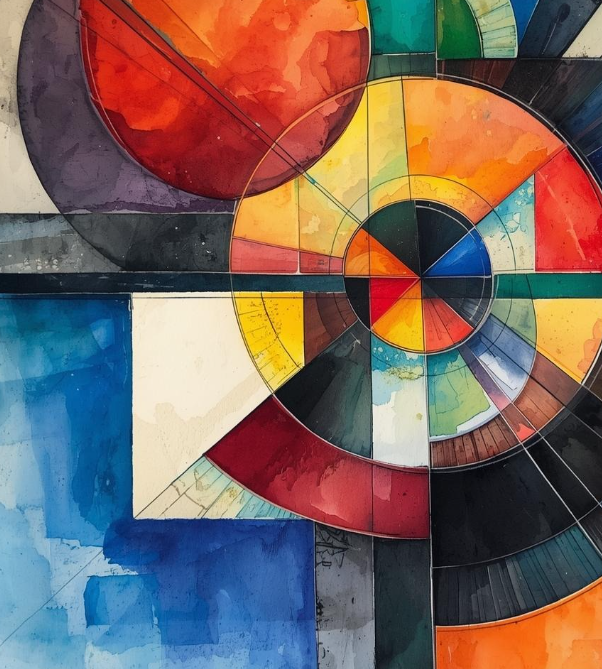
After exposure, sit in silence. Let the new vibrational pattern stabilize. There are sound-color combinations that have universally recognized therapeutic effects:
For emotional healing:
- La-Violet-Sadness transformed → Schubert – Ave Maria
- Sol-Verde-Cardiac Balance → Debussy – Clair de Lune
- C-Red-Rerooting → Bach – Cello Suite No.1
For physical healing:
- 174 Hz-Dark Red → Cellular healing, chronic pain
- 528 Hz-Green-gold → DNA repair, regeneration
- 963 Hz-Violet-white → Pineal activation, spiritual connection
For psychic integration:
- Orange + A Major → Creativity, sacred sexual vitality
- Yellow + G Major → Overcoming fear, courage
- Blue + D minor → Acceptance of loss, release of pain
A closing thought
Today, choose a color that appeals to you. Sit with it for 5 minutes. Then close your eyes and listen: what sound does that color want to play to you? Humming it. Feel where it resonates in your body. That is where the place that needs healing is.
holistic healing #11
There is no art without transformation, and there is no transformation without dissolution.
mell
ARTICLE AUTHOR
MELL
Mell is the founder and visionary behind the project The Meditation Academy and of the magazine TotUna – Momentum Essence. Mell discovered the brush at the same moment he lost his certainties. Or rather – at the moment when the certainties dissolved and all that was left was a hand that wanted to move color on the canvas, without knowing why, without asking if “it’s okay”, without waiting for permission. Years of branding, marketing, building identities for others – and then, silence. Emptiness. And in that emptiness, something began to paint. Not Mell the person. Something through Mell.
Now, The Meditation Academy and the magazine All.One they are extensions of the same creative gesture: creating spaces where people can remember that they don't have to become artists, healers, spiritual seekers – they just have to stop pretending they aren't already.
"I am not here to offer you finite truths, but to remind you that each of you carries within you the entire library of cosmic wisdom. I am merely a companion on the journey of remembering what you have always known deep within your being."
CO-FOUNDER OF THEMEDITATION.ACADEMY


TotUna is not just a magazine. It is a co-creation space.
Submit your article!
If you feel the call to write, share, or contribute your voice, we are here.




