

Sofia — The First Child | TotUna Edition 18
There are images that we have seen so often that we have stopped looking at them. An icon from childhood, a reproduction seen in passing in a museum, a book cover. We know them before we look at them. We recognize them before we understand them. And it is this premature recognition that stops us at the threshold—we convince ourselves that we understand what it is about, and so we never truly enter. The image of the divine child is perhaps the most deeply misunderstood image in the entire history of the spiritual traditions of humanity. Not because it is obscure. But because it is too familiar.
Before we go any further — leave for a moment everything you think you know about it. Leave the sentimental version of Christmas behind, leave the confusion with the biological child, leave the reductionist image of the "inner child" you hold in your own meditation, leave the belief that it is metaphor. Leave all that at the door. And step back into this image — as if you were seeing it for the first time.
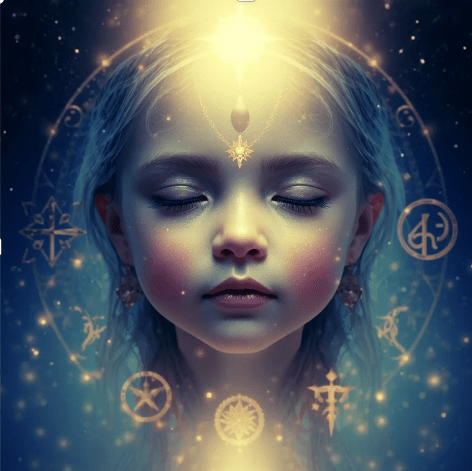
The First Child – the face recognized in all traditions
There is a strange observation that, once made, is never forgotten. All the great initiatory civilizations of humanity have placed their deepest mysteries around an image: a child. In the Orthodox icon, the Theotokos holds the infant Jesus in her arms, but the infant's gaze is not that of an infant—it is that of the Logos, the eternal word that has descended into flesh. In Hindu art, the infant Krishna steals butter and laughs, but the wise know that that very laughter contains the entire universe. In Egyptian iconography, the infant Horus sits on the lap of Isis with his finger to his lips, a sign of pre-creative silence. In the Orphic mysteries, the infant Dionysus is torn apart and put back together—the oldest story of the soul that is born through death. In European alchemy, the filius philosophorum —the child of the philosophers—appears at the end of the Great Work, after all the transformations have been accomplished. In Chinese tradition, Lao Tzu is born already old—a white-haired child who understands everything from birth. No great nation has founded its mysteries around a single sage. At the root of every system is the image of a child. And that child is, without exception, divine. This is not a coincidence. It is recognition.
Vedanta and Atman — The self that has always been
In the Upanishads, the oldest texts of the Hindu tradition, there is a word for that which is neither born nor dies: Atman. Sometimes translated as "Self," it does not designate a being, but a presence. Atman is, in the language of Vedanta, that which remains when all identities fall away.
And what remains, the texts say, is pure consciousness—the same in every being, in every form, at every moment.
The great sages of Vedanta describe Atman with the metaphor of a light that does not turn on or off. Tat tvam asi — "you are That" — is the formula by which the disciple is brought back to his own reality. You have not come from somewhere else; you are already that. You have not lost anything; you have only identified yourself with something else.
Atman, in the Upanishad texts, is frequently described as a small child—kumara. Not because it is immature, but because it is prior to any form. The Vedantic child is not a stage; it is the state of consciousness that precedes identification with a body and a name.
Eckhart and eternal birth in the soul
In Christian mysticism around 1300, a German Dominican named Meister Eckhart preached something that cost him a trial for heresy. He said: Christ is not born just once, in Bethlehem. He is born eternally, in every soul, in every moment when the soul is silent enough to make room for him.
"My Father begets the Son in me ," Eckhart wrote, "and I am that Son, and I am one with the Father who begets him." For Eckhart, the Christ-child was not a historical figure who was born once in the past. He was the divine presence that is constantly being born in the depths of every being—and that waits, like a baby, to be recognized.
And Jesus himself said: “Truly I say to you, unless you become like children, you will never enter the kingdom of heaven.” This was not an invitation to naivety. It was a precise instruction. The kingdom is not conquered. It is entered into as a child—that is, through that quality of being that precedes any maturation of the mind.
Egypt, Greece, the mysteries of the ancient world
The image of the divine child was so fundamental in the ancient world that it crossed completely separate civilizations.
In Egypt, the child Horus—Harpocrates in the Greco-Egyptian version—was represented with his finger to his lips. This gesture, which became the sign of sacred silence, indicated that the child knew what adult language could not say. His silence was not ignorance; it was the presence that precedes language.
In Greece, the child Dionysus appeared in the Orphic mysteries. The myth describes him torn apart by the Titans, put back together by the care of Apollo, and reborn. For the Orphics, this tearing and remaking was the map of the human soul itself: we are born whole, fragment as we pass through the world, and can be reborn whole if we remember our first child.
In the Pythagorean tradition—direct heir to the Orphic mysteries—the divine child was called Phanes, the firstborn of the Cosmic Egg, the luminous being from which all forms emerge. Pythagoras himself taught that numbers are the children of Phanes—each digit is a birth of the first light in form.
Kabbalah and Adam Kadmon
In Kabbalah, the Jewish mystical tradition, there is a concept that the classical texts cautiously call: Adam Kadmon — the primordial man. He is not a historical figure. He is the being who existed before time began to flow — the original blueprint of creation, the man whom God “saw” in himself before the world came into being.
Adam Kadmon contains the entire creation in bud. All souls that have been born and will be born are sparks from him. And what we call "spiritual awakening," in Kabbalistic language, is the act by which an individual spark recognizes its belonging to this cosmic man-child.
There is also a small letter in Kabbalah, placed as the starting point of the entire Hebrew alphabet: Yod (י) — the only letter that is, in itself, a point, not a line. Yod is the seed of all forms. And in Sefer Yetzirah , the oldest Kabbalistic book, Yod is placed in the center of the Cube of Space — that is, in the center of all reality. The smallest point contains the largest principle.
This is the perfect description of the primordial child: the smallest, the most unbelievable, the one who doesn't look like anything that impresses—and yet, it contains the whole.
Alchemy and filius philosophorum
The alchemists of medieval Europe worked for centuries to transmute lead into gold. Many believed they were working with metals. The wisest among them knew that real gold was something else—and that the Great Work ended not with a metal but with a birth. In the illuminations of alchemical manuscripts—especially in the Aurora Consurgens and the Mutus Liber —the last stage of the Work is almost always represented as a child. This child— the filius philosophorum , the child of the philosophers—appears after all the transformations (calcinatio, solutio, coagulatio, sublimatio, multiplicatio) have taken place. He is the result, but also the essence. He is what was always there, but which could not be seen until the layers were removed.
Jung, who spent thirty years studying alchemy, called this child the archetype of the Self. He observed in dreams—his own and those of his patients—that the most frequent image of the Self in moments of deep integration was not the wise old man. It was the child. The divine child. And it appeared precisely when personal consciousness was ending a long battle with its own shadows.
Buddhism and Daoism — the child as nature
In the Mahayana Buddhist tradition, there is a term that has long troubled Western scholarship: tathāgatagarbha—the embryo of the Awakened One, or, in a more literal translation, “the womb of Buddha-nature.” This concept asserts that the enlightened nature already exists, fully, within every living being. It does not have to be attained. Only recognized.
The Zen masters have put it bluntly. The classic Koan question, “What was your appearance like before your parents were born?” does not ask for a reverie about past lives. It asks for the immediate recognition of a presence that is not born and does not die. That—exactly that—is the child.
Lao Tzu, in the Tao Te Ching, formulates the same truth in famous verses. Chapter 28 : “He who knows the strength of the male but retains the gentleness of the female, becomes the bed of the world’s rivers. The bed of the world’s rivers, eternal virtue does not leave him, and he returns to the state of a child.” Chapter 55: “He who carries perfect virtue is like a newborn.” For Lao Tzu, the child was not a stage from which one emerges. It was the state to which the wise man returns, after having traversed all that can be traversed.
Atman. Logos-child. Silent Horus. Phanes. Adam Kadmon. Yod. Filius philosophorum. Jungian Self. Tathagatagarbha. Taoist Child. So many names, in so many languages, in so many ages. None speak of a small being. All speak of a quality of being—the same in all cultures.
So what is this quality?
If we look carefully at all these traditions together, we discover that they are actually talking about the same fundamental gesture. The divine child, in each of them, is not an entity—it is an act. The act by which consciousness, having reached a certain point, turns to itself and asks itself: what am I?
This question—in form, in silence, in wonder, in meditation, in dream—is the first child. It was not asked by someone. It is someone. It is the very first movement in the source, the gesture by which One became aware of itself and by which, consequently, it generated all forms.
In Vedanta, the question is "ko'ham" — "who am I?" In the Heart Sutra, it is "form is emptiness, emptiness is form ." In alchemy, it is "solve et coagula" — unravel and recompose, until what has always been there becomes visible. In Zen, it is the Koan . In Christian mystical traditions, it is the prayer of the heart, repeated until the heart itself becomes the question.
In all these forms, the question is the gesture of the child. Because every child who has ever been born, in any culture, in any time, begins to exist through the act of asking—without words, just through pure attention—what is this? what am I, here, now?
And every adult who remembers this gesture, even for a moment, rediscovers the primordial child. Not because he is making an act of regression. Because that question has never ceased to be asked, within him, under all the layers deposited by life. In recent decades, the neuroscience of consciousness has begun to confirm, with modern tools, what traditions have always said.
Anil Seth , a neuroscientist at the University of Sussex, has proposed that what we call the "self" is not an entity but a process of self-shaping: consciousness shapes something it calls the "I" in order to be able to observe itself. Antonio Damasio , in his work on the origin of feelings, describes the self as a "continuously renewed image"—a birth that never stops. Donald Hoffman , in his controversial but increasingly researched theory of consciousness, proposes that reality itself is the product of this gesture of self-recognition.
In modern language, what the traditions called the "primordial child" translates as follows: the act of self-recognition through which consciousness manifests itself as form, without losing its unmanifested nature.
Traditions said: the divine child is eternally born. Neuroscience says: the self is a continuous process of self-emergence.
These two sentences, in different languages, describe the same fact.
Morning Silence Ritual
This ritual can be practiced in the morning, before the day begins to build in your place.
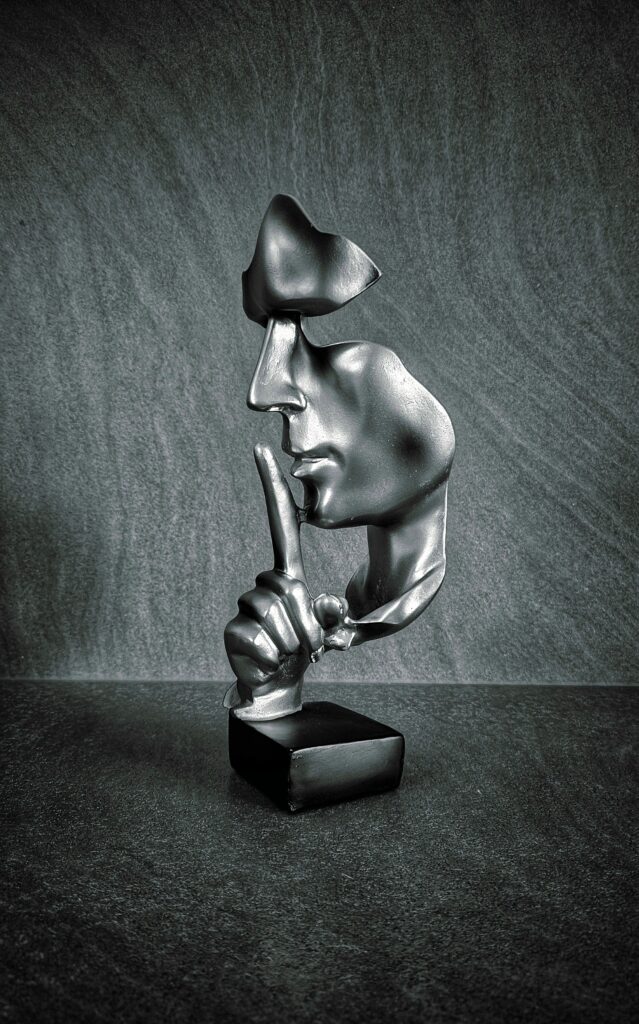
Sophia, the wisdom of the soul #18
The self is a continuous process of self-emergence.
mell
ARTICLE AUTHOR
MELL
Mell is the founder of the magazine TotUna – Essentia Momentum, an editorial space dedicated to the maturation of consciousness through direct experience and integrative reflection. Her writings do not start from theory, but from real journeys – from the encounter with life in its most fragile and revealing forms.
His interest in traditions such as Advaita Vedanta, anthroposophy, Kabbalah or Christian spirituality is not a comparative one, but an attempt to recognize the same thread of continuity that runs through different languages. For Mell, death, suffering and transformation are not abstract themes, but living processes of integration of consciousness into its own vastness.
Through the magazine TotUna and the spaces created around The Meditation Academy, she supports a lucid spirituality, devoid of drama and escapism, anchored in concrete life and open to its subtle dimension. Her approach does not seek followers, but inner maturity; it does not propose doctrines, but invites experience and assumption.
CO-FOUNDER OF THEMEDITATION.ACADEMY


TotUna is not just a magazine. It is a co-creation space.
Submit your article!
If you feel the call to write, share, or contribute your voice, we are here.




