

Hips – Psychosomatic – Living Life
Psychosomatics invites us to view the body as a sacred and living text, which cannot be lied to, because it never forgets what the soul has passed on in silence.
By understanding the hips, we understand a deep part of ourselves: the strength to move forward, the courage to feel vulnerable, and the truth that demands to be heard not by thoughts but by breath. This is where healing begins. This is where Living Life begins.
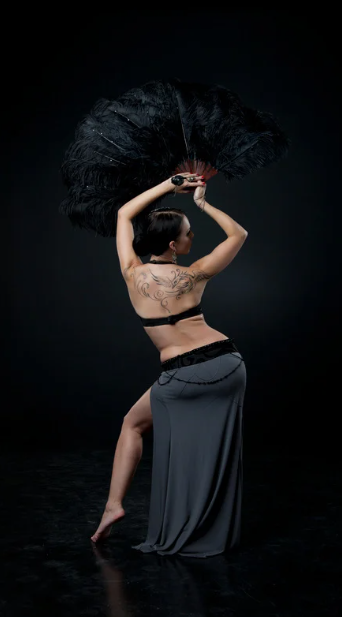
hips
The body does not speak in words, but in shapes, in tensions, in gestures that are repeated, in silences that ache before they are understood. It preserves the truths that the mind could not carry and the emotions that the soul did not know where to put. In this edition, we turn to the hips — the place where the inner Feminine often builds its sanctuary, and fear makes its home when it no longer finds room in the heart.
The Temple of the Sacred Feminine and the place where fear learns to breathe. There are places in the body that never lie. Places that don't know how to hide, that don't know the art of appearances, that can't negotiate with the mind or the rhythm of the world.
The hips are one of these places. They are the repository of the oldest wounds, the sanctuary of the inner Feminine, the center of the instinct for life and flow – the place where fear settles when it no longer fits in the heart.
Psychosomatics calls the hips “the deep archive of the body.” Feminine energy calls them “the cup of life.” Mythologies regard them as “the gateway between matter and spirit.” And their silence says what words have not had the courage to express.
the cup of life
Beyond the profound symbolism they carry, the hips are one of the most complex and important anatomical structures in the human body. They represent the meeting point between the trunk and the lower limbs, the place where stability and mobility are forced to coexist in perfect balance.
The hip joint is a ball-and-socket joint, formed by the femoral head and the acetabulum of the pelvis, designed to support the weight of the body and allow fluid movement in almost all directions. This dual function – support and freedom – makes the hips a key area both biomechanically and symbolically.
Surrounding the joint is a complex set of deep and superficial muscles – flexors, extensors, abductors, adductors and rotators – that work constantly to maintain posture, gait and balance. These muscles are not only responsible for movement, but also for the body’s stress response, as they respond quickly to danger, instability or uncertainty.
The hip area is also richly innervated and vascularized, which makes it extremely sensitive to emotional variations and prolonged states of tension. The nerves that cross this region directly connect the hips with the lumbar spine and the autonomic nervous system,
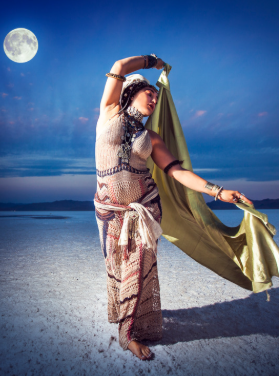
Psychosomatic Map of the Hips
Explaining why fear, anticipation or lack of security can generate stiffness, blockage or pain in this area.
From a functional perspective, the hips are what allow us to stand, move forward, change direction, and adapt to the movement of life. When they become stiff, gait changes, posture changes, and the body sends a clear message: something inside has lost its fluidity.
Thus, the anatomy of the hips shows us, in a concrete way, what psychosomatics has long intuited: this area is not just a structural element, but a node of integration between stability, movement, safety, and the ability to move forward.
In psychosomatics, the hips are associated with the ability to move forward in life, to make choices, to support change, and to stay in touch with the deep instinct of survival and continuity. They are the bridge between “who I am” and “where I am going.” As a major support area of the body, the hips often take on the emotional burden that the mind can no longer bear.
On a psychosomatic level, tension in the hips frequently occurs when: there is a fear of change or the unknown, a feeling of existential insecurity appears, the person feels they have to "resist" or "hold on tight", there is a disconnect between the soul's desire and the concrete direction of life, decisions are postponed or experienced with guilt.
Hip stiffness often indicates blockage in the flow of life: moving forward is perceived as dangerous, and the body chooses stability over fluidity.
Right hip
– direction, action, external reporting. This is often associated with direction in life, practical decisions, relationship with authority, the ability to act, and reporting on responsibility and control.
Discomfort or tension in the right hip may indicate fear of taking a concrete step forward, conflict between what "should" and what feels authentic, pressure related to social or professional roles, difficulty assuming one's own personal power.
Left hip
– emotion, receptivity, the inner Feminine. The left hip is connected to the emotional world, the ability to receive, the relationship with the inner Feminine, intimacy, emotional security.
Left hip blockages frequently occur when emotions have not been expressed or accepted, there is a fear of vulnerability, the person has learned to be "strong" through closure, there has been an experience of loss, abandonment, or early insecurity.
It is the place where the inner Feminine retreats when it does not feel protected.
basin
– the matrix of safety and creation
The entire pelvis, from a psychosomatic perspective, represents the womb of safety, the relationship with the life instinct, the ability to create (not just children, but meaning, projects, relationships), the relationship with pleasure and with life lived in the body.
Chronic tension in the pelvis may indicate deep fear related to survival, difficulty receiving support, bodily or emotional shame, and a disconnect between body and soul.
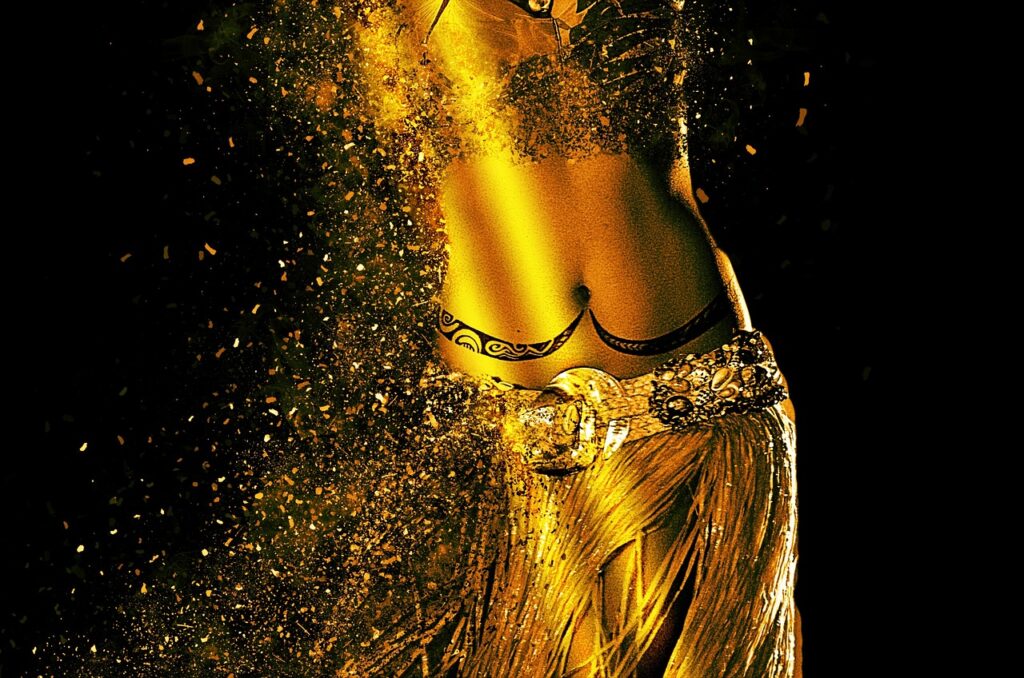
The hips react quickly to fear because they are directly activated by the fight-or-flight instinct. When fear is not consciously processed, the body "freezes" it in this area, transforming it into stiffness, diffuse pain, a feeling of blockage, and a lack of fluidity in gait and posture.
For this reason, healing the hips is not just a muscular process, but one of reconnecting to inner safety.
On a subtle level, the hips are always asking us: Do I feel safe moving forward? Am I allowed to move at my own pace? Can I trust the direction of my life? Do I allow myself to be flexible without losing stability?
The hips respond first.
When these questions are answered internally, the body begins to relax. The hips relax not when they are forced, but when they are understood.
The hips are the first to contract when we are afraid. And the last to open when we heal. In them lie years of unexpressed emotions, postponed decisions, buried vulnerabilities, transmitted traumas, unallowed desires, identities carried out of obligation, not out of truth. They hold everything that man could not hold in his heart, but could not let go either. There also retreats our wounded Feminine – the one who learned to be silent, to be patient, not to demand, not to feel too much, not to bother. There also sits our forgotten Feminine – the one who knows, who creates, who feels, who heals, who holds the world in the palm of his hand without tiring.
That is why the hips are the privileged terrain of this edition: because in them, the theme of the year – fear – meets the theme of the eternal – the Sacred Feminine.
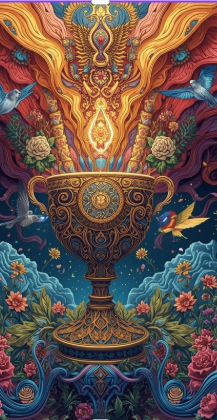
The Metaphysical Center of Soul Stability
The hips are the physical center of stability, just as the Inner Feminine is the metaphysical center of spiritual stability. When the hips are stiff, life cannot flow. When the hips are tense, the steps forward become difficult. When the hips are painful, the body tells us that somewhere, between instinct and emotion, the natural flow of existence has been broken.
Somatic psychologists say that the hips are where the "fear of movement in life" hides.
Energy therapists say they are the gateway to unexpressed life."
Body physicists say they are the center of gravity of man.
Women know that they are the place where peace is reborn.
And men feel like they are the point where power becomes presence, not force. Hips are not a muscle. They are a story. A story as old as time.
The year 2026, called by many "the year of fear," does not require the elimination of fear, but a shift of it. From mind to body. From reaction to breath. From tension to understanding. From blockage to slow, conscious movement. The hips are the tool through which you can do this.
When the Hips relax, the Inner Feminine comes out of hiding. When the Inner Feminine breathes, fear transforms. When fear transforms, the person can finally move forward.
What can you do for your body?
Not stretching, not exercises, not forcing techniques. But something much simpler and deeper:
- Place your palms on your hips. That's all. The body will know what to do with your presence.
- Breathe slowly, deeply, into your abdomen.The hips open to the rhythm of the Feminine, not your mind.
- Say in your mind: "I am safe in my body.” “I am safe in my life.”
- Listen to what comes up. Not all pain comes from the present. Not all tension belongs to you. Some hips carry three generations of fear.
- Contain, don't change. The feminine does not open through control. It opens through presence.
Ultimately, the hips are not just a joint in the body. They are the threshold. They are the place where we begin to exist again. If you want to heal your fear, start at the hips. If you want to heal your inner Feminine, start at the hips. If you want to let life flow, start at the hips. Therein lies the key. Therein lies the truth.
There, silent and patient, your home awaits you.
Psychosomatic – Living Life #13
Fear is not the opposite of love, but the place where love has not arrived.
mell
Still.
ARTICLE AUTHOR
MELL
Mell is the founder and visionary behind the project The Meditation Academy and of the magazine TotUna – Momentum Essence. Mell discovered the brush at the same moment he lost his certainties. Or rather – at the moment when the certainties dissolved and all that was left was a hand that wanted to move color on the canvas, without knowing why, without asking if “it’s okay”, without waiting for permission. Years of branding, marketing, building identities for others – and then, silence. Emptiness. And in that emptiness, something began to paint. Not Mell the person. Something through Mell.
Now, The Meditation Academy and the magazine All.One they are extensions of the same creative gesture: creating spaces where people can remember that they don't have to become artists, healers, spiritual seekers – they just have to stop pretending they aren't already.
"I am not here to offer you finite truths, but to remind you that each of you carries within you the entire library of cosmic wisdom. I am merely a companion on the journey of remembering what you have always known deep within your being."
CO-FOUNDER OF THEMEDITATION.ACADEMY


TotUna is not just a magazine. It is a co-creation space.
Submit your article!
If you feel the call to write, share, or contribute your voice, we are here.




