

Sunflower | Conscious Food #21
There is an intelligence waiting in every seed and a gift in every carefully chosen food — and in Conscious Food we pause, once per issue, on a single fruit of the earth, to traverse it through time, civilizations, science, and symbol, and discover that the way we feed ourselves can itself be a form of awakening.
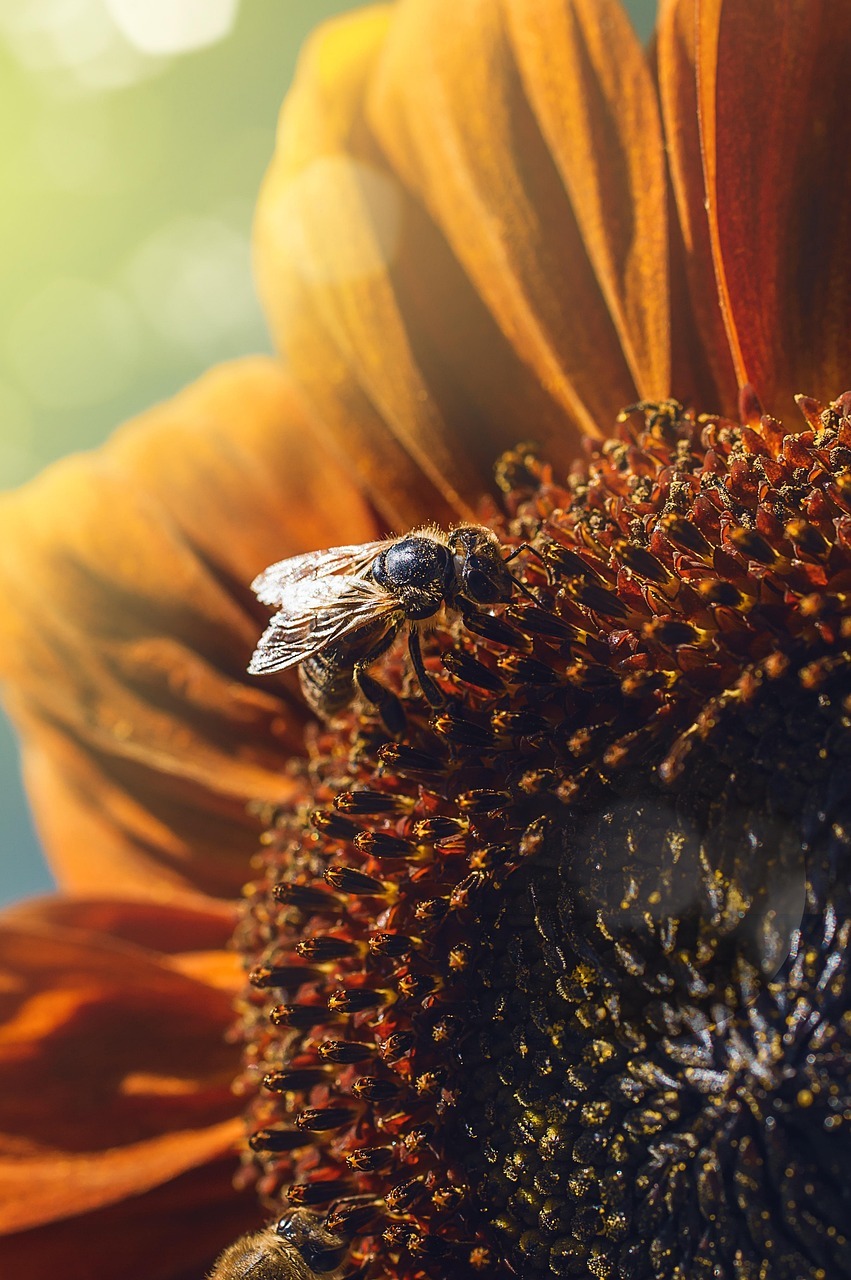
The sunflower lives in a first contact renewed every day. Its entire being is organized around the encounter with light. And yet—here is its secret—it is not the light that pursues it to keep it for itself. It pursues it to ripen, in its center, something completely opposite to light: the dense, dark, and nourishing core of the seed.
Sunflower
It is the only flower that looks. In whole fields, at sunrise, thousands of golden faces all turn in the same direction, eastward, waiting. And when the sun rises and begins its journey across the sky, they follow it—slowly, imperceptibly, but without fail—circling after it until evening, when, tired, they turn eastward again to await tomorrow's sunrise.
The sunflower organizes its entire life around the seed. The seed is the center of its existence. Everything else—the root, the tall stem, the disc, the pursuit of the sun—exists to bring the seed to maturity. Light on the periphery, seed in the core.
A journey through time
The sunflower did not originate in the fields of Europe, although today it seems like ours forever. It comes from the Americas, where it was cultivated by indigenous peoples thousands of years ago — one of the first plants domesticated on that continent. For many of these cultures, it was a sacred plant, a carrier of solar energy, used as food, medicine, and ceremony. The seeds were ground into flour, pressed for oil, and the entire plant was revered as a symbol of the sun itself descending to earth.
With the great voyages between worlds, the sunflower crossed the ocean and arrived in the Old World, where it was at first an ornamental curiosity—a beautiful and strange flower that looks at the sun. It took time for its true wealth, hidden in its core, to be discovered. Today, its golden fields are among the most beloved sights of summer, and its seed feeds the entire world.
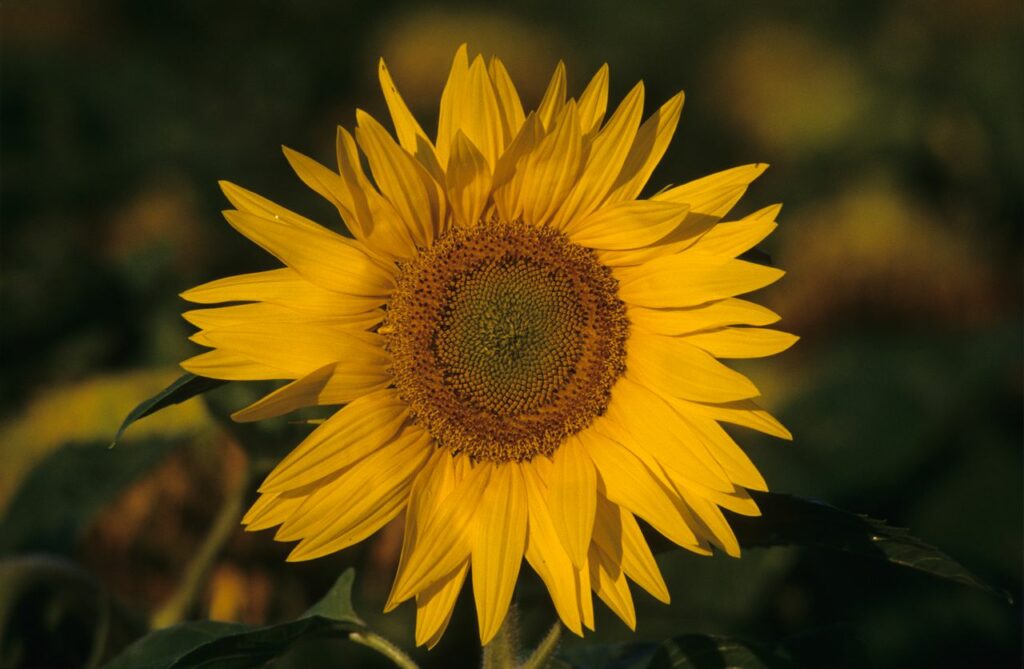
Look closely at its center and you'll see something that seems impossible for a plant: a perfect mathematical order. The seeds are arranged in intersecting spirals—some flowing in one direction, some in the other—and the number of these spirals almost always follows the Fibonacci sequence, the same sequence that organizes so many forms of life.
It is not a coincidence, but the most efficient solution to a concrete problem: how to place as many seeds as possible in the smallest space, without them crowding together. Each seed emerges at a precise angle to the one before it, and from this gesture repeated thousands of times the spiral is born. The order of contact between growth and form, written in the very heart of the flower.
As for following the sun—heliotropism—it belongs mainly to the young plant. The growing flower orients itself after the sun by a slightly uneven growth of the stem, which bends towards the light during the day and straightens up at night. Once it reaches maturity, the flower stops rotating and most often remains turned towards the east—as if, having learned the light, it had chosen to forever proclaim the place from which it rises.
And the seed it ripens is a tangible treasure for the body. Rich in good fats, vitamin E — an antioxidant that protects cells — magnesium, selenium, and vegetable protein, the sunflower seed even nourishes the nervous system that we talked about in the pages of this issue. The kernel that waits in the dark carries within it everything it needs to sustain life.
Seed as first contact
A seed is life compressed to its maximum. Inside it waits, compressed and silent, an entire plant—the stem, the leaves, the flower, and thousands of other seeds after it. But all this promise lies dormant until a single event: contact. Contact with the earth, with the water, with the warm darkness of the glia.
Without this encounter, the seed can wait for years, sometimes decades, without changing.
And this is what the first contact requires from the seed, so that it can be born: to break. The shell that has protected it for so long must give way, so that what was inside can come to light. Nothing sprouts without first breaking. It is the very strait that I spoke about in the opening of this edition — birth through breaking, life that goes through its own disintegration in order to be fulfilled.
The sunflower teaches us, therefore, two things at once, and they do not contradict each other. On the surface: always turn towards the light, orient your life towards it, as the young flower does. And deep down: allow something dense and silent to ripen at the core of this orientation towards the light—your essence.
Seed butter
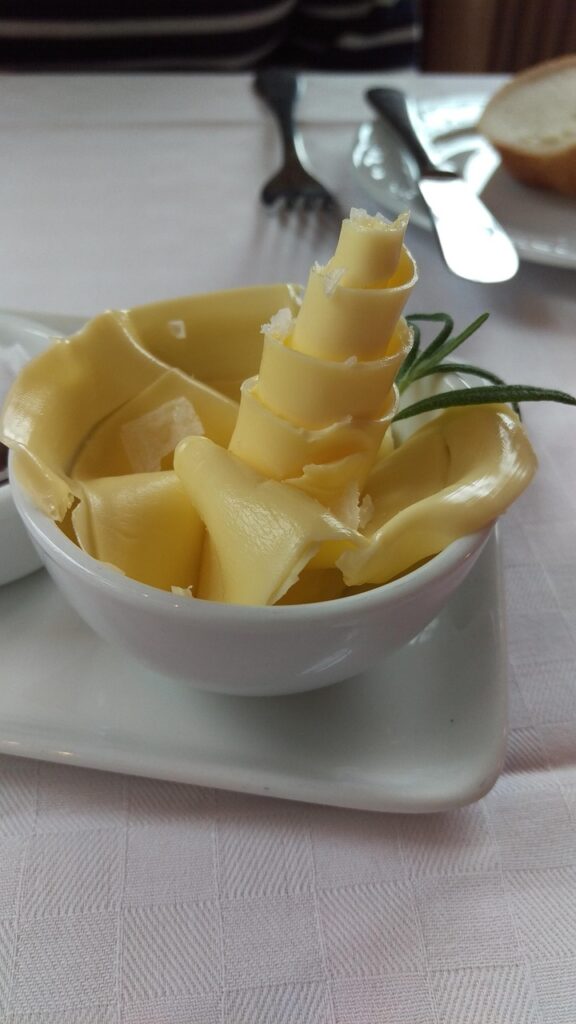
- 2 cups raw sunflower seeds, shelled
- clean water for soaking
- 1–2 tablespoons cold-pressed oil (sunflower or olive), depending on desired consistency
- a pinch of unrefined salt
- optional: a little raw honey, cinnamon or vanilla, for a sweet version
Ritual preparation
- The night before, place the seeds in a bowl and cover them with clean water, two fingers above them. This is the gesture that counts: you are putting the seeds in contact with the water that will awaken them. As you cover them, stop for a moment and look at them. Each one of them carries a whole flower within it. You are now the contact that begins to call it to life.
- Leave them overnight, at least 6–8 hours. During this time, the seeds soak, their shell softens, and the dormant processes in the core begin to quietly awaken.
- Drain the seeds and rinse them well under cold water. Feel how they have changed: fuller, softer, more alive under your fingers than they were last night. They are awakened seeds.
- Place the drained seeds in a blender or food processor, along with the salt. Turn on and let them grind, stopping occasionally to scrape the paste off the sides. At first they will become a wet flour; then, with patience, a creamy paste. Add the oil, gradually, until you reach the consistency you like.
- If you want it sweet, add the honey and spices now and mix some more. Taste. Adjust. The butter is ready when it is smooth and silky. Keep refrigerated for a few days.
conscious food – living life #21
Nothing sprouts without first breaking.
mell
ARTICLE AUTHOR
MELL
Mell is the founder of the magazine TotUna – Essentia Momentum, an editorial space dedicated to the maturation of consciousness through direct experience and integrative reflection. Her writings do not start from theory, but from real journeys — from encountering life in its most fragile and revealing forms.
His interest in traditions such as Advaita Vedanta, Gnosticism, Kabbalah, and anthroposophy is not a comparative one, but an attempt to recognize the same divine thread that runs through different languages. For Mell, creative consciousness is not a concept—it is a living reality, present in all forms of existence, which he explores, writes about, and experiences.
editor-in-chief totuna.live


TotUna is not just a magazine. It is a co-creation space.
Submit your article!
If you feel the call to write, share, or contribute your voice, we are here.




