

Victor Chirea – Self-Love – Interview
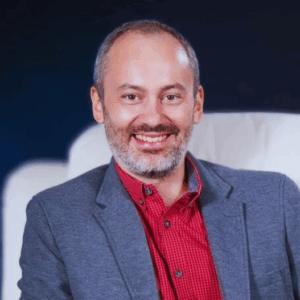
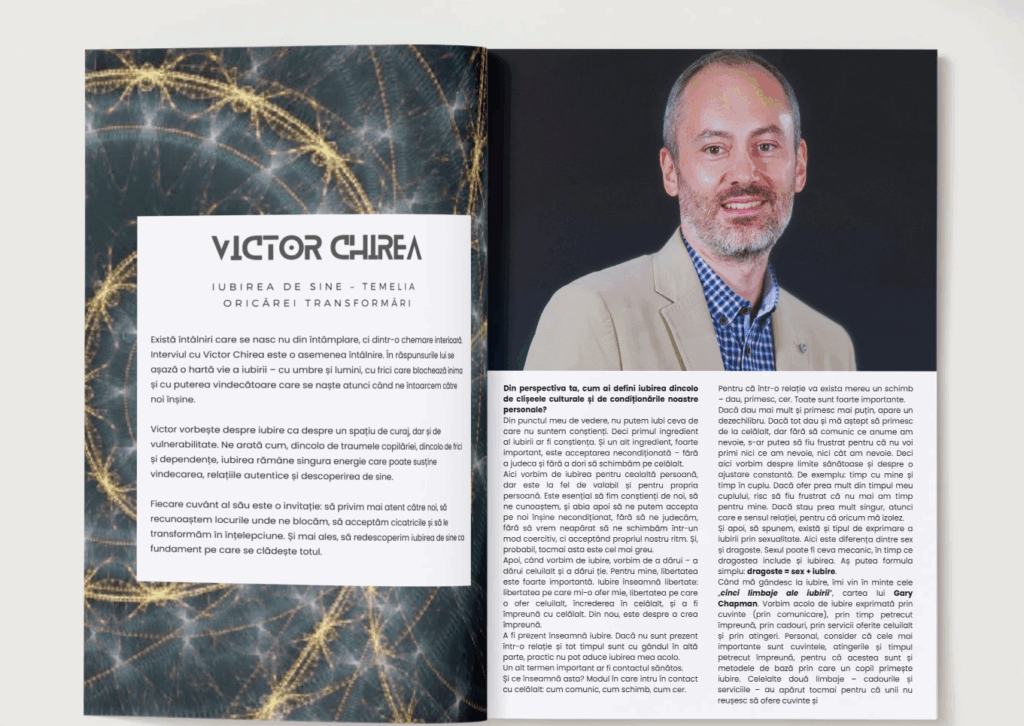
There are encounters that are born not by chance, but from an inner calling. The interview with Victor Chirea is such an encounter. In his answers, a living map of love is laid out – with shadows and lights, with fears that block the heart and with the healing power that is born when we turn to ourselves.
Self-love – the foundation of any transformation
Victor talks about love as a space of courage, but also vulnerability. He shows us how, beyond childhood traumas, beyond fears and addictions, love remains the only energy that can support healing, authentic relationships and self-discovery.
Every word of his is an invitation: to look more closely at ourselves, to recognize the places where we get stuck, to accept the scars and transform them into wisdom. And above all, to rediscover self-love as the foundation on which everything is built.
From your perspective, how would you define love beyond cultural clichés and our personal conditioning?
From my point of view, we cannot love something that we are not aware of. So the first ingredient of love would be awareness. And another ingredient, very important, is unconditional acceptance – without judging and without wanting to change the other. Here we are talking about love for the other person, but it is equally valid for oneself. It is essential to be aware of ourselves, to know ourselves, and only then to be able to accept ourselves unconditionally, without judging ourselves, without necessarily wanting to change ourselves in a coercive way, but accepting our own rhythm. And, perhaps, this is precisely the hardest.
Then, when we talk about love, we talk about giving – giving to the other and giving to yourself. For me, freedom is very important. Love means freedom: the freedom I give to myself, the freedom I give to the other, trusting the other, and being together with the other. Again, it's about creating together. Being present means love. If I'm not present in a relationship and my mind is somewhere else all the time, I can't practically bring my love there.
Another important term would be healthy contact.

Because in a relationship there will always be an exchange – giving, receiving, asking. All of them are very important.
If I give more and receive less, an imbalance occurs. If I keep giving and expecting to receive from the other person, but without communicating what I need, I may be frustrated because I will not receive what I need, nor how much I need. So here we are talking about healthy boundaries and a constant adjustment. For example: time with myself and time as a couple. If I give too much of my time to the couple, I risk being frustrated that I no longer have time for myself. If I spend too much time alone, then what is the point of the relationship, because I isolate myself anyway.
And then, let's say, there is also the type of expression of love through sexuality. Here is the difference between sex and love. Sex can be something mechanical, while love also includes love. I could formulate it simply: love = sex + love.
When I think of love, the following come to mind:five love languages", his book Gary Chapman. We are talking there about love expressed through words (through communication), through time spent together, through gifts, through services offered to the other and through touches. Personally, I believe that the most important are words, touches and time spent together, because these are also the basic methods through which a child receives love. The other two languages – gifts and services – emerged precisely because some fail to offer words and touches, such as hugs, tenderness, gentleness – very important elements within love.
Then there is love as defined in antiquity, where there were four types:
- Eros – passionate love, intense desire for the other, with its polarities: positive passion and negative passion. Eros also includes the perception of beauty in the other and is often found in the initial "falling in love".
- Philia – friendly love, a deep closeness between two people. A spontaneous, natural, quiet, loyal love.
- Storge – family love, between parents and children, between siblings. A warm, natural love, a natural attachment.
- Agape – rational love, a love for someone we appreciate, whose qualities we recognize. It can be the love between disciple and master, between teacher and student.
If love is an energy, how does it change as we evolve spiritually?
I'm going to say a few things about some concepts I learned and some ideas I got from a group called Crimson Circle, where you receive information intuitively. I bought a course from them and they were talking about the history of love – about the fact that love, as we know it now, only appeared on Earth 5000 years ago. And I'll give some explanations.
The idea that struck me was that love is specific to planet Earth. Earth is a planet of emotions, of duality, a planet where we experience a very wide range of experiences. When we incarnate here, we come to experience love. And what struck me was the perspective that God or the Creator teaches love through us.
There is this concept – especially in religions – that “God created the world out of love." or that "God is love.". From my point of view, God is both love, but also the other side of love. Some define it as hate, others as fear, absence or non-involvement. So we must also look at the shadow side of love. We are extensions of the Creator, and the Creator teaches love through us.
Planet Earth had as its main experiment love and its refinement in various forms. If I return to the statement that love appeared approximately 5000 years ago, the explanation would be the following: not even in Atlantis, where there was communion and community, there was love as we know it now. There was rather appreciation or familiarity. Then love evolved from this familiarity with the other – “I admire him, I befriend him, I cooperate” – to desire, passion, the need to be together, communion, union, even physical. And only then did love appear in its forms that we know today.
In the past, in polytheism, there was love but also fear of the gods.
Historically speaking, the moment of transition from polytheism to monotheism – belief in one God – coincided with the emergence of a higher form of love, about 5000 years ago. Then, 2000 years ago, Jesus came and planted the seed of Christ Consciousness, which is only now bearing fruit.
From my point of view, the second coming of Jesus is not a literal reincarnation, but the awakening of Christlike love in our hearts. It took more than 2000 years for humanity to understand and be able to apply what was transmitted then.
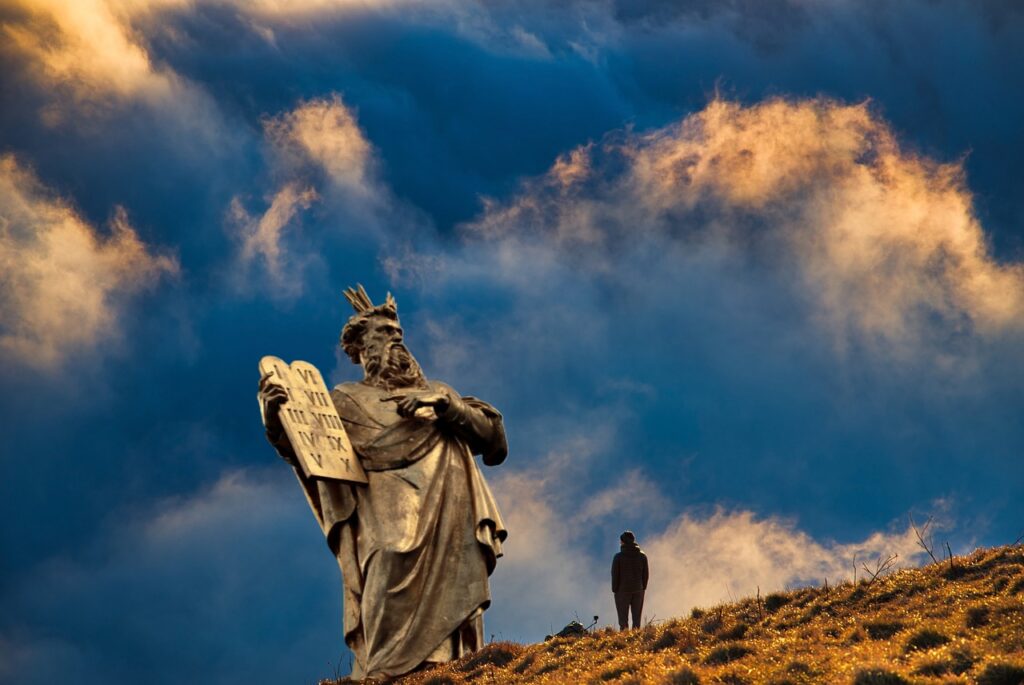
Now, if we look at love as energy – yes, love is also energy, but it is more than that. Love is expressed through energy. Emotion is energy. Emotions give us energy, motivation, passion. I would place love between two concepts: energy and consciousness. Consciousness existed first; energy was created later, as a kind of condensation of existence. The union of consciousness and energy is done through love. Love is the secret ingredient – especially self-love – that makes them become a whole.
Of course, there is also the scientific definition of energy. At the Polytechnic, we learned that energy means the ability to do mechanical work. If we want to light a fire, we need to rub two sticks until energy is released. We have potential energy and kinetic energy. The same goes for love: potential love (which I carry within me, but do not manifest) and kinetic love (the one I give, receive, let circulate). If love stagnates, it is like water in a lake that begins to spoil. If it moves, it becomes alive, like a flowing river. Love, too, must circulate: they give and receive. Animals do this too, they enter the flow of kinetic love.
Then there are the new paradigms: energy is moved by emotions and the quality of our emotions. Energy also means the ability to receive from the abundant Universe. Energy is attention, awareness – where I put my attention, my energy goes. I learned this in Aikido: where you look and where you put your awareness, there the energy flows.
And, of course, energy is vibration, it is both a particle and a wave – like the photon. Einstein said: mass times the speed of light squared. At the speed of light, matter turns into energy. It's the same with love: when the speed of exchange between me and others increases, love turns from something static, solid, into a fluid flow, which I can share with others.
That's why there is this spiritual evolution of love and how it has transformed so far.
In your experience working with regression, how do shadows of love appear in the soul's stories and memories?
Love is everywhere. When we do a regression, we will see this. If we ask the right question, we will discover that it is always related to some kind of love – because love appears in relationships with people and in relationships with animals. We can also have love of home, love for objects, which we ultimately invest our energy in. If a relationship appears, if an exchange occurs, then love also appears.
Now, if we look a little at the shadow of love, we will see that it also appears in past lives, but also in history. We can look at history, at movies, and we see: betrayal. Betrayal due to love, dramas, energy theft or feeding – especially through sexuality, where manipulation and the desire for power appear. Also as a shadow of love appears jealousy, obsession for the other.
In connection with feedingthe and energy theft, there is the abuser-victim dynamic. The abuser takes energy, takes love from the other, and the victim in turn has manipulative ways of getting what they need. This dynamic also occurs between masculine energy and feminine energy. If we look at history, we see that the masculine has abused the feminine more.
I'm not saying that one is better than the other. Each type of energy has its own dynamics and, implicitly, a shadow. For example, a man goes to war and destroys through aggression. In an argument, a man will express aggression through words, gestures. A woman, not having the same strength, uses other mechanisms. From my point of view, a man is more "sucker", easier to manipulate; a woman, if she really wants something, will manage to get it.
If we look at history, we see how wars were created because of women, conflicts and dramatic situations. Women did not need to be on the throne to get what they wanted – they succeeded by other means. I could say that the destruction brought by unbalanced feminine energy manifests itself in another way: through curses. Curses arise from pain and suffering.
My definition of curse is: a negative intention and emotionality directed towards a situation or person. For example: "I was hurt out of love. My husband was stolen by another woman. Then I create a curse, and I curse that couple or that person to no longer be able to enjoy love, children, freedom..."
From my point of view, the shadow of female love is heavier and more treacherous than male aggression. Male aggression is like an explosion – it produces harm and it's over.
But the female curse is passed down from generation to generation. In family line regressions, we find curses rather than the raw aggression of the man. These curses are more easily caught in karma and persist.
If we look at literature, the shadow side of love is masterfully illustrated in Shakespeare. Into the Romeo and Juliet, passionate love becomes unfulfilled because of society and family – a theme we often encounter in regressions: social differences, family opposition, arranged marriages. In regressions, stories appear in which couples ran away, tried to build a life, but were caught, separated, sometimes even killed.
In Othello we find murder of passion, jealousy, suicide. In Macbeth, we see ambition and manipulation, love used as a tool for power. All of this clearly shows how love can become a destructive force, not just a creative one.
But if we go beyond the shadows, today we are at a maturation of loveIn regressions, when we look back and learn from experiences, we can extract the wisdom of love. We can understand that there is no need to get caught up in drama or waste ourselves giving only to others, forgetting about ourselves.
Religions have emphasized the idea of loving others, but not so much of self-love. Today we are rediscovering its importance. Self-love is not selfishness. If my glass is empty, what do I have to offer others? If I take care of myself, I have something to give to others. In regressions we see that, in Atlantis, people were rather androgynous. There was no separation between male and female. Then, through certain experiments, male and female bodies were created, and thus the experimentation of love in relationship with the other began.
Today we are called to look within – towards self-love . Because when we are connected to ourselves, we discover that everything is there. That is the key to connecting with the Source, with the Creator, with universal love. Only from the overflow can we offer true love to others.
Have you encountered situations in your sessions where people sabotage their love out of fear of losing it? How does this mechanism manifest itself?
I would say that most of the time, people sabotage love not necessarily out of fear of losing it, but to avoid pain. There is also fear behind it, but the main mechanism is to avoid suffering. For example, if we experienced abandonment or rejection in childhood, these unresolved wounds reappear in the relationship.
When we enter a relationship and feel vulnerable, out of control, there is a tendency to protect ourselves through sabotage. Some people think: "I'd rather abandon first than be abandoned." Or: "I'd rather leave you, so it wouldn't hurt when you left me."In this way, they create an illusion of control over the pain.
There is also the opposite option: "I can't abandon you, but I start behaving badly so that you leave. Then I blame you for leaving me, and I remain 'immaculate'.” Obviously, it's an illusion, because in the end you're still left with yourself and you'll still have to face your inner wounds.
Another important aspect is the way we received love in childhood. Michael Hangan talks about "poisonous food” – distorted love, accompanied by manipulation, emotional blackmail, abuse or violence. If we grew up with such toxic emotional food, later, even when we enter a healthy relationship, we cannot recognize it. We are used to the poisoned “taste”.
It's like the story of the husband who broke up with his wife who always burned his food. When he remarried, his new wife was a great cook, but he missed the smoky taste of his old dishes. It's the same with love: even if it's unhealthy, we get used to it, and when we receive pure, healthy love, suspicion arises: "What does he want from me? What is the hidden interest?"
This is where pathological relationships come from: someone who had an alcoholic father will often attract an alcoholic or aggressive partner. Not because they feel good there, but because it seems familiar. Other people completely block their love: "If I feel love, I will also feel pain. It is better not to feel anything."They build an emotional armor, but no armor lasts forever. Like a plant without sun, man also needs love to live."
In addition, there are deep-rooted beliefs: "I don't deserve to be loved. I'm not good enough."They usually come from childhood. Children take the blame for their parents' arguments or problems. They have this magical thinking: "If my parents fight, it's because of me. It means I'm not a good child."
When I work in regressions with the inner child, I always explore this trio:
- The child's conclusion at the time of the trauma ("I can't rely on my parents.","I am a bad child.
- The decision taken then ("I have to manage on my own.","I don't want to be like my parents.
- Impact on adult life ("I don't trust others.","I can't receive love.","I sabotage relationships
In fact, it is not the conscious adult who sabotages love, but the wounded inner child who controls, from the shadows, our inner mechanisms when we are in a relationship.
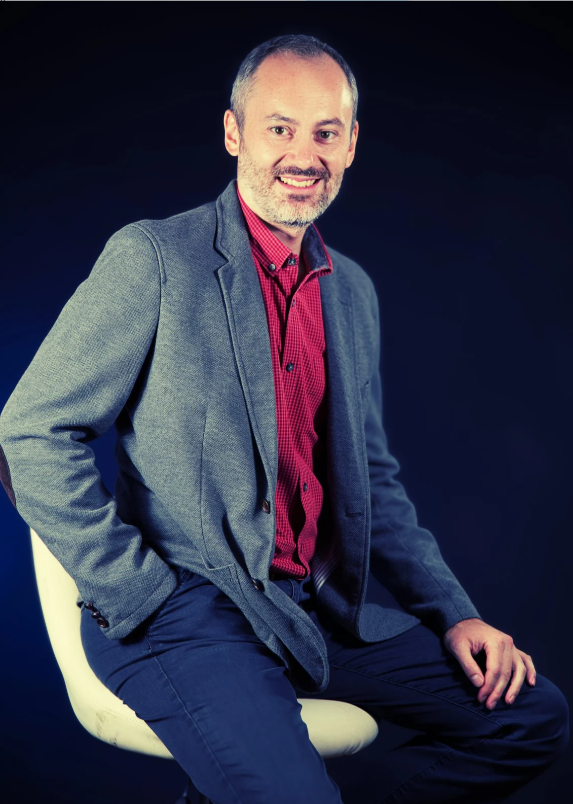
Are there moments in regression therapy when fears of loving or receiving love surface? How do we recognize them?
It's all about fear here, but unlike the previous answer, I'd like to look at it from a different angle now.
First, let's look at the therapeutic relationship. There are times when the simple attention given to the client – through listening, through presence – is experienced by the client as a form of love. If the therapist is sufficiently "MOLDING", this love is usually unconditional. But the way the client perceives it differs. For some it feels like simple and warm love, for others it activates in the form of sexuality and what we call erotic transference appears. The client may fall in love with the therapist, because, perhaps for the first time in his life, he receives what he needs.
Sometimes, the client projects the image of the father or mother onto the therapist. Thus, deep fears surface: fear of abandonment, rejection, intense need for attachment. Extreme reactions can occur – despair, crying, clinging, insistent messages or repeated appointments. A dependency on the therapist can be created. Sometimes, this has a temporary beneficial role, especially when the client regresses at very young ages, emotionally speaking. At those moments, the therapist has a supporting role. But as the client “ grows ” emotionally and develops his adult self, the therapist should gradually withdraw, to allow for natural maturation.
Related to fears that block love: many people block the expression of their emotions because they fear that, once expressed, they will make them vulnerable, out of control, exposed to manipulation or abuse.
Thus two categories appear:
- some do not feel emotions (they block them completely);
- others feel them but cannot express them.
On a symbolic level, I have often encountered images in regressions of “petrified” hearts, lacking vitality, or emotions stuck in the throat – that is, an awareness of emotion without the possibility of expression. These protective mechanisms keep people away from their own heart and, implicitly, from love.
How do you see the connection between love and emotional wounds from childhood? Can these be completely healed?
Childhood traumas and the way they are formed are closely related to love – either the lack of it or the distorted forms in which it was offered.
I speak especially from the perspective of my generation and the clients who come to therapy. In Romanian families, there was usually a lack of healthy love. Many parents did not have the ability to show their love through the essential languages of love. Thus, children received a distorted love.
The child needs primary forms of love:
- physical contact – caressing, hugging;
- words of love – “I love you”, verbal expression of affection;
- presence and time spent together;
- only then come the food, gifts or services offered.
Animal experiments are also well-known: a baby monkey preferred a warm, touchable stuffed doll to a bottle of milk. Children have a vital need for touch and words of love.
Unfortunately, previous generations were not taught to express their love. In many families, they did not say "I love you". At most, the indirect expression appeared: "mom loves you". Love was conditional: "I love you if you have high grades.","I love you if you are good.". In the absence of a "I love you unconditionally.", the child learns that he must always do something to deserve love.
Then, the surrogates of love appear: gifts, money, tablets, television. Parents, not knowing how to offer authentic love, replace it with substitutes that bring them comfort, but which can turn children into little "tyrants" or into beings who no longer know how to relate naturally and exchange love. In communism, emotional expressiveness was repressed. "Children kiss in their sleep"- this is how generations were raised: with rigidity and a lack of warm words.
This lack of authentic love produces emotional trauma.
Can it be completely healed? I don’t know what “completely” means. In my opinion, scars don’t have to disappear completely. They are useful – they remind us of the past and give us wisdom. Healing is not about erasing memories, but transforming them. We don’t receive a “ new emotional body ,” but we learn to function, to transform ourselves, to give something other than what we received.
The basic childhood wounds are:
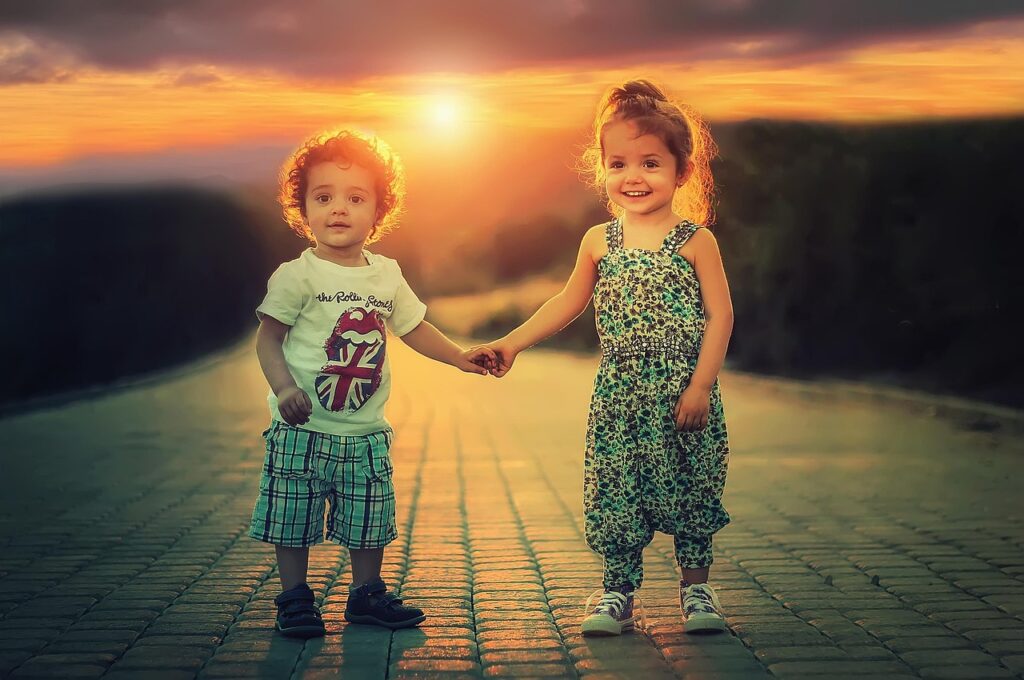
- the trauma of loss – rejection, abandonment, death or absence of a loved one;
- the trauma of abuse – violating boundaries, forcing the child to accept what they do not choose, not listening to their needs.
These mark us, but they can be integrated.
Healing is about transformation and awareness. We can understand what happened, draw wisdom from the past, and choose to offer our children and the world today something different than what we received.
What was for you the most powerful moment of personal transformation related to love, experienced either in your life or as a witness in your work with people?
The first thought that comes to my mind is about first love. They say that first love stays with you for life. For me, it was an experience that opened my heart a lot, because until then, I had the "turtle" mechanism: if a trauma or something painful occurred, I would close myself off and move on.
I was in my 2nd or 3rd year at the Polytechnic, I was about 21–22 years old. I went to Sibiu, in a very beautiful, free setting, with my brother. There I met a girl and, for the first time, I felt my heart completely open. To understand the context, I was the type who was never absent from college: courses, seminars, laboratories. However, then I stayed in Sibiu for almost two weeks after the winter break, without returning to Bucharest. My colleagues did not know what was happening to me. I was simply overcome with love.
The relationship was not clear from the beginning. She was a little older, she was in a different stage of life – she wanted a family and children. I was in a different register. At some point she left on a cruise ship to work. We experienced love from a distance, and that was very difficult. After a year she came back, changed, transformed, but I intuitively felt that her life had to continue in a different direction. I gave up on the relationship, both out of love and out of fear, because I was not ready to move on. It remained an unfinished story, with suffering and wounds, but one that deeply influenced me.
What I later understood was that it was a transformative lesson. A space of pure, innocent love opened up within me, even if suffering came along with it. That moment led me to retreat for a while, to explore spirituality more, to travel and seek answers.
Now, after many years, I feel like I'm experiencing another important moment of transformation related to love. For the past 2–3 years, I've started to focus more on self-loveThis meant gradually withdrawing from management positions, devoting less time to work and more time to close relationships: my relationship as a couple, my family, with my father and brother. I understood that self-love is essentialWithout it, we cannot reach authentic contact with our essence nor true spiritual development.
You created a center dedicated to supporting transpersonal therapies. What place does love occupy in this space and in the way you run it?
For me, leading this space is not about power or control, but rather about leading by example. I try to be a role model through what I do and how I live, both as a therapist and as a trainer. In my work training regression therapists, I would like every student, assistant, supervisor, or trainer to bring their own purity.
But where there is love and light, shadows inevitably appear. When light penetrates the hidden corners of the subconscious, less pleasant aspects also come to the surface: personal interests, manipulation, competition, jealousy. It is a natural process.
I want the center to be a space of love, even if that means confronting the opposite side. I myself strive to become a gentler and more loving person, even if I don't always succeed. My students notice that there are two sides to me, which I try to bring closer and closer to each other:
- The therapist's side – full of patience, love, restraint and gentleness, with a slower pace, which I associate with Anima, my feminine side.
- The trainer side – firmer, more demanding, sometimes even severe, coming from the animus, the masculine side. Here I can be more direct, harsher, but I try to maintain love and gentleness even when correcting or pulling someone.
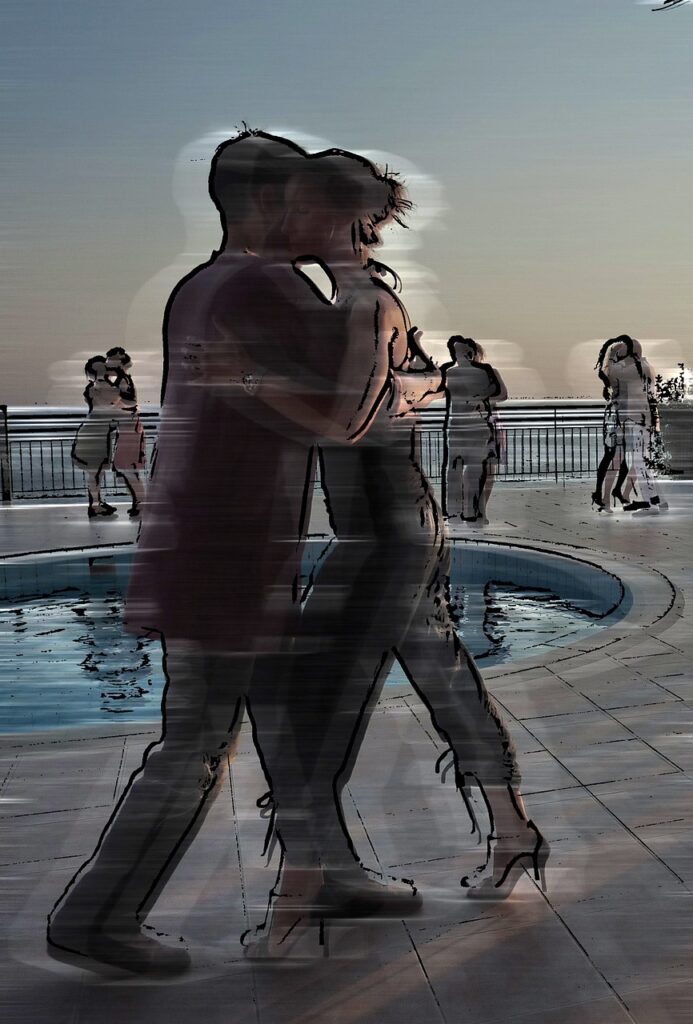
Sometimes I imagine this dual nature as a dance, like the scene in Beauty and the Beast , where the two seemingly opposing forces come to coexist. The clumsier and harsher animus dances with the delicate anima, like a flower or a fairy.
I see this inner balance as a process of integration through self-love. If I manage to experience this love myself, I can inspire others to do the same. And at the Institute, it is very clear to me: without love there is no healing. Love is not just an ideal, but the foundation of any authentic process of transformation.
How can a therapeutic process teach us to love without losing ourselves?
When we talk about losing ourselves in love, it's important to make a distinction. There are natural moments when we "melt" into love - as sometimes happens at the beginning, in that intense infatuation, or how a small child melts into its mother. It's a beautiful experience, even necessary. But when this state is prolonged too long into adult life, it can become problematic.
That is why the therapeutic process teaches us to consciously oscillate between losing ourselves and finding ourselves again. It is a healthy back and forth: I open myself up, I give myself away, but I also come back to myself. In this way, I learn to be present, to love without disappearing from my own life.
As children, many of us were conditioned to lose ourselves – through school, through social models that promote competition, stress, exhaustion. We were taught that our worth depends on how much we give or how much we perform. But this is not love. It is just a form of survival.
In therapy, we learn to cultivate healthy boundaries: to balance the time and energy we give to others with the time and energy we give to ourselves. Only in this way can we experience authentic love, without nullifying our identity.
A simple and extremely valuable tool is feedback. We can ask the person next to us: "How do you feel about me in this relationship? How do you feel about my love?"Open communication and honest feedback help us to reflect on each other, to adjust, to become aware."
Thus, love becomes a conscious process : giving, but also remaining present with yourself, so that the relationship is a living exchange, and not a loss of self.
ÎHow can the connection between love and self-knowledge accelerate the healing of the soul?
Authentic self-knowledge involves sitting with yourself, looking within, and becoming aware of the filters through which you see yourself. Most of these filters come from the past – from education, from family, from social or cultural models. They manifest as masks, programs, and cognitive distortions: “black-and-white” judgments, the tendency to focus on the negative and disregard the positive, excessive self-criticism, shame, guilt. When we relate to ourselves through these distortions, we end up seeing ourselves partially, perceiving ourselves differently than we are. The moment we bring these filters and masks to light and begin to put them aside, vulnerability appears, but also liberation. Self-acceptance becomes possible. And acceptance is, in fact, love.
That's why the process of self-knowledge and self-love go hand in hand: the more deeply I know myself, the more authentically I can love myself. And with this love, the healing process accelerates.
However, healing has its own rhythm. Just as in nature the seasons follow one another naturally, as the sun and moon alternate, as plants grow according to their own cycle, so too the soul has a rhythm that we cannot force. If you try to rush a flower to bloom, you risk destroying it.
I have also observed in therapy: working “harder” does not always mean healing “faster”. Sometimes, on the contrary, forcing brings resistance and new difficulties. Healing accelerates, paradoxically, when we align with our inner rhythm – a rhythm often slower than that imposed by society.
We already live in a world where everything is accelerated: information, communication, access to countless methods and courses. That is why I believe that there is no need to rush the healing process even more. It unfolds at a natural pace anyway. The essential thing is to enjoy the journey, not just wait for the end.
Thus, self-love and self-knowledge meet in an inner dance that heals us – not through speed, but through truth, authenticity, and acceptance.
Could you share an experience from your practice that showed you that love is stronger than fear or suffering?
I have many examples, but to maintain confidentiality I will not tell a specific case, but will combine several experiences I have encountered.
A clear framework is that of abusive couple relationships. Most of the time, it is the man who manifests aggression, and the woman withdraws. Here the difference must be made: aggression is not always negative, it can be a vital force, for example in sexuality. But when certain boundaries are crossed, aggression becomes violence, and then wounds appear.
I have observed how a continuous back and forth manifests itself in the couple: one hurts, the other withdraws, fear appears, then separation. Then, after a period, each reconnects to themselves and to self-love, and the desire for reconciliation appears again. Here we see how much love matters: if it still exists between partners, it can be stronger than fear or suffering and create the premises for healing.
It is also important to understand the differences in rhythm between women and men. Men experience the immediate impulse, they want to release tension, including sexual tension. Women need time, especially if they have been hurt or traumatized.
If the man truly loves the woman, he will be patient with her, offer her tenderness, hugs, security, without forcing contact. If the woman feels accepted and respected, she will be able to open up again.
From here it is clear: love is stronger than fear when it creates trust and patience.
At the same time, it is not enough to blame the other. In therapy we work a lot with taking responsibility: both the man and the woman have their share of shadows, of challenges, of roles in this dance. If we do not learn to take responsibility, we end up repeating the same pattern with other partners.
But when love is genuine and both parties choose to stay in the process, it can heal even the deepest wounds. . It's a dance of love. And as long as we can accept the other, but first and foremost ourselves, I say it can change.
If you were to leave our readers with just one practice or thought to transform their relationship with love, what would it be?
From my point of view, the most important is self-love. This is the key point and a necessary element for any traveler on the path of personal development. An empty well has nothing to offer the traveler. First we must fill our own glass, fill ourselves with love and energy, and then we can give to others.
And that doesn't mean selfishness. A lot of people don't understand what it means to be selfish. Selfish means being self-centered and giving only to yourself, without giving to others. If I give to myself first and then to others, that's self-love.
In the relationship class I talk about relational circles. In the center is the relationship between me and myself – self-love. The second circle is the relationship between a couple. Then come the children. And here is a common mistake, especially for mothers. They put the child above the couple. But the child feeds on the couple, and the couple feeds on self-love. Then, further, come the parents and grandparents, then close friends, then distant ones, and only then society. If we put the job above me, or the child above the couple, then the flow is broken. Love no longer flows as it should.
Basically, for me the most important thing is to give myself time. It doesn't matter what you do – you can meditate, sit in silence, sit in the garden, watch a movie or do nothing. Just time with yourself. Because when the mind is silent and there is no more noise from the world and others, you focus on yourself and love flows naturally.
At first, pain, trauma, suffering may come out – like rusty water from a pipe that has been stopped for a long time. But then it flows cleanly.
And we can also have mirrors in the process: a friend, a therapist, an accountability partner, or even ChatGPT. I, for example, once gave him a context – two enlightened masters sitting under a tree and talking about time. And the response amazed me. If you give him the right context, he can be a good reflection buddy.
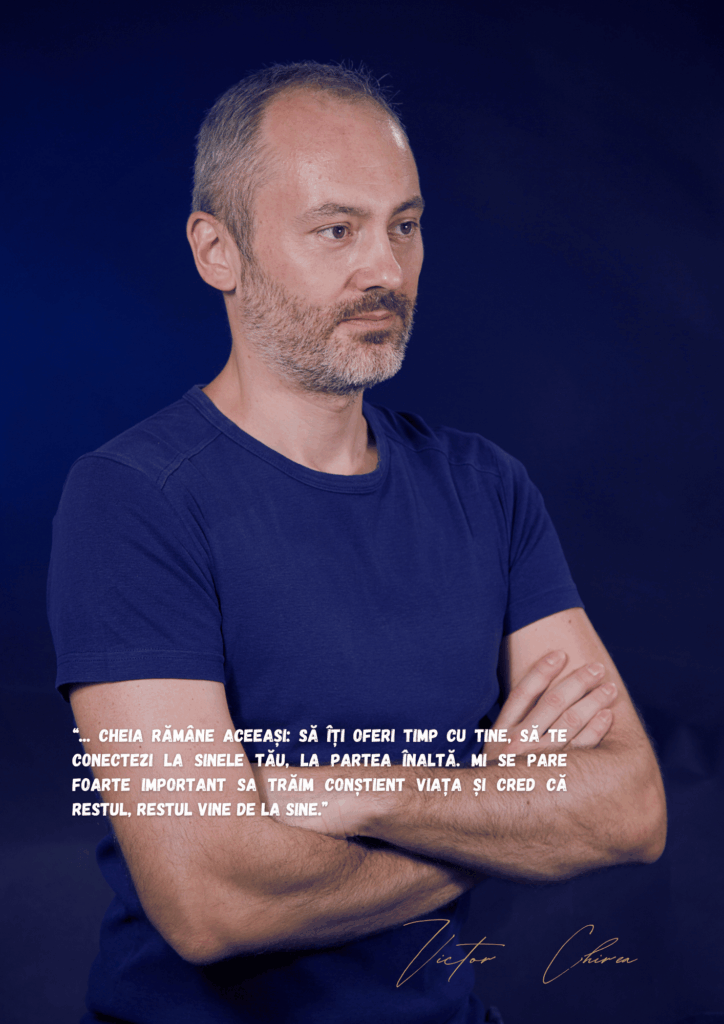
But the key remains the same: to give yourself time, to connect to your Self, to the higher part. I think it's very important to live life consciously and I think the rest, the rest comes by itself. But the moment we give ourselves time, the moment we are awake, the moment we are aware, at that moment love will find us. Then love comes by itself.
interview of edition #09
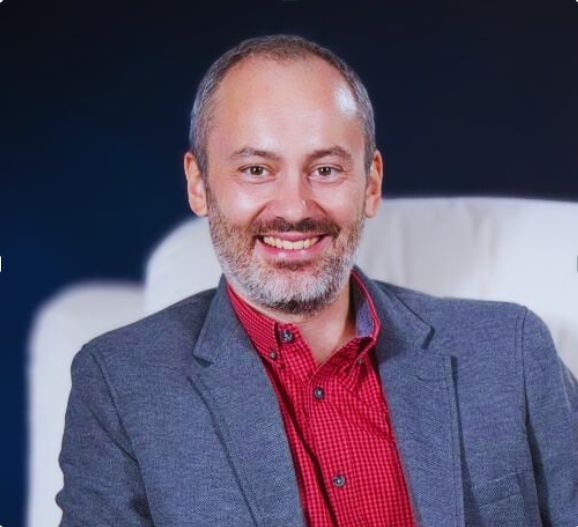
Thus, self-love and self-knowledge meet in an inner dance that heals us.
Victor Chirea
– not through speed, but through truth, authenticity and acceptance.
ARTICLE AUTHOR
MELL
Mell is the founder and visionary behind The Meditation Academy project and the magazine TotUna – Essentia Momentum . His journey combines the rigor of a spiritual researcher with the sensitivity of a therapist and the courage of a person who has chosen to live authentically. Through his own method – IRMA – and through his writings, Mell explores the place where introspection, prayer, meditation and timelessness meet, opening a path to unity and inner truth for readers and practitioners.
Her texts are not simple reflections, but invitations to experience. With a poetic language, but anchored in concrete reality, Mell manages to transform abstract ideas into living experiences. Her writings do not demand idolatry, but the courage to look at life in all its forms and to embrace it as a single field of love.
CO-FOUNDER OF THEMEDITATION.ACADEMY


TotUna is not just a magazine. It is a co-creation space.
Submit your article!
If you feel the call to write, share, or contribute your voice, we are here.




