

Hand Dance – Holistic Healing #21
There is a gesture that no one taught us, but that we all do.
When something hurts us deeply, the hand rises by itself and rests over the wound—over the heart, over the belly, over the forehead.
We don't think about it. It just happens. As if the hand knows something the mind has forgotten: that touch heals, and that healing often begins with our own palms.
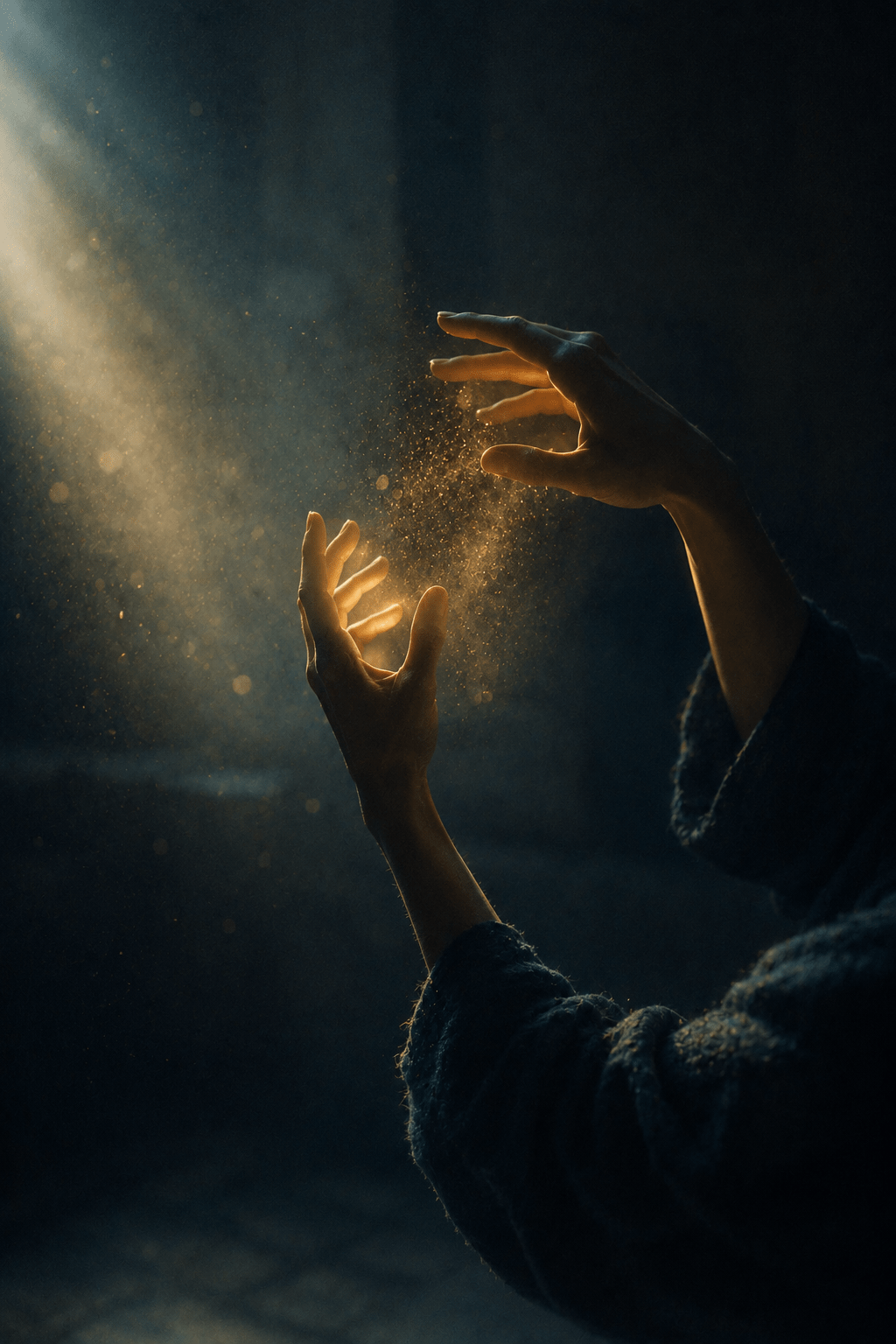
Hand Dance
Hand Dance takes this ancient knowledge and takes it further than we might expect. On the surface, it's simple: let your hands move on their own, without choreography, following not a learned form, but an impulse that comes from within.
But beneath this simplicity lies one of the most profound practices of alignment, reconnection, and awakening of one's own power that I have ever encountered.
It is a practice that works on two levels at once. One can be measured, explained, verified by science. The other begins where science is silent and lived experience remains. We will step through both, carefully, without confusing them.
The science behind the technique
We start with what we can know for sure, because the foundation of a healing practice deserves to be solid.
The hand occupies a huge area in our brain, completely disproportionate to its size. On the cortical map of the body — what neuroscience calls the homunculus — the hands and face are represented on huge surfaces, while the trunk and legs, although much larger, occupy surprisingly small areas. The reason is the extraordinary density of nerve endings in the hands. When you consciously move your hands, you activate an unusually large part of your brain. The hands are, literally, one of the most direct gateways to the nervous system.
And here comes the second mechanism, perhaps the most important. Slow, rhythmic, and purposeless movement sends the body a profound signal of safety. The autonomic nervous system, which is always oscillating between the sympathetic branch—of action, alertness, flight—and the parasympathetic branch—of rest, digestion, recovery—swings, under such movement, toward the parasympathetic. The vagus nerve, the great nerve of tranquility, which runs from the brain through the heart, lungs, and organs, increases its activity. The heart rate slows. Breathing deepens. Blood pressure drops.
Contemporary research calls this capacity vagal tone, and shows that high vagal tone is linked to better emotional regulation, resilience to stress, and overall well-being. Rhythmic movement—the rocking, the swaying, the repetitive gesture—is one of the oldest and safest ways to cultivate it. It is no coincidence that we rock a child to soothe him. The Hand Dance does for the adult who has forgotten him exactly what the swing does for the child.
So far, everything is verifiable. The conscious movement of the hands activates a large part of the brain, calms the nervous system, and brings the body back from alertness to openness. If the practice stopped here, it would still be worth doing. But it does not stop there.
Where the experience begins
Beyond the threshold that science can measure opens up a territory that we cannot speak about with instruments, but only with testimony. And testimony must be offered as it is: not as proof, but as the experience of someone who has walked this path.
For me, there is no more powerful technique for aligning, connecting, and consciously manifesting life. When I let myself go, I no longer work with just my hands. I work with the totality of energies and archetypes, and I become aware of the power that flows through me as if through a construct — not a power that I possess, but one that I let pass through. I see and feel how the energy responds to my intention and gesture. And I see and feel how everything around me can be re-established, as long as I remain aware of one truth: that I have complete freedom in a universe that has prepared a space for me to experience life.
This is the heart of the practice, and it is worth naming it carefully, because this is where many approaches slip. It is not about commanding the universe. It is not about imposing one's will on the world around us, as if we were masters of creation. It is something more subtle and much truer: we are free in the context of the Creator.
We have been given a space—a world, a body, a life—and, within that space, a real freedom to create, to choose, to move energy through intention and gesture. We are not prisoners of a fixed fate. But neither are we absolute creators, alone in the void. We are creators in context—children playing freely in the garden prepared for them, with all the power of real play, but within a love that prepared the garden. Freedom and context are not contradictory. They are inclusive.
And the Hand Dance is perhaps the most direct way to feel this truth not as an idea, but as an experience. When the hands move from impulse, not from decision, you touch the very subtle boundary between doing and being done. Who moves the hands? You—and yet not just you.
Something flows through the gesture. And the moment you feel that something flowing, you stop believing yourself separate from its source.
A first contact with one's own power
In this edition about First Contact, the Hand Dance occupies a special place. Because it is, above all, a first contact with one's own creative power — not that of the ego that wants and demands, but that of the being that lets life flow through it, aware that it is a channel, not a source.
The first time you really let yourself into this movement, a little twist happens.
The hands begin to lead, and the mind, accustomed to commanding, suddenly finds itself in the position of witness. It is disorienting, at first — and then, if you allow it, deeply restful. Because you discover that not everything depended on your decisions. That there is an intelligence within you that knows how to move on its own, if you let it. And that, by letting it lead, you do not lose control — you find a deeper form of trust.
This is the contact: with the part of you that doesn't need to be commanded to know where it's going. With the power that flows through you without being yours. With the real freedom you have, within the space that has been given to you.
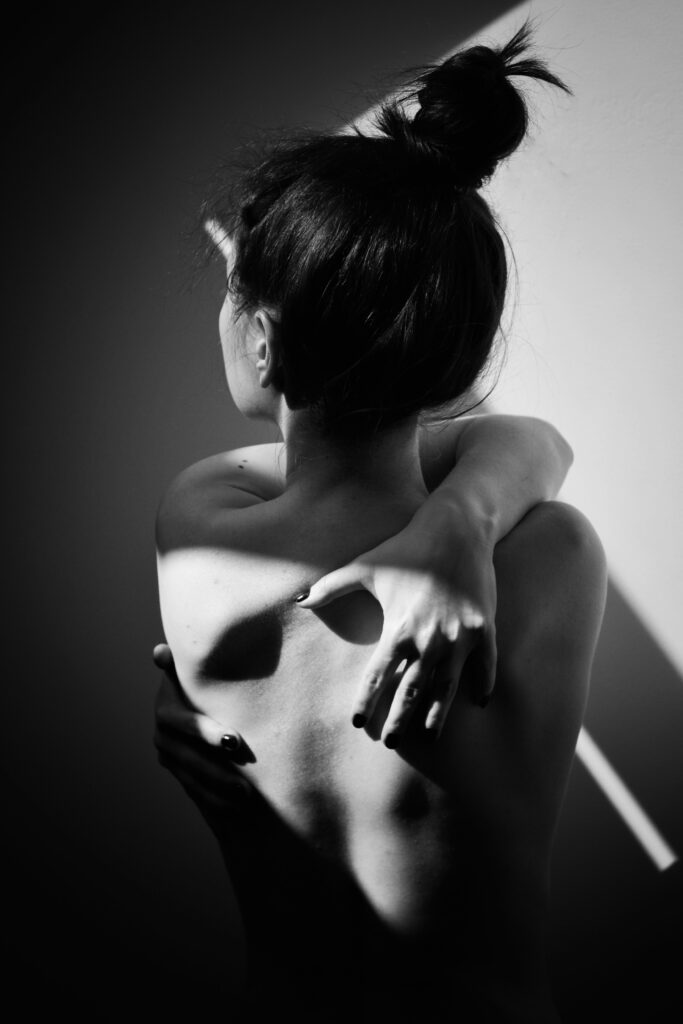
Everyone's space
What I have confessed here is my experience, my path, my contact. Not yours. Every being has its own space—its own rhythm, its own gateway, its own way of encountering what is to be encountered. And this space must be recognized and honored, above any technique.
The Hand Dance does not ask you to feel what I felt. It does not ask you to believe what I believe. It only asks you to allow your hands to move, and to be attentive to what opens up—for you, in your own way, in your own time. Maybe it will be just a quieting of the nervous system, and that will be enough. Maybe it will be much more. It is no one's business to decide for you how far your own contact goes.
For this is the very form of freedom in the context of the Creator: each one walks through his garden on his own path, and all paths are good.
holistic healing #21
the form of freedom in the context of the Creator: everyone walks through their garden on their own path, and all paths are good.
mell
ARTICLE AUTHOR
MELL
Mell is the founder of the magazine TotUna – Momentum Essence an editorial space dedicated to the exploration of consciousness, inner transformation and the reconnecting of man with his profound essence. Its path is not built on the idea of spiritual authority, but on lived experience, continuous introspection and the living integration of traditions such as Vedanta, Kaballah, theosophy and Christian spirituality, viewed as different languages of the same truth.
His writings and testimonies are born from moments of profound lucidity, from a direct encounter with human fragility and from a living relationship with the mystery of existence. For Mell, consciousness is not a concept, but a space of responsibility and love, and transformation is not an ideal to be achieved, but a process of revealing what is already whole.
Through the magazine, awareness programs, and dialogue spaces created around The Meditation Academy , Mell supports a form of mature spirituality, anchored in real life, that does not separate man from the divine, but places them in a relationship of natural continuity.
editor-in-chief totuna.live


TotUna is not just a magazine. It is a co-creation space.
Submit your article!
If you feel the call to write, share, or contribute your voice, we are here.




