

Healing the Relationship with Parents — The Two Poles of Masculine and Feminine | TotUna 17
There are wounds we didn't choose, and yet we carry them. There are maps of the world we didn't draw, and yet we navigate by them—in relationships, in decisions, in how we relate to ourselves in moments of crisis or grace.
The oldest of these maps were drawn at home. By the two men who were our first witnesses.
In this article, MELL gently and lucidly explores how the relationship with father and mother — beyond concrete persons, as internalized living principles — continues to shape, invisibly, the inner architecture of each of us. And how, step by step, healing begins.

Relationship with Parents
There is a question that few people consciously ask themselves, although life leads them to it in countless ways: where did I learn to be a man or a woman? Not in a biological sense. In an energetic sense. In a relational sense. In a profound sense. The answer, almost without exception, is the same: from the first two people who were present at the beginning of our lives. Father and mother. Or their absence — which teaches, in turn, an equally powerful lesson.
Before any book read, before any romantic relationship, before any spiritual practice — the child has absorbed, from the field of both parents, a map of what it means to be masculine and what it means to be feminine.
How power behaves. How love is expressed. Whether firmness and gentleness can coexist or are they necessarily separate. Whether it is safe to feel or whether feeling is a dangerous vulnerability. These maps were not taught through words. They were absorbed through presence, through the atmosphere of the house, through the way the two adults looked at each other or avoided looking at each other, through what was allowed to be expressed and what had to be kept silent.
And these maps — once entered into the system — became the templates through which we built all the relationships that followed. With life partners, with colleagues, with friends, with our own children. And, most profoundly and least visible: with ourselves.
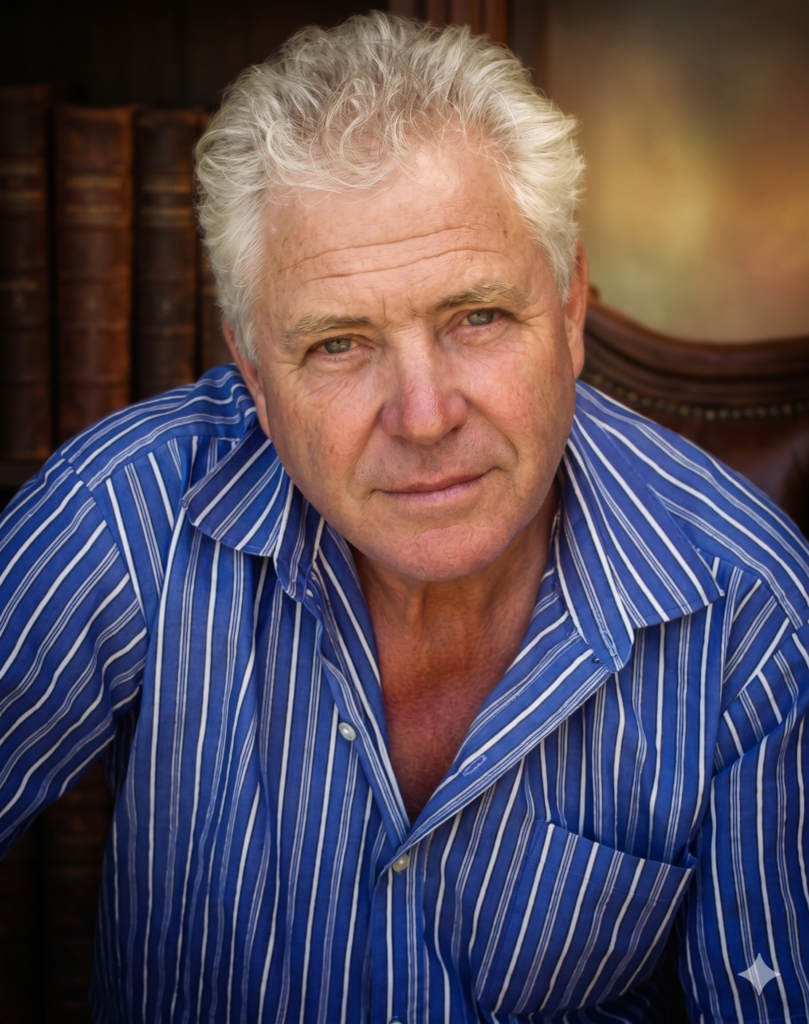
The Father — the First Bearer of the Masculine Principle
The masculine principle—in the archaic, not patriarchal sense—is the principle of structure, of direction, of firm presence in the world. It is the energy that says there are limits and they are secure, that provides the framework within which life can flourish without being wasted. The father—by his mere presence or absence, by the way he carried his own masculinity—taught each of us a lesson about this principle. And that lesson has remained.
A present, balanced father, capable of providing both firmness and warmth, transmitted to the child an image of masculinity as a protective, not dominating force. The child raised in this field will later be able to access his own strength without confusing it with aggression and his own gentleness without confusing it with weakness.
But many of us didn't get that picture. We got an absent father — physically or emotionally. A father who experienced his own masculinity as a burden, as a mask, as a performance. A father whose unintegrated wounds expressed themselves through control, through harshness, through emotional distance — or their opposite, a structureless tenderness that didn't give the child the feeling that someone knew where we were going.
And the child — because he has no other reference — internalized that image. He built an inner father inside him after the model of the real father. And that inner father will speak, decades later, in the voice of the inner critic, the perfectionist, the one who never feels enough — or, on the contrary, in the voice of the one who avoids any structure because structure has always meant constraint.
Mother — the first bearer of the feminine principle
The feminine principle—in the archaic sense—is the principle of receptivity, of nurturing, of love that does not condition, of the ability to be without necessarily having to do. It is the energy that says you are accepted exactly as you are, that provides the soil in which roots can go deep without fear.
The mother taught, through her presence or absence, through the way she lived her own femininity, the lesson about this principle.
A mother capable of providing a warm presence, healthy boundaries, and love that does not suffocate has transmitted to the child an image of the feminine as a safe space, not as a dependency. The child raised in this field will later be able to access within himself his own capacity to receive, to rest, to be vulnerable without feeling in danger.
But here too — many of us received something else. A mother who sacrificed her own identity in the name of love, turning love into duty and duty into guilt. A mother who did not receive unconditional love herself and could not offer what she did not know. A mother whose wounds of rejection or abandonment expressed themselves through overprotection, through emotional control, through the inability to let the child go — or through the opposite, a cold detachment that left the child to seek warmth in every other direction.
And the child internalized this image as well. He built an inner mother modeled after the real mother. And that inner mother will later speak in the voice of chronic worry, of the need for approval, of the feeling that love must be earned—or in the voice of the one who cannot receive care without feeling suffocated.
When the two inner poles come into conflict
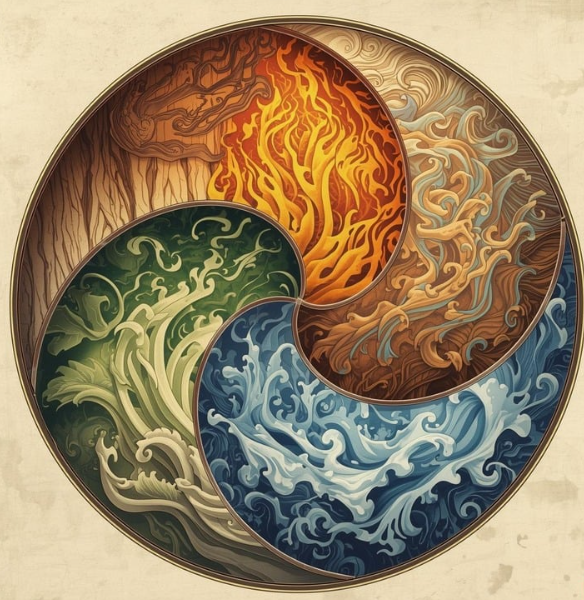
Each of us carries both images within us—the inner father and the inner mother. And the relationship between them—that internal, invisible, active relationship—shapes how we experience the polarities in our lives.

Each of us carries both images within us—the inner father and the inner mother. And the relationship between them—that internal, invisible, active relationship—shapes how we experience the polarities in our lives.
When the inner father and inner mother are in conflict—when the principle of structure and the principle of receptivity have not found peace with each other—that conflict expresses itself externally. In relationships where we alternate between control and abandonment. In the body, through chronic tensions between doing and being. In family dynamics where brothers and sisters, raised by the same two parents, end up embodying each a pole—one more rigid, the other more fluid—and looking at each other from opposite sides, not recognizing that they both carry the same wound, expressed differently.
This is not a dysfunction. It is a deeply human mechanism for distributing unintegrated tension. Family systems—as understood by systemic therapy, from Bert Hellinger to Virginia Satir—function as living organisms, in which each member carries a part of the common emotional field. What one child cannot integrate, another will carry. What a parent could not express, will live on in their children.
Healing is not, in this understanding, an individual act. It is an act that ripples through the entire system.
How healing begins
Healing your relationship with your inner parents doesn't mean forgiving in the moral sense—that wording, however well-intentioned, places an additional burden on someone who already carries enough. It means something simpler and deeper: you see.
To see the father not as the figure who disappointed or hurt — but as a man who carried his own wound, his own map, his own limitation. A man who gave what he could of what he had. Sometimes a little. Sometimes too much of what was not healthy. But always from a place of humanity, not from a place of ill will.
To see the mother not as the figure of the ideal love that was missing — but as a woman who lived her own femininity within the constraints of her time, her family, her unspoken wounds. Who loved as she knew how. And who, perhaps, would have loved differently if she had known differently.
This view doesn't erase the pain. It doesn't undo the impact. But it creates a space where the pain no longer needs to turn into condemnation — theirs or ours.
A simple practice — conversation with your inner parents
Close your eyes. Breathe a few times until you feel present in your body.
Imagine your inner father—not necessarily the image of your actual father, but his energy, his presence, the way you feel him inside.
Observe without judgment: what does it look like? Where do you feel it in your body? What does it mean?
Give him a simple sentence: I see you. Thank you for what you were able to give. I return to you what is not mine to wear.
Do the same with your inner mother.
It's not a ritual of resolution. It's an act of recognition. And recognition, repeated with gentleness, is the first step to any real healing.
holistic healing #17
Each of us carries, within us, both images—the inner father and the inner mother.
mell
And the relationship between them shapes how we experience the polarities in our lives.
ARTICLE AUTHOR
MELL
Mell is the founder of the magazine TotUna – Momentum Essence an editorial space dedicated to the exploration of consciousness, inner transformation and the reconnecting of man with his profound essence. Its path is not built on the idea of spiritual authority, but on lived experience, continuous introspection and the living integration of traditions such as Vedanta, Kaballah, theosophy and Christian spirituality, viewed as different languages of the same truth.
His writings and testimonies are born from moments of profound lucidity, from a direct encounter with human fragility and from a living relationship with the mystery of existence. For Mell, consciousness is not a concept, but a space of responsibility and love, and transformation is not an ideal to be achieved, but a process of revealing what is already whole.
Through the magazine, awareness programs, and dialogue spaces created around The Meditation Academy , Mell supports a form of mature spirituality, anchored in real life, that does not separate man from the divine, but places them in a relationship of natural continuity.
CO-FOUNDER OF THEMEDITATION.ACADEMY


TotUna is not just a magazine. It is a co-creation space.
Submit your article!
If you feel the call to write, share, or contribute your voice, we are here.




