

Holistic Healing – The Inner Child | TotUna 18
A little boy and his father were walking, one autumn evening, through the unpaved streets of the neighborhood where they lived. The neighborhood was not pretty. Tufts of grass grew chaotically among the stones, the houses had tired roofs, and the air smelled of old water, boats, fish, and lack. But it was home. And for a child, home is a word that is not discussed.
The sun was setting slowly over the River Mersey. Its warm light embraced the two figures walking silently—one taller and one shorter, the small hand in the large hand, not speaking to each other because there was nothing to say.

The Sovereign Child
On the other side, the lights were starting to come on.
They were reflected in the river waves, yellow, white, interrupted by the trembling of the water. Another world. A world that smelled neither of fish nor of deprivation. A world that, seen from this bank, seemed possible and impossible at the same time.
The boy asked his father, lost in thought:
"Dad, what's there?"
The father looked across the river for a moment. Then he answered, without turning his head:
"There's nothing there. Just the other side of the river."
And they kept walking. Silence closed in around them again. Their footsteps—one bigger, one smaller—continued on the stones of the neighborhood, and the lights on the other side slowly began to fade behind them.
That boy was Paul McCartney.
That boy later stepped across the river. He entered the world that, from the other side, seemed like another world. He sang for millions, he made riches his father could not conceive, he lived in a reality that, as a child, he did not even know existed.
And yet.
All his life, he remained that boy who walked silently with his father through the unpaved streets of Liverpool. And when he had children of his own, he chose to raise them on an isolated farm, surrounded by green grass and animals—even though they were vegetarians, even though he could have raised them anywhere, in any palace. He chose that simplicity because, without naming it, he knew: the child in him did not ask to be fixed. It asked to be continued.
continuation, not healing
Continued. Not repaired. In these two words, I believe, lies the entire secret of holistic healing of the inner child.
The word "healing" suggests that something is broken and needs to be fixed. But when we look closely at the lives of people who have walked through their own wound without remaining in it, we discover that what they did was not a fix. It was a continuation. They took the child with them, rather than leaving him on the other side, trying to fix his condition there.
Most of us, when we hear “inner child work,” imagine a session in which we turn our attention inward, to a wounded place, and try to give it what it wasn’t given at the time. This practice is real, it has value, it has its place. Many wounds have been healed this way. This article is not saying that this practice is wrong.
This article is just saying this: there comes a point when this practice is no longer enough. And that point comes when we realize that we have begun to live inside it. We sat down next to the wounded child and stayed there, like a never-ending vigil.
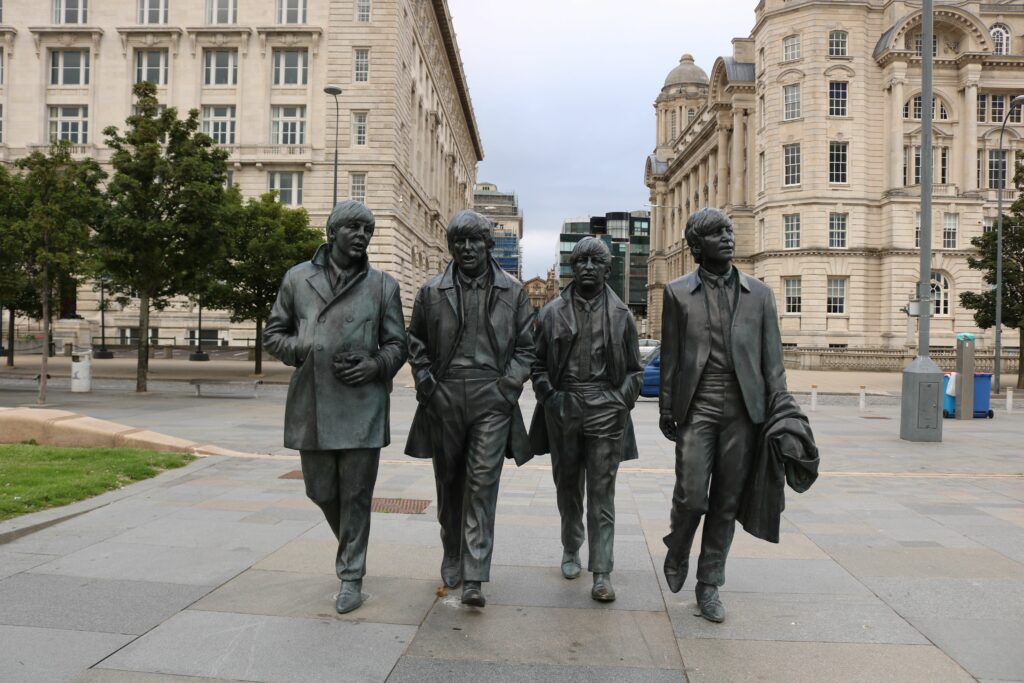
The inner child doesn't ask to be fixed. It asks to be taught how to live.
Refusal to grow
I have encountered in my practice—and in my own life—a typology that, for a long time, I didn't know what to call. These are the people who have been doing inner child work for five, ten, fifteen years. They read the right books. They go to retreats. They hold their inner child in their arms, week after week, with a constancy worthy of admiration. And yet, if you observe them carefully, something inside them doesn't move. It doesn't mature. It doesn't settle down.
What I have come to understand, gradually, is this: healing the inner child can become, without anyone calling it that, an elegant form of refusal to grow up. You stop at the edge of the threshold that the body has long passed, but that the soul refuses to cross. And you call this stopping "healing." Because it is, indeed, a form of care. But care that never ends is no longer healing. It is a vigil. And vigil, if it lasts a lifetime, becomes identity.
This is not a criticism of those who do inner child work. It is an observation about a threshold that is difficult to see from within — because its very nature is to mask itself in the continuation of the same gentle gesture.
And here comes what may seem harsh at first glance: the inner child does not ask to be cared for forever. It asks to be taken with us, to the other side of the river. It asks to grow with us. It asks that its wound become our intelligence. It asks to become our eyes, not to remain our private burden.
As long as our inner burden remains intact and untouchable, it cannot breathe outside. And as long as it does not breathe outside, we cannot see the children running past us on the street. Because our gaze is captive in our own mirror. And the mirror—no matter how tender it may be—is, after all, a closed surface.
Paul McCartney didn't stay on the shores of Liverpool mourning his poor childhood. Nor did he forget it. He did something else: he took it with him. And he turned it into a farm, into green grass, into animals, into children who slowly grew up.
But many of us didn't get that picture. We got an absent father — physically or emotionally. A father who experienced his own masculinity as a burden, as a mask, as a performance. A father whose unintegrated wounds expressed themselves through control, through harshness, through emotional distance — or their opposite, a structureless tenderness that didn't give the child the feeling that someone knew where we were going.
This is the healing that deserves the name of healing. Not the repair of the past. Its continuation in a living form.
There is an old principle that alchemists wrote on the walls of their laboratories: quod superius, sicut quod inferius. What is above is like what is below. What is within is like what is without. Hermes Trismegistus was not talking about a poetic mirroring. He was talking about an ontological identity. There are not two worlds that reflect each other. There is one world, which appears divided only to the one who has not integrated it.
For those who have chosen — often without realizing it — to stay on their side, the world remains divided. Inside is the wounded child. Outside are other people, other children, other lives. There are two worlds. And the two do not communicate, no matter how much a child smiles on the bus, in the market, in line.
For those who have crossed the threshold—often without ceremony, simply by exhausting old forms—the world resets itself. There is no longer a separate inner child from the child on the street. They are the same presence. And the gaze of one is, in that moment, the healing of the other.
How does this look in practice? There's nothing mystical about it. You walk down the street. A child crosses your field of vision. He runs. Or asks for something from a tired mother. Or laughs for no reason. Or cries just the same.
Your gaze sees him for a second. In that second, if the gaze is present—not critical, not didactic, not sentimental, just present—two things happen at the same time. The outer child is seen. And the inner child, under your layer of “work on me,” receives exactly what the other receives. Because there are not two.
This practice doesn't require time. It doesn't require therapy. It doesn't require being a parent. It just requires a real second of presence, when a small being enters your field. That's it. If you do this daily, you will find that, within a few months, something inside you resets. Not because you did "more" inner child work. Because you stopped keeping it locked away.
Holistic healing is not healing one part of yourself in isolation. It is recognizing that there is no part separate from the others, and that true healing is the act of letting your inner child become your gaze on the world. In that gaze, he is finally home. Not because you have managed to fix his past, but because you have dared to continue it in the present.
The other side of the river was, after all, "nothing." It was the rest of life. It was the farm with green grass. It was the children running among the animals, unaware that their father — an adult who remained, intimately, that little boy — was looking at them with the eyes of his childhood, finally fulfilled.
The only way to heal a child is to take them with you. Not to endlessly nurse them on the shore from where you left.
holistic healing #18
mell
For those who have chosen — often without realizing it — to stay on their side, the world remains divided.
Inside is the wounded child. Outside are other people, other children, other lives. There are two worlds. And the two do not communicate.
ARTICLE AUTHOR
MELL
Mell is the founder of the magazine TotUna – Momentum Essence an editorial space dedicated to the exploration of consciousness, inner transformation and the reconnecting of man with his profound essence. Its path is not built on the idea of spiritual authority, but on lived experience, continuous introspection and the living integration of traditions such as Vedanta, Kaballah, theosophy and Christian spirituality, viewed as different languages of the same truth.
His writings and testimonies are born from moments of profound lucidity, from a direct encounter with human fragility and from a living relationship with the mystery of existence. For Mell, consciousness is not a concept, but a space of responsibility and love, and transformation is not an ideal to be achieved, but a process of revealing what is already whole.
Through the magazine, awareness programs, and dialogue spaces created around The Meditation Academy , Mell supports a form of mature spirituality, anchored in real life, that does not separate man from the divine, but places them in a relationship of natural continuity.
CO-FOUNDER OF THEMEDITATION.ACADEMY


TotUna is not just a magazine. It is a co-creation space.
Submit your article!
If you feel the call to write, share, or contribute your voice, we are here.




